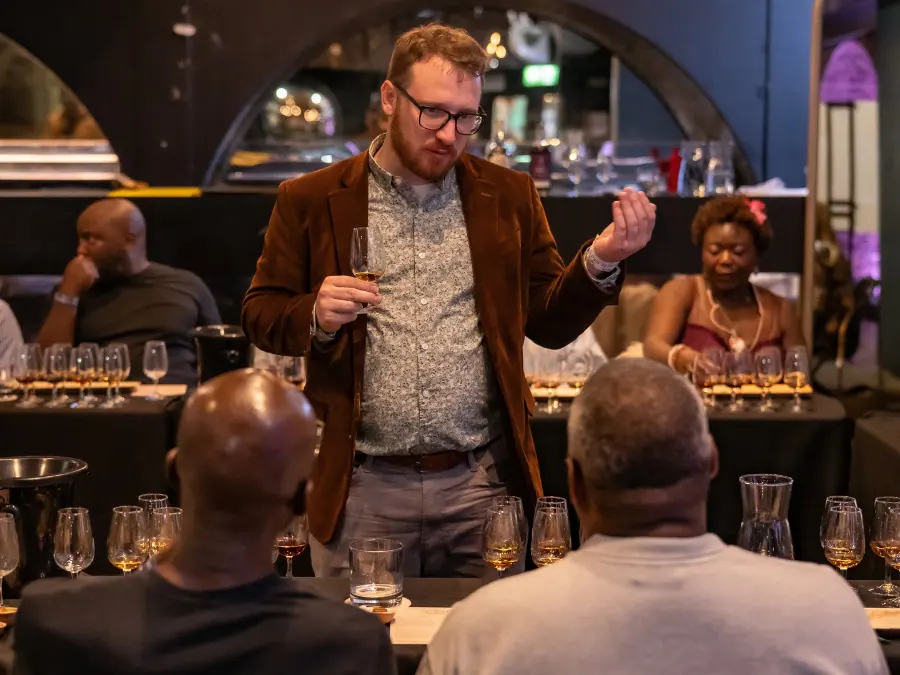
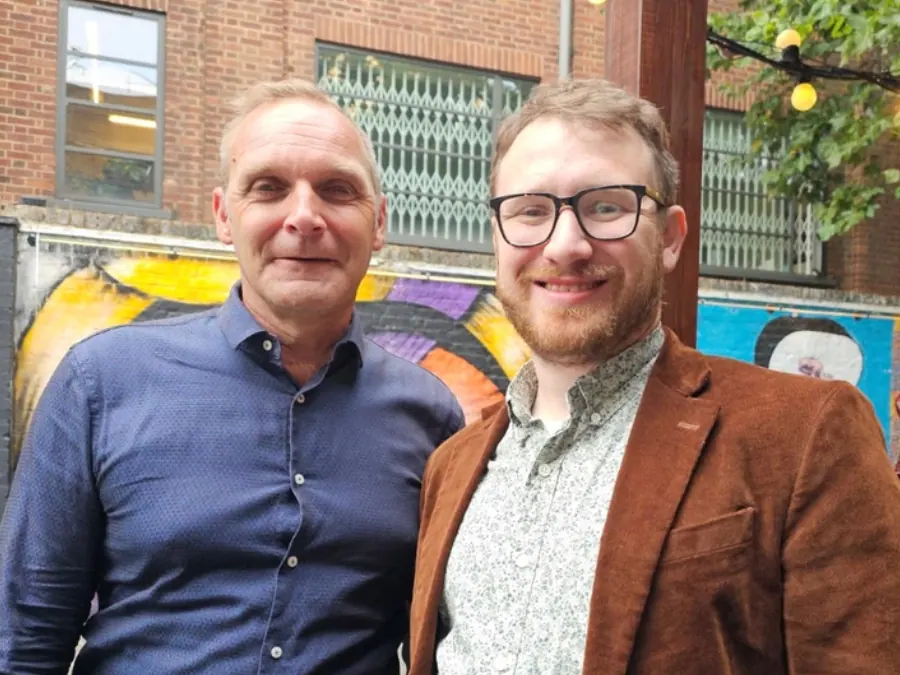
Earlier this month, trade association The Distilled Spirits Council of the United States (Discus) brought its ‘House of US Spirits’ activation to London. The one-day event, which headed to Paris two days later, provided ten brands and their owners the opportunity to present their wares to an invited audience. Among them was Global Drinks Intel editor Olly Wehring, who seized an opportunity of his own; to sit down with Discus’ export promotions manager, Joel Matticks (below).
What does your role at Discus entail?
Every year, we apply for funding from the US Department of Agriculture to put on promotions in several different markets around the world, such as this one here in London, then Paris after this. We organise a combination of events and trade trips to shows like Bar Convent Berlin. I manage the allocation of those funds.
I’ve been with Discus for two and a half years, so I’m fairly new to the industry. I came from the USDA, actually, where I managed a different grant programme.
How easy is the funding conversation to have with the USDA?
It’s pretty straightforward. The department has relationships with a lot of different commodity organisations around the country that use the same market access programme. We apply for funding from the programme every year, and they make a determination on what level of funding we get.
Which export markets do you prioritise?
There are two buckets; educational and developed. The educational markets are where the middle class is developing, and include the likes of India and the Philippines, which are our priorities for the next couple of years. We try to educate these consumers in the differences between American and Irish or scotch whisk(e)y, for example.
The developed markets are home to consumers who are more familiar with American whiskey, such as Australia, Germany, Japan and the UK.
Who decides which markets you should focus on?
We’re member-driven, so we’ll ask our member companies where they’d like to be. We’re guided by them. We also conduct our own desk-based research to identify population areas with the right demographics that help make sense of our investment programme.
Is there a textbook about promoting in developed markets that you refer to for educational markets?
The world’s constantly changing, so although there are strategies that have worked in the past, we look at every market through a different lens. It’s tough to generalise across markets and across time. You need to change it up and take a different approach every time.
We’re always trying to refresh our export promotion programme and to find different ways to promote US spirits around the world.
Is your job made harder by geopolitical factors, such as import tariffs?
In my position, things are pretty consistent around the world. We’re always approaching these markets in the same way by looking to where the buyers are.
Where are your efforts proving most successful at the moment?
India’s really exciting for us – We’re going to be at ProWine in Mumbai in mid-November, and our bartender education is a great programme that’s been really successful in India. The aim is for the bartenders to act as our ambassadors – that’s the approach in all of our markets, really.
That sounds like quite an old-fashioned approach in this day and age.
We also target media folks with these events, and we always evaluate what we’re doing. Besides, we can be pretty flexible in our approach if we find that what we’re doing isn’t working.
How do you ascertain whether your strategy is working or not working?
We drive towards promoting distillers who are already in the market as much as we aim to support brands in getting into a new bar or getting a new listing. The more ambiguous part of the strategy is the education piece.
We’ll deem our work a success if we can start to educate people about US spirits.
How do you balance the established with the new-to-market US spirits brands?
We try to make our events suitable for everyone. Some distillers are here to talk to media, some are looking to find a new bar listing. Discus is member-driven and they’re all on the same page, so the balance doesn’t require a lot of management from our side.
What keeps you awake at night, professionally?
It’s very boring things, such as logistics – have we got the right glassware at the venue? Has the product made it through customs? It’s important that these programmes go off without a hitch – that’s not just my main focus, it’s my only focus!
Which other markets are you running events in over the coming months?
So far this year, we were at ProWine Singapore, then we went to Japan and Taiwan, before heading to Australia in July. After this event, we’re going to Paris and then Bar Convent Berlin, which we’re going to tie Warsaw on to as well. Our last show of the year will be in India.
You’re getting married next month – What do you have lined up for the bar?
I’m struggling here because I don’t have the spreadsheet in front of me! I think we have Maker’s Mark as the bourbon, but really, I don’t have any favourite children. Honestly, I could have gone with any of them!