

Despite recent challenges, there are interesting positive trends in the varied French spirits sector, reports Sandra Newman
Exports of French spirits decreased -19.4% by value and -8.5% by volume due to the tough conditions presented by the Covid-19 pandemic in 2020, according to the Fédération des Exportateurs de Vins et Spiritueux de France. Cognac, the biggest category, saw an -11.6% fall in volume exports and a -21.4% decline in value exports.
The performance of key international markets for French spirits brands during recent months has varied, with positive trends for producers in Asia, especially China and the US, but a sharp decline of duty-free sales, which has particularly affected the Cognac category.
Cognac Frapin communications manager Thomas Soret says the contraction of duty-free sales has not had a serious impact for Frapin, however, owing to the brand’s limited exposure to the channel, and trends have been positive in other markets. “Asia saw a quick recovery and is almost back to a kind of normality,” he says. “In Europe, in general, we were not affected a lot because wine merchants were open, so consumers could still buy Cognac and consume at home. The US is seeing a strong recovery, and this market is still increasing.”
House of Hine commercial director Thibaut Delrieu adds: “The on-trade has suffered a lot, but we’ve seen a lot of growth in the off-trade, notably thanks to e-commerce, so the shock has been moderated. In our case, we’ve been very lucky to see our sales growing year on year globally, with the US being our leading market.”
La Martiniquaise-Bardinet international marketing manager Constance Descamps says: “Our ‘Craft from France’ brands are mainly sold in the on-trade, so the closing of bars unfortunately badly affected our sales – as did the cancellation of fairs and trade shows. We did a lot of digital masterclasses, but the contact is still better and easier when we can meet physically.”
Key trends for French spirits consumption
Descamps says French consumers are tending to drink less but of a higher quality and to consume more locally produced drinks. “Transparency regarding production and craft spirits has become much more important in the last past few years,” she says. “The lockdown was also favourable to more home consumption and the opportunity to discover, test and taste and helped develop new ways of consumption and pairing.”
Cognac producers are also seeing evidence of consumers trading up, as Hine’s Delrieu explains: “The demand for ultra-premium Cognac is rising and we see regular releases of new luxury expressions from big and small houses. We were really pleased with the very positive feedback our limited-edition Antique XO 100th Anniversary 1920-2020 received. It generated a lot of interest.”

At St-Rémy brandy, producer Rémy Cointreau global brand director Hervé Buzon also highlights increasing premiumisation. “Value growth is superior to volume growth and we can observe a stronger rise for more premium brands,” he says. “These trends clearly show premiumisation and a renewal for the brandy category.”
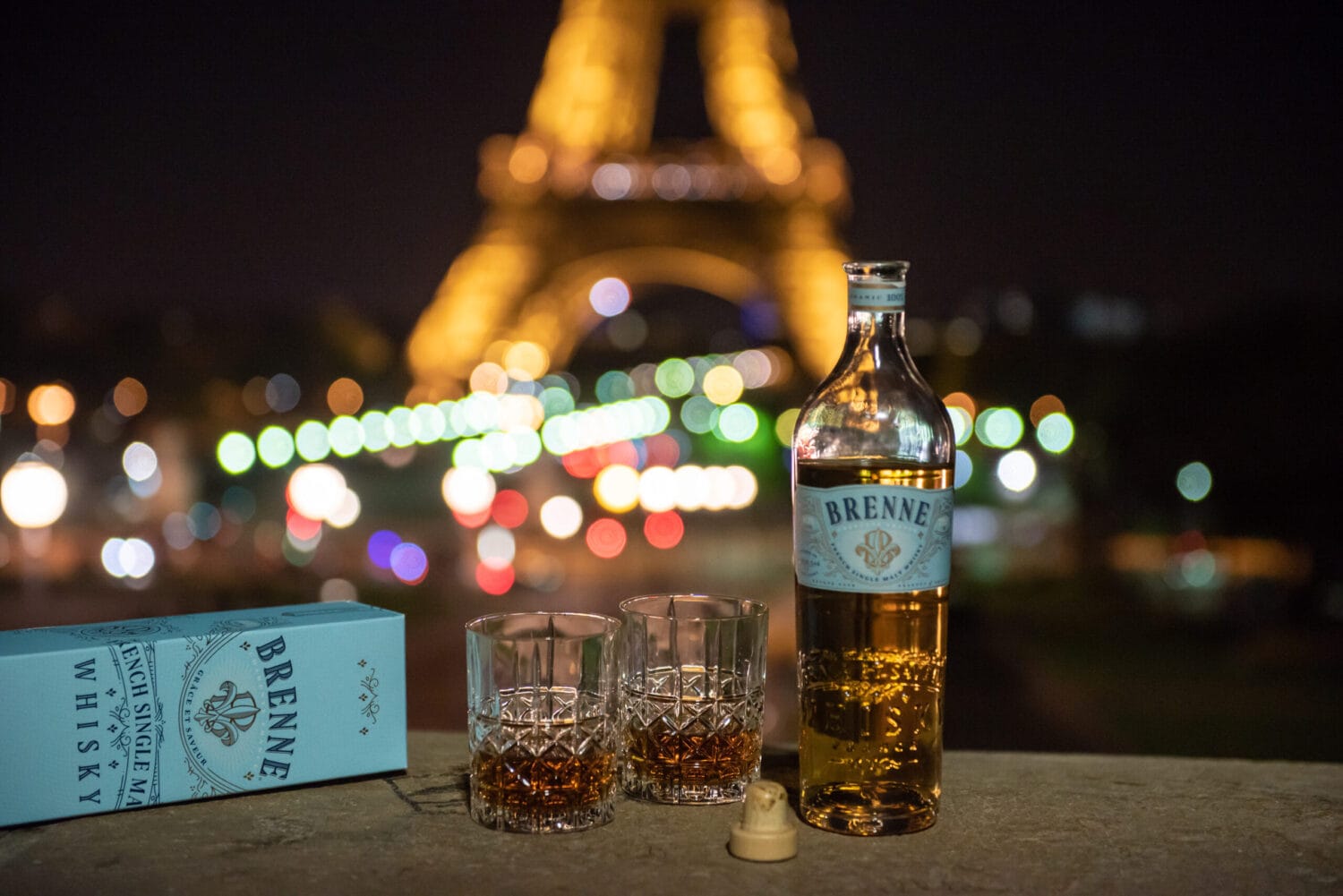
Provenance, craft and quality hold great importance for French spirits, according to Frapin’s Soret. He says this trend can be seen in more traditional categories, such as Cognac, as well as in newer sectors. “Consumers are looking for quality, for craftmanship,” says Soret. “They want to know how the product is made, the terroir. They are looking for luxury but in a handcrafted way.” Brenne Whisky is produced in Cognac and launched its first French single malt whisky in 2012. Brenne founder and president Allison Parc says: “Terroir is at the essence of everything we do, from our organically grown local barley to our proprietary local yeast, water and oak used for maturation. We work hard to produce a whisky that is elegant, smooth, approachable and tastes like the beauty of the south of France.”
The Warenghem Distillery in Brittany began producing whisky in 1983 and launched Amorik, the first French single malt, in 1998. Amorik brand ambassador Paul Klocke says the introduction of the ‘whisky Breton’ geographic classification in 2015 has been beneficial. “The whisky Breton geographic classification has helped to give credibility to the brand and distilleries in the area.” While France accounts for about 90% of Amorik’s sales, Klocke says: “We export to a lot of countries now. The main export markets are Germany, Belgium and Poland. China is also getting big now and Italy, Spain and Portugal are also significant.”
Klocke says Scotch whisky represents greater competition than other local whiskies in international markets. “Scotch is a competitor in export markets because of the taste profile and how traditional it is,” he explains. “If you don’t have consumers who are curious about tasting other whiskies, it’s difficult to enter. In some markets, consumers want whisky to have an age statement or if not, they want it to be Scottish.”
Spirits drinkers are focusing more on product origin, according to Hine’s Delrieu. “Consumers are increasingly looking for products with very strong provenance, but also traceability,” he says. “As a result, we’ve seen growing interest and demand globally for our Cognac with a specific origin: single-estate, single-harvest or single-cask Cognacs.”
To capitalise on the trend, Hine is introducing a gift pack featuring the latest three releases of its Bonneuil single-estate Cognacs, from 2006, 2008 and 2010. “Each Cognac expresses a unique terroir and harvest and being able to compare each vintage next to each other is a special experience, truly demonstrating the whole philosophy of this concept,” says Delrieu. “We’re also seeing growing interest in Cognac cocktails from younger drinkers. They are revisiting classics such as the sidecar, the French 75 and the Sazerac – this trend has really benefited our H by Hine Cognac globally.”
Frapin’s Soret agrees that cocktails are rejuvenating Cognac’s image. “Cocktails give people the opportunity to discover Cognac and then can drive them to another way of consumption, such as digestives and food pairing,” he says.
Out of Cognac’s shadow
As with Cognac, cocktails are broadening brandy’s appeal. “Brandy has long been the preserve of established spirits drinkers – we are seeing a trend away from this as brandy targets a younger demographic by moving into the cocktail sphere,” says Buzon. “St-Rémy Signature was designed specifically for a new generation of brandy drinkers. We are hoping that those who are already interested in quality spirits, but are perhaps not familiar with brandy, will enter the category through St-Rémy Signature. Its versatility in cocktails and stylish packaging were deliberate choices to appeal to this target demographic.”
When consumers think of French brandy, their thoughts automatically turn to Cognac and occasionally to Armagnac, but this ignores the almost 3.7m cases of French brandy exported. Much of this is to the UK, Germany and the US, where it is seen as a relatively cheap-quality alternative to other brandies. However, some brands, including Bardinet and Beehive, have used the perception of France as a source of quality to carve an alternative approach. Beehive has had great success positioning itself as a premium product to consumers already used to drinking brandy, whether from the Philippines or India, where large local brandy markets exist. It is also beginning to garner success in Central and Eastern Europe, including Russia, where drinking brandy is often for special occasions and where French is seen as superior to many other countries of origin.
St-Rémy also has a strong international presence. “We are seeing new opportunities with good performances in key domestic markets such as Canada, the US, Australia and New Zealand, driven by consumers purchasing for at-home consumption,” says Buzon. The company successfully launched St-Rémy Signature in Canada in December 2020 and is confident the brand will also do well in the US and Australia. Rhum is expected to be the standout performer of the categories included in La Martiniquaise-Bardinet’s ‘Craft from France’ spirits. Descamps says the company is confident a revamp for its leading brand Saint James, including new packaging, new lines and fresh marketing, will boost its strength in the category.
Amorik’s Klocke highlights French whisky as the category to watch. “French whisky saw really fast growth last year,” he says. “Before then, it was growing by 5% to 10%, but last year growth was much faster and now there are more than 80 distilleries producing French whisky.” Klocke believes French whisky has great potential to develop worldwide, as Japanese whisky has done. Brenne’s Parc agrees: “France has an incredible value as a country in both the high quality of production in every area of gastronomy and beverage, as well as the vast uniqueness provided by the earth itself. Given this high commitment to quality and the benefits of the areas surrounding each distillery, the opportunities in French whisky are exciting and endless.”
Vital role of the on-trade
Frapin’s Soret thinks the on-trade will play a vital role in the renewed growth of French spirits sales. “We are expecting a good performance – consumers are looking for restaurants, bars and hotels to be opened,” he says. “We think that consumption will increase and that people will celebrate more.”
The on-premise has shown great resilience, says Brenne’s Parc. “It’s been a heartbreaking time to see the devastation in our on-premise industry,” she says. “At the same time, we also saw some great creativity and I’m confident we will see this sector emerge with incredible resilience and energy.”
There are reasons to be optimistic, according to Hine’s Delrieu. “Growth is expected in the coming months,” he says. “The on-trade is always a key channel and we couldn’t be happier to see hotels, restaurants and bars opening again.” The resumption of international travel should also boost sales for Hine and other Cognac brands, particularly in Asia. “The travel-retail channel is a priority market for Hine,” says Delrieu. “And we hope to see our brand grow in this channel in 2022.”