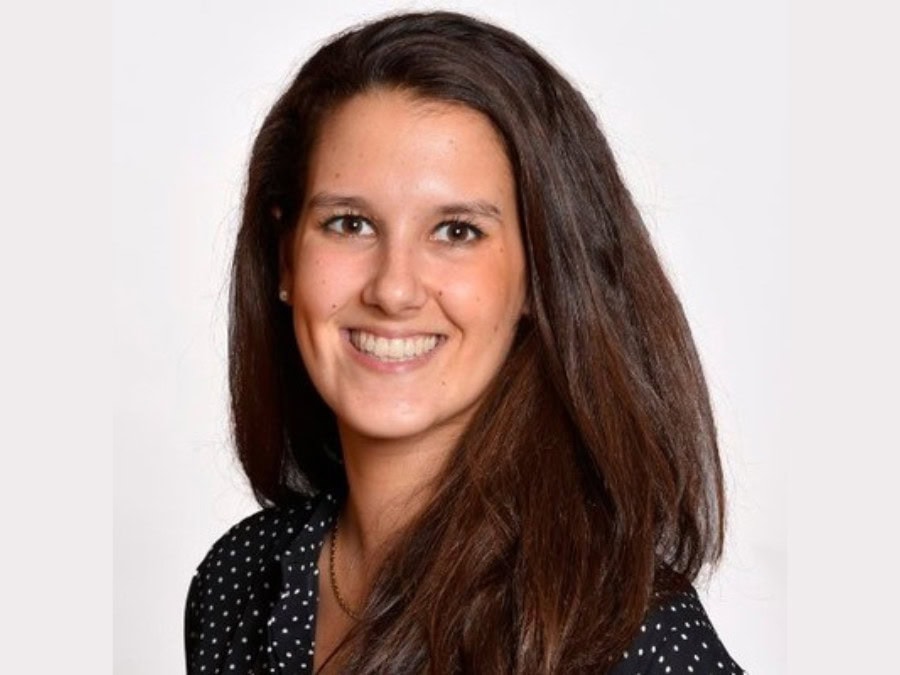
Solène Marchand celebrates her tenth anniversary with Pernod Ricard in May. The head of marketing for the company’s alcohol-free spirits unit assumed her current position in mid-2022, with the division making its biggest statement in January when it launched Beefeater 0.0% in Spain.
Global Drinks Intel: Tell us more about non-alcoholic in Pernod Ricard.
Solène Marchand, head of marketing for non-alcoholics at Pernod Ricard: We created a dedicated team for non-alcoholic spirits a year ago. The team, which is based in Paris, comprises me as head of marketing and a head of business acceleration along with experts in consumer insights, digital and operations. This is a specialised hub to accelerate the category for the group.
GDI: What’s the proportion of attention for – and sales of – no-alcohol spirits for Pernod Ricard?
SM: Overall, non-alcoholic spirits represents around 2%-3% of spirits – that’s pretty much the case for Pernod Ricard. It’s very small, but it’s not the absolute number that’s interesting, it’s the growth that we’re seeing, as well as the future opportunity.
GDI: What’s the landscape for the segment today?
SM: There are three types of non-alcoholic spirits right now. The smallest is what we call functional, which is very US focused. These do things like give you energy or calm you down. This isn’t where we’re looking right now.
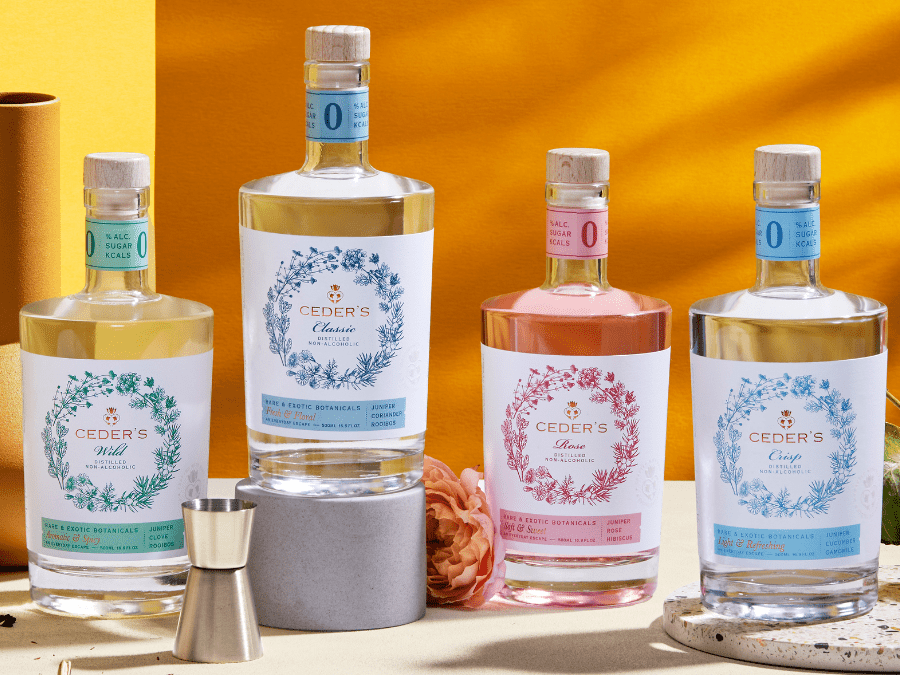
The second is what we call ‘new-to-world’ brands, which didn’t previously exist as an alcoholic version. For Pernod Ricard, that’s Ceder’s, which we bought in 2021. These brands are more premium, more craft, and have a specific type of market and consumer.
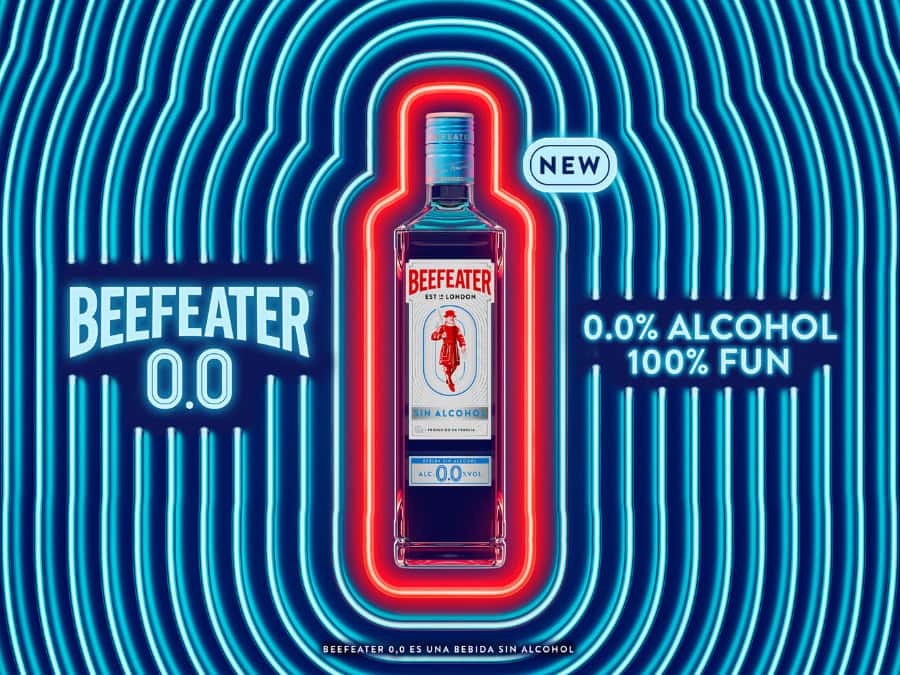
Finally, there’s a large portion of non-alc spirits that is going to be brand extensions. This is something we were lacking in our portfolio until we announced Beefeater 0.0% in January. There’s a lot of interest in having an established brand in 0% to be able to target the brand’s specific consumer when they want to moderate.
We already had Beefeater Light [at 20% ABV, launched in 2021], so this is really interesting for us in terms of having the full moderation portfolio for a brand.
GDI: Why does a brand owner the size of Pernod Ricard need new-to-world?
SM: They have a strong added value. There are markets where consumers don’t really have links to alcoholic brands, such as the Middle East, where you can offer something that’s more in line with consumer interest.
There’s also route-to-market to consider. While 0% brand extensions will work well in the spirits distribution route, outlets that don’t sell alcohol – because they need a specific licence – can’t sell no-alcohol versions of alcohol.
The distribution options for a new-to-world no-alcohol spirits brand are pretty much unlimited. In Canada, for example, Ceder’s is on sale in gifting places, like flower shops. The challenge there, though, is low brand awareness. People aren’t aware of the Ceder’s brand if we don’t tell them about it. So, there are pros and cons in both categories.
For non-alc brand extensions, the idea is to go further than gin. The idea now is to see how we can be multi category. That said, we’re definitely not closed to looking to new-to-world brands – maybe those that don’t mirror existing spirits categories.
GDI: Is Ceder’s your flagship no-alc new-to-world brand?
SM: Definitely.
GDI: How’s the brand performing?
SM: It’s in around 12 markets, with strong growth mainly in Canada, France and the US. In its smaller markets, we’re testing and learning. But, the larger scope of the business opportunity relies on brand extensions.
GDI: Is there a wider group concern that zero-ABV extensions could dilute the consumer perception of the parent brand?
SM: If we were afraid of the impact on a brand of something new, we wouldn’t be doing so much innovation. We saw success for Beefeater Light in Spain, so there’s demand already from consumers. It’s actually that proactive demand that led us to create 0.0% for Beefeater.
We also launched Seagram’s 0.0% [in Spain] last year, so we already have learnings from brand extensions. We saw a lot of Seagram’s consumers drinking 0.0%, but we also saw a lot of incremental consumers. That confirmed the interest for Beefeater 0.0%.
GDI: Which Pernod Ricard brands are off limits to you?
SM: The category started with gin. We can now see other spirits categories emerging, but it’s a test and learn situation.
Making non-alc spirits is really challenging – that’s the hardest thing to communicate. We don’t take a spirit, de-alcoholise it and then sell it – That wouldn’t work because the product wouldn’t be strong enough. There’s a lot of R&D work: There were 154 recipes of Beefeater 0.0% that we worked on before getting where we are today.
No brands are off limits, but we wouldn’t launch unless we get to the right level of quality.
GDI: Even the ultra-premium-positioned brands?
SM: About 60% of the top ten non-alc brands are super-premium-plus – the rest are mainstream. Pricing wise, I don’t think there’s a limit, so long as you’re representing the brand correctly. The spirits category has different price points and so will the no-alcohol spirits category.
GDI: When provenance plays a big part in an established brand’s USP, how does that work with its zero-ABV extension?
SM: What’s key is that the liquid has all the characteristics of – and links back to – the original brand. There’s a need for non-alc expertise, which is why we decided that our production facility for non-alcoholic spirits is in Thuir, in the south of France.
GDI: Is Pernod comfortable with consumers assuming Beefeater 0.0% is produced in London?
SM: It’s a new innovation category. We make sure it’s clear on the label that it’s produced in France.
Obviously, there’s going to be some education to do towards consumers, but we’re proud of our centre of expertise. This will be something that’s going to be promoted rather than cause concern for the group.
GDI: How will you counter the assumption that a non-alc version of a full-strength brand is a de-alcoholised version of the latter?
SM: To make the non-alc spirits category clear for consumers, what’s really important is to get the product in hand and tasted. We’re mirroring the brands, but it’s a different category.
In terms of explaining the production process, it is a challenge, because it’s not a sexy story to share. It’s going to be the work of our teams and our ambassadors to share the amount of time and energy it takes to make these.
GDI: Who’s your competition?
SM: There’s a good mix between new-to-world and brand extensions. The key global players today are Lyre’s, Seedlip and Diageo’s brand extensions. But, it’s evolving super fast and the dynamic is getting stronger with every new launch.
Just one brand launch can change everything – that’s what we’re planning to do with Beefeater 0.0%.
GDI: Where will the category be five years from now?
SM: Everyone’s doing their forecasts! The numbers are amazing and the forecasts are very positive.
Putting the numbers aside, we say it goes in the order of history – We’ve seen the health & wellness trend grow globally in all types of categories over the years. We’ve seen alternatives in terms of moderation happen in dairy with almond milk, for example, and in tobacco with e-cigarettes. That’s why I believe in this category.
We have a role to play by making good products, otherwise it won’t work. People didn’t stop drinking alcohol, it’s just that when they don’t drink alcohol, they want to up their game – that’s where we come in.
GDI: Are you taken seriously enough by a multinational spirits brand owner?
SM: I wouldn’t be here if they didn’t. There’s a big strategic focus now on 0% and it’s accelerating fast. The opportunity is clear and now the group is going to focus on developing the portfolio. We’re only looking up!