

Ask anybody about Global Travel Retail and more than likely the first thing they’ll think about is the airport.
Of course, airports are important to GTR from both a marketing and sales perspective, but they’re not the channel’s only strand. GTR comprises a number of sub-channels where consumers either need to be travelling – and able to show proof of travel to access shopping areas – or are working or living in places that enjoy special tax and duty-free privileges. Some of these strands may not spring to mind quite as quickly as airports, but shouldn’t be ignored when considering GTR opportunities and strategies.
Travel-related shopping environments comprise airports, airlines, cruise lines, ferries, port stores, downtown duty-free stores and border stores. Also relevant are tax- & duty-free, which includes embassies (the diplomatic channel), military/navy bases and special zones with tax- and duty-free status (in some of these places, proof of travel is also required).
Airports are important for many different reasons and should form the bedrock of any wine and spirits brand owner’s strategy. International airports offer a fantastic shop window to the world for brands and access to a wide range of nationalities and shopper profiles. They are, however, expensive places for brands to do business. Regional airports may have a lower profile than their international siblings, but they can help support domestic market plans and enable brands to be seen and purchased by a high number of passengers.
Airline opportunities for wine and spirits brands consist of in-flight consumption and catalogue sales. In-flight consumption occasions vary by airline, with some charging for all products consumed on-board and others ‘pouring’ products free of charge, (the quality of which varies depending on the class of travel). Some airlines have bars on their planes, elevating the experience to a higher level and allowing the crew to tell passengers about brands and drinks they are serving.
All these occasions come at a cost for brand owners but offer a wonderful trial opportunity in an environment where consumers spend more time getting to know a brand. There is also the full-bottle sales opportunity on some airlines, either through traditional on-board catalogues or more commonly now via e-commerce, so that products are delivered to your seat on the flight or, in some cases, to your home after the flight.
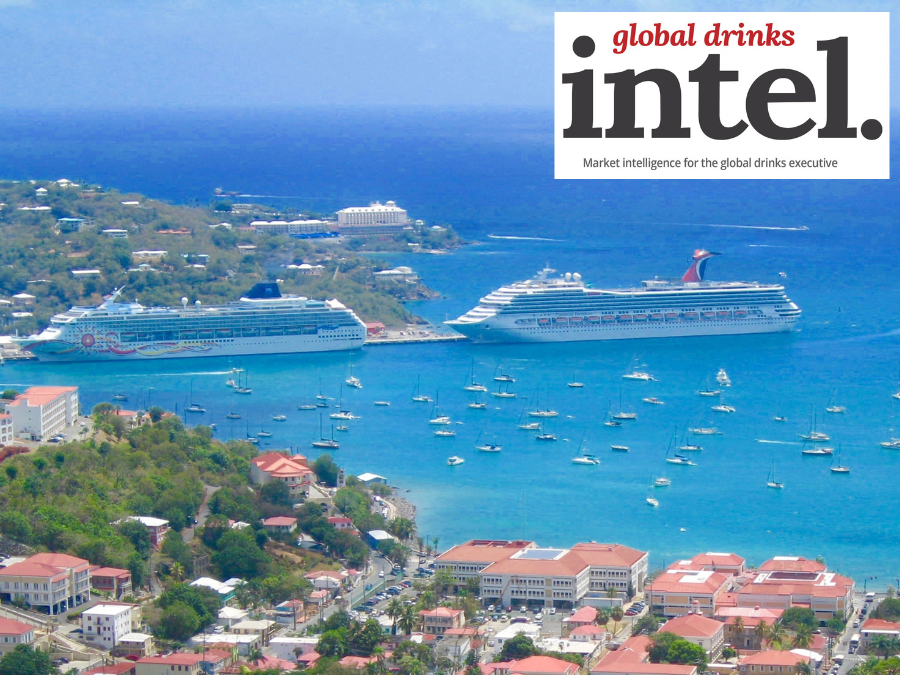
Sea travel also offers a number of GTR opportunities. Cruise liners are like floating hotels containing a captive audience of consumers who are keen to enjoy their favourite brands as well as discover new ones. This can be in the onboard shops or bars, restaurants and minibars. When coming off these boats, passengers may also find port stores where they can purchase wine and spirits brands.
For those who live in the UK and France, the cross-channel ferries that sail between England and France come to mind. These ferries now offer a duty-free purchase opportunity, as they did prior to the EU’s abolition of duty-free, so potentially represent an attractive sales opportunity. Ferry opportunities exist all around the world, though, with perhaps the biggest in the Nordic region on the ferries that travel between Denmark, Norway, Sweden and Finland.
Travellers by rail and road between countries may have the opportunity to buy wine and spirits in border stores at duty-free or advantageous duty-paid prices, depending on the country they’re travelling to and from. Border stores exist all over the world.
If you think border stores are unsophisticated and not places to build a premium image for brands, think again. Many of these outlets look like they could be in an airport, with plentiful retail space, personalised brand displays and a premium shopping experience.
Some cities have downtown duty-free stores. These are particularly found in some Asia-Pacific markets and are like big department stores, selling a wide range of items. In these outlets, shoppers need to show proof of travel and typically will pick up their purchase at their departing airport.
Diplomats around the world enjoy duty-free privileges. As well as purchasing items for personal use, embassies purchase wine and spirits for entertaining guests at the special events they host. Embassies tend to support brands from their countries; it makes sense, for example, for Mexican embassies to offer their guests a choice of Tequila.
There are a number of places around the world with tax and/or duty-free status. Did you know there’s a duty-free shop in the Vatican City in Rome?
One of the most talked-about places with preferential tax policies currently is Hainan Island in the South China Sea. Chinese travellers departing the island avoid paying the hefty import duties on imported goods and have an allowance of 1.5 litres of alcohol. Livigno in northern Italy is another example of a tax-free area; travellers have a 1-litre spirits allowance.
Some brand owners also include the military channel in their GTR business. Military bases have exchanges and commissaries where active and retired military personnel can purchase items tax-free. In addition, there may also be on-premise opportunities on bases.
COVID-19 has no doubt highlighted the importance to anyone managing a GTR business of not relying solely on airports. There are many other opportunities to build brands and sales, as well as to spread risk brought about by disruption. Brand owners should consider the role the various GTR strands could play for their brands.
This article was originally published in July/August’s issue of Global Drinks Intel magazine. For more details, including how to subscribe, click here.