

Across many spirits categories, flavoured variants are growing in popularity as consumers become more curious and adventurous in their choices. Joe Bates investigates.
Flavour innovation is becoming central to new product development in spirits. The home-cocktail boom seen during Covid lockdowns has only accelerated the trend and while flavours are nothing new to either vodka or gin – the base of both being fairly neutral – flavoured whiskies are starting to grow in appeal too. In short, flavoured spirits is ‘growing up’ as a drinks segment, becoming more diverse and responsive to consumer trends.
UK online drinks retailer Master of Malt has certainly noticed a growing interest in flavoured whiskies. “The likes of Jameson Orange, Haig Club Mediterranean Orange and ‘Bourbon Bourbon’ (a Bourbon whiskey flavoured with Bourbon biscuits) have hit the market, and demand is incredibly strong,” the Anheuser-Busch InBev-owned business notes. “As these are relatively new releases, our data can only look at the short term, but when Bourbon Bourbon can barely restock quickly enough after multiple complete sell-outs, that speaks volumes. Though possibly divisive, there’s no doubt that there’s a demand for flavoured whisky.”

In the US, the flavoured whiskey sub-category is already well established, with peanut butter-flavoured whiskies, led by San Diego-based Skrewball Peanut Butter Whiskey, launched in 2018, gaining momentum. In fact, in 2020, according to IWSR Drinks Market Analysis, the leading five peanut butter-flavoured whiskey brands in the US increased their combined sales by over 250%.
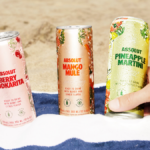
The increasingly important role of flavour in the spirits category was underlined earlier this year with Absolut’s revamp of its flavour range, described as the “biggest shake-up” of the vodka brand since its launch in 1979. Alongside a bottle redesign and more product information added to the front, several expressions in the Absolut flavour range have been reformulated after recent changes in consumer drinking habits.
“In our journey to find the best taste for consumers, our sensory experts and flavourists optimised the ABV levels for each flavour profile so that the range has a style and taste that’s even more authentic,” explains Absolut global head of product portfolio Elin Furelid.
“The fresh top notes of the citrus range are underpinned by the traditional ABV level of 40%, while the sweet and spicy flavours stand out better with a lower level of 38%. Over the past year, we’ve seen trends such as mixing flavoured vodka with soda water influence what people want from their spirits,” she adds. “To meet this need, we first launched our Lime and Grapefruit flavours which complement less-forgiving mixers due to the intensity of the tastes and true to fruit sensory profiles, then continued this flavour development across our whole range. ABV levels have changed for Absolut Mango, Vanilla, Raspberry, Pears, Peach, Mango and Peppa and as before, no sugar has been added.”

A consensus is building in the drinks industry that the pandemic has accelerated the consumer trend towards trying new flavours. “The pandemic has certainly made consumers more adventurous with flavour, particularly as many of them have been experimenting at home, both with cooking and drinking,” says cocktail expert Pritesh Mody, the founder of UK-based premium bottled cocktail producer World of Zing.
“As such, it’s no longer acceptable just to have a standard Mojito or Margarita on the menu – there needs to be an added twist to take the drink in a direction that consumers won’t already be familiar with. For example, our Persian Lime & Nori Margarita and Yuzu Whiskey Sour saw huge like-for-like sales increases in the on-trade as we started to exit the pandemic.”
Raissa de Haas, the co-founder of premium mixer brand Double Dutch, agrees that Covid has changed the consumer’s willingness to try new things. “People weren’t able to travel or experience different cultures and different flavours; they were looking at that experimentation at home. A lot of the exotic flavours have become more popular. It started from food, but most food trends are translating into drinks. Spicy, earthy flavour profiles are going to become more popular along with exotic flavours like lime and yuzu.”
Quintessential Brands’ customer marketing director for the UK & EMEA, Russell Kirkham, also highlights the growing importance of tropical flavours, citing recent research that 75% of UK shoppers would purchase a gin with tropical fruits. As a result, the company has introduced Greenall’s Tropical Fruits, which boasts essences of orange, pineapple, mango and passionfruit, in the UK on- and off-premise this Summer. Kirkham says the new launch “offers consumers a fresh and fruity creation, perfect for the summer months”.
Bold, spicy flavours are also becoming popular. In September last year, Pernod Ricard unveiled a new habanero-infused Bourbon, Horse With No Name, created by Monkey 47 founder Alexander Stein. The Bourbon is aged for four years in toasted American oak barrels, then blended with habanero distillate produced from specially-cultivated Red Savina habanero chillis grown in Germany’s Black Forest.
As the role of flavour develops and grows in spirits, some craft distillers believe localisation, regionality and provenance will become key factors. Paul Scanlon, the co-founder of alcohol-free spirit producer Mahala Botanical, argues this trend is particularly apparent in the growing no- & low-alcohol sector. “No & low is expanding rapidly, and I think we will start to see more demand and production of drinks with a real sense of place and with flavour profiles that are unique, not just substitutes for alcoholic alternatives.
“Provenance is becoming increasingly important to consumers. Mahala Botanical is handcrafted and we own the ‘farm-to-glass’ process. All of our ingredients are ethically sourced and the product is vegan friendly, while also being free from sugar, gluten, colourants and artificial flavours.”
The on-premise remains an important source of inspiration for new flavours. “When it comes to creating new products and flavours to add to our liqueur range, we always turn straight to our bartenders for advice,” says Emilie Giffard, sales & brand development manager for French liqueur producer Giffard. “We work closely with bartenders all over the world; we want to know what they are missing behind the bar and how they can challenge their creativity when it comes to mixology.
“We chose to launch a mango liqueur after bartenders told us … the only option so far behind the bar [is] a juice. When juice is used in mixology, the drink loses its transparency and smooth texture. Based on this insight, the idea for Giffard Mango Liqueur was to create a clear and delicate liqueur that is able to maintain both the transparency and the complexity of flavour notes.”
The health & wellness movement continues to impact flavour trends, as Double Dutch’s De Haas explains. “People definitely want less sugar, but they don’t necessarily want to give up on the sweetness of their flavours. A lot of the slightly sweeter fruits, herbs and ingredients are being used to make up that sugar. We try to use ingredients that are already sweet by themselves, such as watermelon, strawberry, cherry, apple and pomegranate. They give sweetness to drinks without having to add sugar.”
This article was initially published in June’s issue of Global Drinks Intel magazine. For details on how to subscribe, click here.