
This article has been available to Global Drinks Intel subscribers since May. For details on how to join them, please click here.
Just over a year since reopening to tourists, Thailand’s drinks industry is slowly recovering. But, what’s next for a country still exploring its relationship with alcohol?
Thailand is known as a land of contrasts. From towering mountains and lush forests to party islands and the bustling metropolis of Bangkok, it’s a country that’s multifaceted and rich with life. But more than just environmental, the social contrasts are stark too.
While technically secular, the government recognises five religions – Buddhism, Islam, Hinduism, Sikhism and Christianity – with the former promoted. World Bank figures show 13% live below the US$5.50-per-day poverty line. An ageing population and soaring household debt mean a once-blooming middle class now seems stagnant.
While Bangkok is home to some of Asia’s wealthiest neighbourhoods, in 2021, average household wealth slipped by almost 4%, according to the latest available data from Credit Suisse. In short, there’s a sense that the pre-pandemic potential for the middle classes in Thailand to keep growing has stalled somewhat.
The environment for beverage alcohol
There’s a huge contrast in social attitudes to alcohol across Thailand – and it’s vital to consider any growth opportunities within this context. Of course, Thailand’s reputation for wild Full Moon beach parties and the hedonistic districts of Bangkok have truth to them but, in many ways, the country is socially conservative. Tourists and locals often have different views on what is ‘acceptable’ in terms of how – and how much – alcohol is consumed.
There’s also a gender split to consider. World Bank figures from 2018 show that Thai women aged over 15 consumed on average 3.5 litres of pure alcohol a year, compared with 13.4 litres for men. While Thailand is rapidly urbanising, alcohol use skews much more towards cities. That said, Millennial and Gen Z consumers are more likely to drink regardless of location or gender. It’s also important to note that the legal drinking age is 20.
Regardless of demographic, what’s being drunk? Research from IWSR Drinks Market Analysis suggests a flattening of all categories from 2020 to 2021, with the exception of still wine. Its growth in the year was outpaced only by cider, so still wine is finding favour in the country.
Siam Winery is the biggest domestic producer, founded in 1986 by Chalerm Yoovidhya, heir to the Red Bull energy drink fortune. Yoovidhya also tapped into the low-alcohol trend, targeting women with the launch of Spy Wine Cooler 30 years ago. Today, the brand claims to hold 70% share of the country’s RTD market.
Despite the challenging last few years in terms of pandemic-related restrictions, Siam is optimistic about the quality of its wine production. Even with unexpected rains, “the prolonged cold spell benefited the Merlot, Colombard and Chenin blanc grapes, as it allowed for a slower development of flavour while preserving their fresh fruit characters,” says assistant MD Varit Yoovidhya.
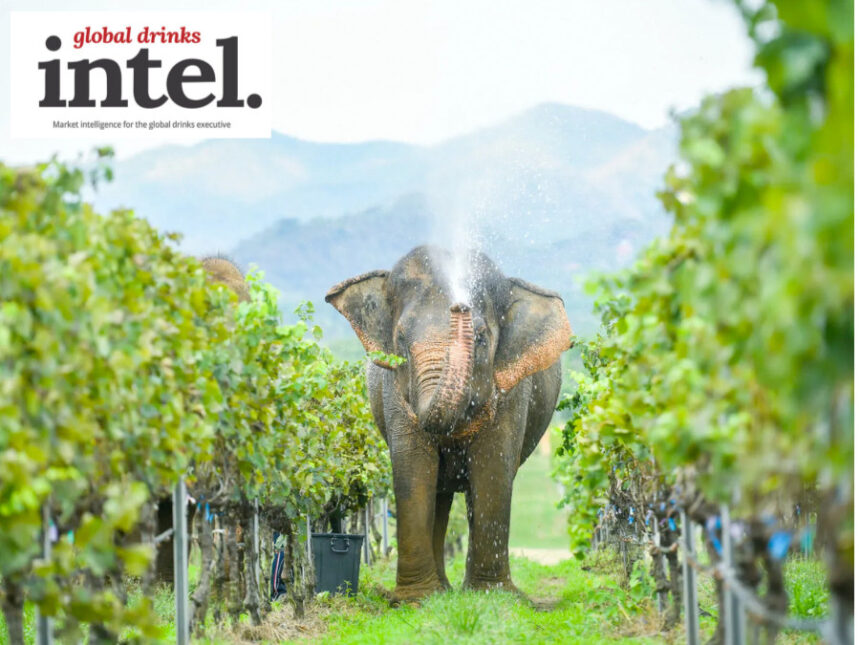
Well away from the traditional wine-growing regions, the case for ‘new-latitude’ wines is being made more loudly.
Beyond wine
It’s easy to forget just how much of the Thai beverage alcohol market is dominated by domestic spirits. Over 90% by volume is accounted for by categories outside of whisky, rum, brandy, vodka, soju, gin and liqueurs. But interest is growing.
Google Trends is always worth considering when tracking the emerging zeitgeist. While there was a lull in search volumes for all spirits categories throughout 2020 and 2021, every category has seen an upswing since. Perhaps unexpectedly, gin is leading the charge, with search volumes, already the largest by spirits sector, soaring almost 25% from early 2021 to now.
For every category, the tourist hotspots of Krabi, Chiang Mai and Greater Bangkok all rank highest when it comes to search volumes by geography. It’s a trend in line with broader consumption patterns, and also mirrors the location of some of Thailand’s most dynamic bars.
As for ‘bars’ as a search term, it’s the only major query that hasn’t meaningfully rebounded since 2020 across the majority of the country. While it seems the on-premise could still do with some marketing support in Thailand, the bar teams themselves continue unperturbed. ‘Asia’s 50 Best Bars 2022’ list saw a slew of Thai bars pick up accolades. In Bangkok alone, BKK Social Club ranked tenth [especially impressive for a new entry], Tropic City came in 17th, Vesper hit 19th, Asia Today made 43rd and The Bamboo Bar nabbed 46th spot.
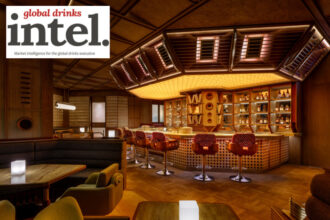
BKK Social Club is situated inside the Four Seasons in Bangkok. Kimberly Grant, global head of restaurants & bars at Four Seasons Hotels & Resorts, describes the win as “exceptional”.
“These accomplishments validate our mission to continue to deliver category-defining concepts that are bold, exciting and relevant,” she says. And with so many Bangkok bars on the list, it feels like the collective push for cocktail excellence is redefining drinking in the city.
Changing regulatory landscape
While there are many challenges to alcohol in Thailand right now, there are more signs that the general trading environment is shifting. Ahead of the reopening to international tourists on 1 July 2022, the Government decided to withdraw a long-standing ban on when alcohol can be sold. It’s the end of a 50-year restriction that only permitted sales from 11:00 to 14:00 and from 17:00 to midnight – a rule enforced to stop civil servants from indulging in afternoon drinks. With over 7m tourists flocking to the country in the second half of last year, the move was deemed a useful measure to boost perceptions.
It’s a step change from the alcohol ban in force during Covid-19 lockdowns. At one point in 2020, alcohol sales were forbidden for over 16m people across the country, Bloomberg calculated. The ban came as states attempted to curtail social gatherings at the height of the pandemic.
Some additional draft liquor regulations are also under consideration. Intended to make things easier for craft distillers to set up operations, the proposals – which passed at first reading – could simplify licensing, excise tax and duty stamping.
Yet many feel the Move Forward Party’s so-called “progressive” bill is anything but. Some claim it adds complexity, others say the move will not achieve its aims to level the playing field for smaller producers – and the fees they would pay are unfair. Nonarit Bisonyabut, a senior researcher at the Thailand Development Research Institute, even went so far as to tell the Bangkok Post the draft regulation was “destined to fail”.
ThaiBev’s domination
While a new wave of wine, beer and spirits producers is undoubtedly cropping up across the country, Thailand’s liquor industry is still dominated by large-scale producers. Diageo is active in the market through a tie-up with Möet Hennessy, while Suntory and PepsiCo have a long-standing joint venture in the country.
The largest domestic producer by far is ThaiBev. In 2022, its sales soared over 13%, with profits climbing 26.2%. Beer accounted for 45% of group sales, with spirits at 43%. In his accompanying statement, however, chairman Charoen Sirivadhanabhakdi pointed to a diversification strategy. “We pursue product innovation and introduce a wider range of health & wellness products in our non-alcoholic beverage business, which are well received by our target consumers,” Sirivadhanabhakdi said.
Has Thailand made up its mind about its relationship with alcohol? Not quite. But there’s plenty of space for disruptor brands to seek out opportunities.
This article has been available to Global Drinks Intel subscribers since May. For details on how to join them, please click here.