

This article was initially published in the November issue of Global Drinks Intel magazine. For details on how to subscribe, click here.
After almost 30 years in the beverage industry — including spells at Diageo, PepsiCo, Grupo Osborne and Edrington — Julian Fernandez has picked up a trick or two. Speaking to Global Drinks Intel, the spirits marketing & innovation director reveals why family-owned Zamora Co is content to play the long game and take consumers along with them.

Global Drinks Intel: Zamora Co’s portfolio appears to be dominated by the Licor 43 brand…
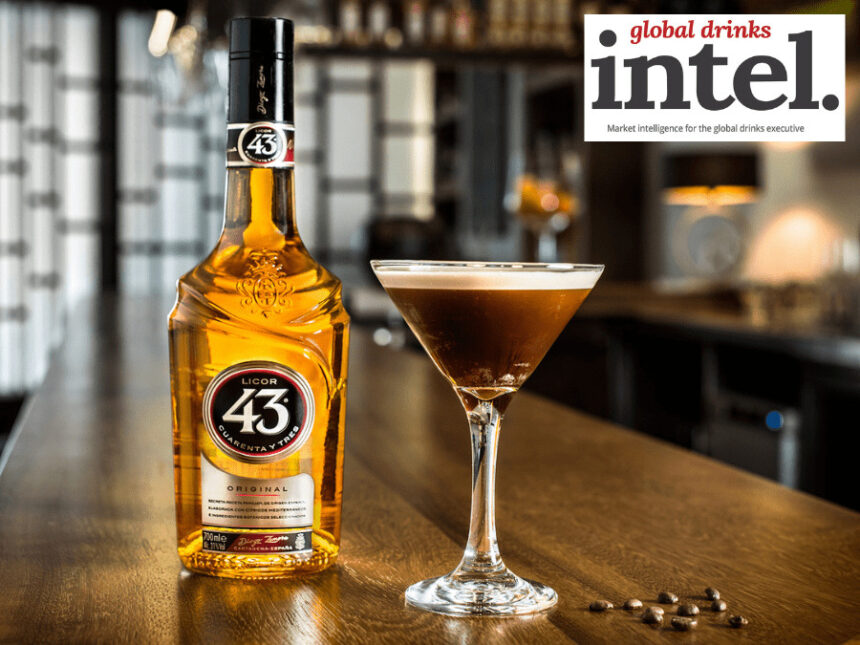
Julian Fernandez, Zamora Co’s global marketing & innovation director for spirits: Licor 43 accounts for around 40% of group turnover. That’s likely to be higher this year [2022] because the brand’s in healthy growth. Our other major spirits brands are Martin Miller’s, Villa Massa and Yellow Rose.
GDI: Is that dominance by one brand a concern?
JF: This was a worry for the company five years ago, although we were also worried that we were over-concentrated in Spain — around nine years ago, two-thirds of our business was in Spain only. Today, the market accounts for 45% to 50%.
The company’s priorities have been to grow faster internationally and to diversify the portfolio. In 2018, we incorporated Martin Miller’s, Yellow Rose and Lolea Sangria into the group. With Licor 43 specifically, in 2016, the brand had two markets with sales above 100,000 cases. Today, it’s six markets.
Zamora’s diversification approach has really been a brand and market combination. Today, we’re in a healthier position, not only geographically and portfolio-wise, but also with Licor 43 spread across more markets.
GDI: Zamora has been quite focused on the US in recent years. Why?
JF: We always needed to grow Licor 43 outside of its strongholds in Europe, mainly Germany and the Netherlands. The biggest potential was in the Americas. While we had a good business in the region, seven years ago it was less than a third of what it is today. In Mexico and the US, we saw the potential for the Carajillo serve [espresso shot with liqueur], but we needed a stronger presence to unlock that potential. The best way to do that was with our own company, not only for Licor 43, but for the rest of the portfolio.
We designed a growth strategy based on the serve and really focused on below-the-line in markets such as California, Florida, Texas and Las Vegas. The results have been very good. The Carajillo has healthy levels of acceptance, helped by the fact that it was already known by the Hispanic population.
Even during the pandemic, our growth in the US over the last four years has been around 55%. We’re in good shape in the US now.
GDI: Why doesn’t Zamora promote the provenance of Licor 43, particularly in markets with a Hispanic audience?
JF: We’re proud of the brand’s Spanish origin, but we aren’t focused on communicating Spanish stereotypes to represent our brand. It’s true that the US states we’re focusing on have big Hispanic populations, but those states are also the richest in the country — California’s economy is bigger than Spain’s — with the highest levels of spirits consumption. We’re looking at markets with the highest potential in terms of population, GDP and spirits consumption.
GDI: What’s the umbrella marketing message for Licor 43 in export markets?
JF: It’s the Carajillo, a distinctive serve with a ritual and a concrete consumption occasion (after meals), that makes the brand appealing. On the education side, we work not only with bartenders, but also with baristas — we’ve engaged with coffee experts not only globally, but also locally. It’s very simple and it’s long term. We can’t push a strong campaign with a lot of money like Diageo would do, we don’t have the resources. It’s also not our brand-building culture. It takes longer but if it’s done consistently and correctly, it pays off.
I worked like this when I was with [Edrington’s] The Macallan — right location, right occasion, right consumers, then take them along, stage by stage. This isn’t a short-term approach.
GDI: How did Licor 43 navigate the pandemic and associated lockdowns?
JF: That was a big challenge but we identified a few things. First, consumers began to be open to less well-known flavours and combinations. This is exactly what Licor 43 offers. Consumers also turned to indulgence and pleasure — you could see that in food, but also in spirits. As a motivation among consumers, indulgence increased during the pandemic. That’s the Licor 43 proposition, too.
GDI: Licor 43 also has horchata and chocolate extensions. Any brand dilution concerns?
JF: That’s a question I get at least twice a year in board meetings! The good thing is we’re developing the mother brand faster than our innovations. It’s important that the original Licor 43 is what consumers know about us. But, the innovations allow us to target a different consumer and reinforce our indulgence proposition.
We’re also active with Licor 43 in RTDs, which appeals to Millennial, Gen X and Gen Z consumers. At least two-thirds of our RTD consumers have never tried Licor 43 before. To have younger consumers try the brand through RTDs is great for the brand’s future.
GDI: Has the current economic climate affected the trends towards indulgence and trying something new?
JF: The trade-down risk is becoming a reality in many categories. The risk is going to be higher for brands in the middle — I would say, standard — segment. In our case, though, we’re not seeing it. In Mexico and Brazil, for example, we’re priced around 40% above Johnnie Walker Red — we’re really premium. For that level of price segment, the risk is lower. Also, the flavour profile for Licor 43 is difficult to replicate.
What we’re seeing is when consumers appreciate our brand, they don’t replace it. I’m not going to say the risk in the future is zero — the grey clouds are in the sky and the risk is significant.
GDI: Do you look to raise prices to strengthen your premium positioning, or lower them to capitalise on the appeal of value?
JF: Looking down isn’t part of our strategy. Licor 43 is quite expensive to make. We’re not tempted to make short-term decisions or to reduce the price. We can take a long-term view, that’s one of the advantages of being a family-owned company. As all spirits operators are doing, we’re analysing the opportunity to move the price up on a market-by-market basis, but not down.
GDI: Turning to the rest of the portfolio, why did a Spanish company, located in a big gin market, wait until as recently as 2018 to get into gin with Martin Miller’s?
JF: Zamora did have a link with Martin Miller’s before: In around 2006, we entered into a partnership with the brand in Spain. We were latecomers, I would say, but today it’s the No.1 super-premium gin in Spain and we’re growing share. We then had the opportunity to strengthen the relationship and increase our stake. The challenge now is to grow internationally as well as in Spain.
GDI: Are you able to sit back and count the money or do you have to work hard to draw success out of Martin Miller’s?
JF: Gin’s a good category to be working in, but I wouldn’t say it’s good for newcomers. Also, those markets that have been in growth are at a maturity stage and beginning to decline. Spain isn’t growing anymore and that’s been the case for two or three years — it’s not hitting 2019 figures.
But, gin’s growing in other markets. So, now we need to manage Martin Miller’s in two worlds — post-maturity markets and those in growth, where big players are operating. We have to be very clever and make sure we place the right bets where the company has the ability to develop the brand effectively in the coming years.
GDI; What’s the geographical plan of attack for Zamora Co?
JF: We have three speeds. First, we want to accelerate our growth in high-potential markets. The US is a clear priority, along with Mexico and Brazil, even Spain, where Martin Miller’s is a good example. The gin category isn’t in growth [there], but the brand is very healthy and is growing market share.
Secondly, we want to consolidate our strongholds, where there’s still potential to achieve moderate growth. This is more in Europe and Spain.
Finally, we’ll look at markets for the future, which could be in Asia, Australia and emerging Europe. So, we’re working at three different levels of speed, intensity, focus and resources.
GDI: Why does Zamora Co choose to own a brand in a spirits category — flavoured whisky — that continues to grow strongly called, of all things, Thunder Bitch?
JF: It’s a typical entrepreneur story. The brand was created about six years ago by three entrepreneurs who saw an opportunity in a growing category, so created a brand and developed it. For us, strategically, Thunder Bitch is very interesting in the high-energy on-premise channel, particularly in Spain. In that channel, you need something provocative and controversial.
Besides, the Spanish consumer finds Jägermeister difficult to pronounce.
GDI: Zamora Co seems the right size to appeal to the larger multinational spirits groups…
JF: At the end of the day, Zamora’s a family company that’s in the third and fourth generations. The approach is more long-term, more independent. Six years ago, we had zero debt. We have some now, but it’s very little. I don’t see any financial pressures on the company to sell.
Rumours are always there but there’s nothing on the agenda.
This article was initially published in the November issue of Global Drinks Intel magazine. For details on how to subscribe, click here.