
- No & low opportunity – The rapid growth in no- & low-alcohol wine is driving demand for specialised closures designed to minimise cork taint risks
- Anti-counterfeiting shield – Guala Closures’ Magnex cap uses magnetic pulse-forming technology to create geometries and textures that are difficult to replicate
- ESG push – Tightening environmental laws and retailer demands are accelerating sustainability efforts across the industry
- Precision oxygen control – Diam Bouchage’s Moove service lets winemakers test different permeability rates to fine-tune oxygen exposure and wine ageing
In the wine category currently, low- & no-alcohol continues to be one of the few bright spots for the wider industry, proving popular mostly among younger legal drinking age consumers. Between 2019 and 2024, according to IWSR data, sales of no-alcohol wine across eight key markets grew at a CAGR of 4%, with Millennials and Gen Z accounting for six in ten buyers.
Key English-speaking markets, such as the US (+23%), Canada (+27%), Australia (+18%) and the UK (+15%), are driving demand, alerting leading closure suppliers to a growing commercial opportunity.
Developing effective closures for no/low wines, however, is not so easy.

Technical challenges of no/low
“These beverages bring technical challenges, as preservation processes are not yet standardised and may involve pasteurisation, preservatives or different filling conditions,” says high-end Italian closures producer Tapì Group’s marketing, digital & CRM specialist, Luca Stefan. “Understanding the product, its shelf life and its production process are, therefore, essential to developing the right closure solution.”
Nonetheless, in November last year, Vinventions, the world’s second-largest wine closure supplier, entered no/low with Nomacorc Nolow (above), billed as the first closure specifically designed for the category.
Made from bio-based raw materials, the Nomacorc Nolow closure is guaranteed TCA-free, according to the Belgium-based producer, while offering the lowest level of oxygen permeability in the cylindrical closure market in the first year of bottling.
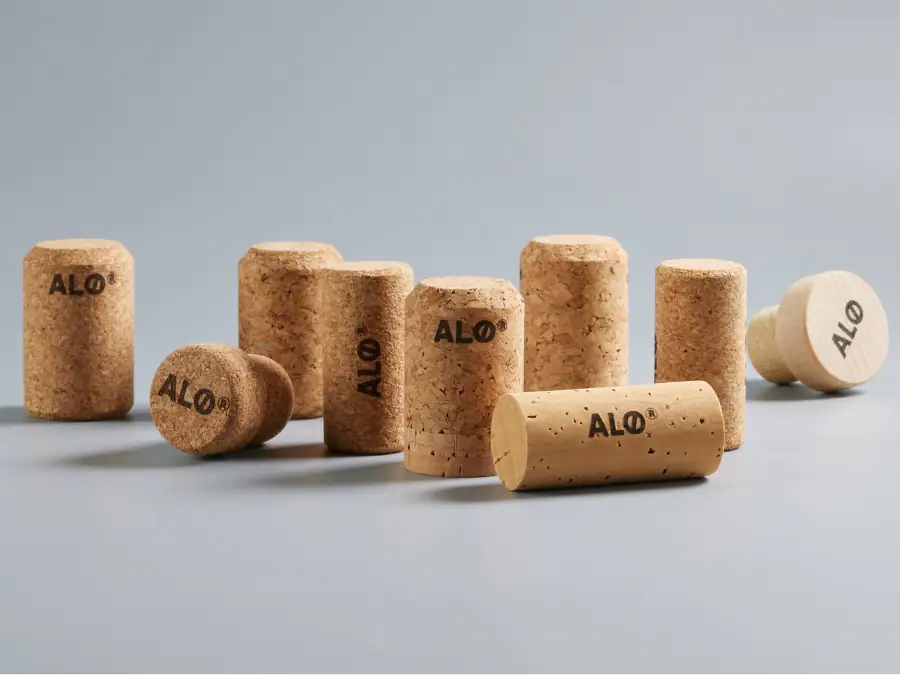
Other major closure players are now making their presence felt in the category. In July, leading natural cork producer Amorim unveiled its own solution – the ALØ range (below), which is available for no/low still and sparkling wines and spirits.
The family-owned Portuguese firm said that the new cork-based range had been specifically designed to address the fast-growing category’s key technical challenges, namely “microbiological control, sensorial neutrality and aroma preservation”.
Guala tackles counterfeiting
Counterfeit wines and spirits are a growing scourge for the global beverage alcohol business, eroding brand equity, destroying consumer trust, posing major health risks and funding criminal activity.
The World Health Organization believes 21% of alcohol consumed worldwide is not subject to government oversight, having been illegally imported, counterfeited or otherwise left untraceable. Guala Closures has long sought practical solutions to the problem, incorporating tiny NFC microchip tags into closures, for example, to act both as a consumer authentication tool via smartphones and a supply chain tracker to prevent unwanted grey market distribution.
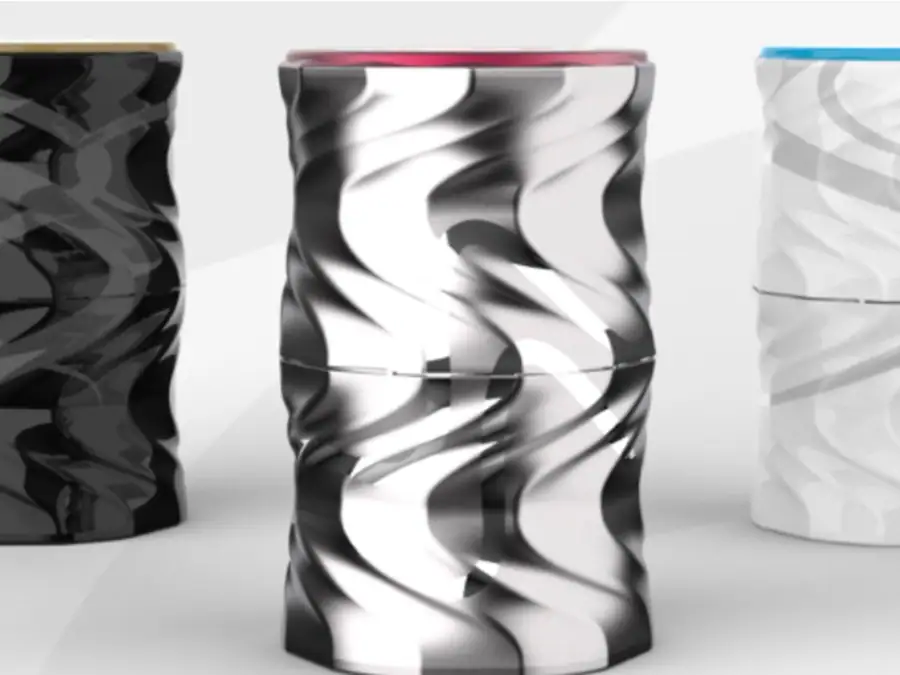
The company unveiled its newest innovation in May: Magnex (below), a “closure for premium spirits manufactured through EMF [electromagnetic forming] technology”. The high-velocity process shapes aluminium using magnetic pulses to create complex 3D textures, deep geometries and micro-engravings that are impossible to replicate by counterfeiters using standard tooling.
By embedding protection directly into the design of Magnex, Guala aims to close the gap on illicit trade, where traditional holographic seals and basic tamper-evident systems are increasingly mimicked on the open market. The range is manufactured at the company’s Gartcosh facility in Scotland, currently the industry’s only site equipped with industrial EMF lines, and ideally located for the scotch whisky industry, a sector relentlessly targeted by counterfeiters.
The closure pairs its custom metal shell with internal anti-refilling valves and tamper-evident mechanisms, offering further protective measures. Beyond brand equity protection, Magnex offers sustainability benefits, such as infinitely recyclable aluminium alongside internal components made from recycled plastics.
Why sustainability matters
Tightening global regulations, particularly the EU’s Packaging and Packaging Waste Regulation (PPWR, a drive by wineries and distilleries to crack down on indirect Scope 3 emissions), and the increasingly strict ESG regulations of major alcohol retailers (such as Canada’s LCBO and UK supermarket chains), have made sustainability a top priority for closure producers.
Achieving meaningful CO2 reductions is tricky, because both metal screwcap and cork closure producers rely on energy-intensive processing. Manufacturers also can’t compromise on sterility, precise sealing or structural integrity without risking bottle spoilage.
“Sustainability requirements will become increasingly important as European packaging objectives evolve,” confirms Tapì’s Stefan. The group holds ISCC PLUS (International Sustainability & Carbon Certification), which he says is “invaluable as a gold-standard third-party certification” to reassure customers its synthetic stoppers, bar-tops and wooden caps are authentic, low-carbon and food-safe.
“The certification is part of a broader approach based on rapid material development, industrial testing and continuous collaboration with customers,” says Stefan. “Rather than waiting for future requirements to become mandatory, we are already building the expertise and production capabilities needed to respond effectively.
“The challenge is to combine quality, technical reliability, sustainability and cost efficiency. Being prepared, certified and able to react quickly will become a key competitive advantage in the closure market.”
Cork Supply gets B Corp status
Tapì is not the only manufacturer making breakthroughs in their efforts to become more sustainable. Cork Supply, a major player in the natural cork segment, last November achieved B Corp certification.
This widely recognised designation verifies that a business is meeting high standards of performance in a wide range of areas, including accountability, employee benefits and charitable giving, as well as supply chain practices and use of raw materials. Significantly, the B Corp certification extended to Harv 81 Group, Cork Supply’s parent company, which produces sister brands, such as Tonnellerie Ô barrels and Talis spirits closures.
Cork Supply uses nearly 100% of the harvest corkwood for its stopper lines, with by-products from the production of natural corks used to make technical stoppers. Meanwhile, a centralised system in the company’s manufacturing plants collects cork dust to fuel its boilers. The highly efficient boilers are used in a process which flattens and sterilises the cork planks, using heat exchangers and steam condensation collection to optimise both energy and water usage.
Further up its supply chain, Cork Supply is also actively preserving the cork forests it relies through forging partnerships with estate owners – many of whom have tended the cork oak trees for generations.
Diam debuts OTR Moove service
While sustainability has become the north star of the closure sector in recent years, long-standing concerns for suppliers remain, such as the control of the oxygen transfer rate (OTR) during the ageing process.
The OTR is widely understood to determine the speed at which wine evolves over time. Too high a rate can potentially shorten a wine’s shelf life, while a rate that’s too low can stifle a wine’s aromatic develop and slow its overall maturation.
Diam Bouchage, the world’s second-largest cork producer after Amorim, has undertaken extensive research into the science behind OTR over the past two decades, releasing technical closures with different OTRs to suit different wine styles.
In May this year, the French company took a step further, introducing Moove, billed as a “bespoke permeability service”, which allows winemakers to experiment with different levels of oxygen exposure to control how their wine evolves in the bottle, either slowing down the ageing process to preserve freshness or accelerating it to enhance the wine’s expression.
A service based on a trial-and-error approach, winemakers can use Moove to select different permeability rates to test on their wines and gain a better understanding of how it changes over time.
“Time is no longer an imposed factor but a parameter that can be adjusted to achieve the optimal quality desired by the winemaker at bottling,” says Diam Bouchage CEO Eric Feunteun.
“The Moove service also allows them to test the effects after one year with an expert from our oenology division.”
It is another strong example of how, despite falling demand across many categories, the closure sector continues to demonstrate remarkable dynamism and innovation.
Crealis brings its brands together
Closure specialist Crealis Group has undergone a major corporate restructure, bringing historic brands including Enoplastic, Sparflex, Rivercap and Supercap under one unified identity.
The move transforms the group, best known for its capsules, foils and wirehoods, from a collection of acquired businesses into a fully integrated global operator, while streamlining sales and production across its 13 manufacturing sites worldwide.
“By unifying our brands, we make our offer clearer, more cohesive and more efficient for our customers worldwide,” explains CEO Enrico Bracesco.
Commercial teams have been brought together under chief commercial officer Jean-Pascal Rey to provide clients with one point of contact. “Our ambition is to offer a global and integrated approach, with a single partner for all closure solutions,” says Rey.
Industrial operations have been split into two specialised business units: one handling capsules, foils and wirehoods for still and sparkling wine; the other dedicated to closures for spirits, oil and vinegar.
For drinks brand owners and procurement managers, the consolidation promises a clearer, more efficient sourcing process. By streamlining supply chains and committing 6%-8% of its annual revenue to R&D, Crealis aims to accelerate turnaround times and drive innovation, particularly in high-growth segments like premium spirits and eco-designed packaging.
This article is available to Global Drinks Intel members only.
Click below for details on how to join the Global Drinks Intel community.
Already a member?
Log in here to read the article in full.
If you work for any of the following corporate subscribers to Global Drinks Intel, head here to activate your access.
- AB InBev
- Bacardi
- Campari Group
- Diageo
- Moët Hennessy
- Pernod Ricard
- Proximo Spirits
- Suntory Global Spirits
- William Grant & Sons