

Chris Tyas from creative agency Impero offers his advice to drinks brand owners that are considering a rebrand.
Brand assets take years to develop and mature, which is why I believe the ‘brand manager’ job title does the role a disservice. I prefer to think of brand managers as brand custodians: They’re here to look after the brand for the next generation and protect what the brand stands for.
Sometimes, however, a brand needs to be refreshed.
Every rebrand is a delicate job, normally forced by either losing market share or a lost connection with the consumer. The decision to rebrand often comes off the back of several failed attempts to achieve these things, while consumer focus groups deliver the knockout punch that the brand doesn’t feel like it’s meant for ‘people like me’.
Typically, there are two classic revitalisation strategy models to follow when embarking on a rebrand. The first is the category leader play. This is where a brand decides it wants to be the biggest in the category and therefore has the right to own all the biggest category codes. Whether that’s refreshment, flavour or taste, the brand decides to own the biggest drivers.
It seems a sensible strategy, but there’s a real danger that the two strategic forces of distinctiveness and category driver could collide. In some respects, they’re opposing strategies that lead to unclear decision-making. But, there’s an even greater danger when deciding to focus on category drivers – you end up picking the most dominant drivers rather than the emerging ones.
Most rebrands take around nine to 18 months from research to hitting the shelves: If you only focus on the most dominant drivers at the research stage, you run the risk that your brand will lag behind the market momentum by the time it hits the shelves. It’s a safe choice to pick the dominant category drivers, but a brand must take risks on the future market dynamics rather than be led by what’s happening today.
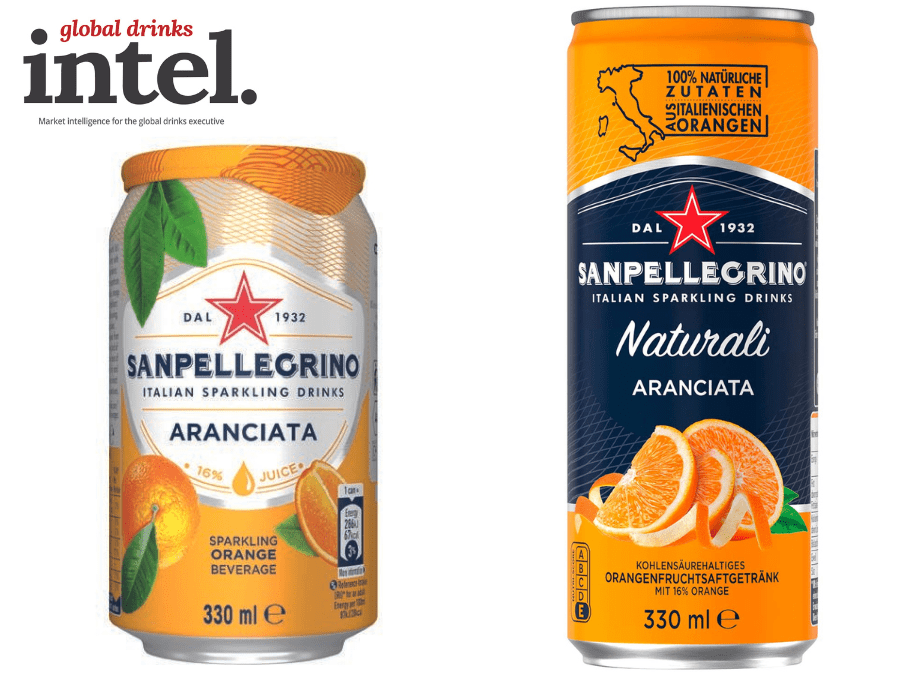
Nestle Waters’ recent rebrand of San Pellegrino fell into this trap of losing its distinctive assets – the silver foil lid cued ‘freshness’ while the wavy lines and green leaf signified ‘just picked’. The brand has replaced its distinctive assets with generic category codes, such as cut oranges to signify taste and a map to hint at geographic authenticity. What we see here is a classic example of distinctive assets being replaced at the expense of category drivers. The end result is a more generic brand.
Tropicana followed the same path in 2009, when PepsiCo spent US$35m on a rebrand only to lose $20m in sales in the first month. After 30 days, the brand owner reverted to the old design. Tropicana had removed what had made it distinct – the straw in the orange – and replaced it with an occasion message, most likely, to raise the sophistication of the drink outside of breakfast.
So, what’s the right way to approach a rebrand?
The second revitalisation strategy model, which is to create a category of one, is potentially more successful. In the first approach, the opposing forces of category drivers and distinctiveness often mean category drivers win out because there’s data to back up the size of the prize. In the second, you prioritise distinctiveness over category drivers; the argument being that brand recall trumps category drivers. This model acknowledges the truth that advertising to conversion is a messy business and that a tiny increase in funnel metrics will likely outperform being relevant through category drivers.
If you’re thinking about a rebrand, there’s one last thing you need to know: neither category drivers nor distinct assets equal relevance.
The truth is, modern brands are built off cultural relevance, not category relevance. If you really want to succeed, you need to understand this driver, or face being relevant only in the cold drinks aisle but not outside it. Brands win by gaining an unfair share of attention, which means you’re never just competing against your competition.
Knowing how to prioritise cultural relevance is the big unlock for successful rebrands.
This article was initially published in the July/August issue of Global Drinks Intel magazine. For details on how to subscribe, click here.