

A bright performance in the off-trade notwithstanding, vermouth struggled during the pandemic. But better times may be ahead, writes Joe Bates
The pandemic strangled any chance the vermouth category had of resurrecting its fortunes in 2020. The category’s importance in classic cocktails and Mediterranean aperitif culture makes it reliant on the hard-hit on-trade. Sales dropped -4.8% last year, according to IWSR Drinks Market Analysis. Volumes were declining even before Covid-19, slipping -1.2% in 2019, but a number of factors point to a brighter future.
The IWSR forecasts vermouth volumes will be flattish this year, but then grow at a respectable CAGR of 2.1% between 2021 and 2025. Moreover, Spain, the world’s largest vermouth market, is poised to grow at a healthy CAGR of 5.7% over the same period. The US, the top premium spirits market, is also set to increase in importance for vermouth producers with a CAGR of 1.9%. Finally, the IWSR singles out Russia as a growth market to watch, forecasting it to deliver a CAGR of 5.2%.
“The [vermouth] category taps into key global trends, such as craft cues,” explains IWSR analyst José Luis Hermoso, outlining the factors likely to propel the category forward. “This, along with it being a refreshing, easy-to-drink, Instagrammable option, will likely help drive the category forward. We are especially seeing more premium offerings enter the market, and many brand launches in the past five years focus on a premium positioning.”
Change in tastes driving revival
Martini global brand director Rafael Ferrer Trepat is well placed to analyse the category’s trajectory, describing the vermouth category as an “exciting place to be”. He argues that a fascination with all things Italian and changes in global food habits making people’s palates less sensitive to bitterness are driving vermouth’s revival. Martini’s growing range of vermouths are recovering well from the pandemic in the brand’s key markets, he reveals.
“At present, Russia is seeing the biggest growth, followed by Southern Europe which is benefiting from the reopening of the on-trade,” reveals Trepat. “Unsurprisingly, global travel retail is still showing some difficulties, but we expect this to change as markets open up and restrictions lessen, and people become more confident about travelling again.”
Trepat describes the launch last year of Martini Fiero, a 14.9% ABV blend of white wine and botanicals, such as Murcia orange peel, and designed to be drunk 50/50 with tonic water, as having been a strong performer. “We are currently seeing 70% growth versus the previous year. Martini Fiero is now sold in 30 global markets and has recruited over 30m new consumers worldwide,” he says.

The growing Martini family also includes the recently launched Martini Non-Alcoholic Aperitivo made with the same wines as the brand’s classic vermouths, and three RTD products: Martini Fiero & Tonic, Martini Vibrante & Tonic and Martini Floreale & Tonic.
Commenting on the Martini brand’s entry into the no/low-alcohol category, Trepat says: “The demand for low-ABV and nonalcoholic drinks is consistently growing, with sales 25% higher than expected and a strong performance across e-commerce. Over 4m people have tried the drink.”
Elsewhere, volume-driven brands with a strong off-trade presence did comparatively well during the pandemic. Perlino Dilmoor Group export director Giuseppe Bellotti says the company’s mainstream Perlino Vermouth didn’t suffer a drop in volumes in the first half of 2021 due to a high percentage of sales being generated in the off-trade.
“In Spain, we even observed an increase in sales as consumption of vermouth increased during the lockdown periods,” he says. “However, we suffered a slowdown in sales of our premium vermouth [Vermouth di Torino Riserva del Palio], which is consumed predominantly in the on-premise.
“In the markets where the on-premise outlets have not yet returned to normal, it is very important to meet the needs of our customers. We are very flexible in accepting to supply limited quantities of our artisanal premium vermouth, which can slow down production but allows our distributors to keep supplying the on-trade outlets and at the same time avoiding excessive stock while they gradually return to the original rotation.”
In addition to Spain, Bellotti reveals that off-trade sales of Perlino Vermouth have also been strong in Poland and Sweden. “In Sweden, where Perlino Bianco is present in over 370 Systembolaget shops, sales in 2020 grew 6% over 2019, and in the first five months of this year, they are marginally higher than last year,” he says.
Stream of new entrants

The super-premium Hotel Starlino Vermouth brand, which was launched last year by Malfy Gin founder Elwyn Gladstone, is prospering despite the still-difficult state of the on-trade. “We are now launched in about 30 markets, the biggest ones being the US, Australia, Canada, the Netherlands, Sweden, Italy, France, Germany and the UK,” says Gladstone. “Starlino is at a superpremium price point and we are really pleased with how well it has been doing. Our rosé and arancione (orange) variants are performing very well as more and more people get into the aperitif moment.
“Our rosso, which is aged in Bourbon barrels, has also been performing really well, with at-home cocktails growing (see related story page 8) and the on-premise coming back. In addition, our Maraschino cherries have been a runaway success, and really surprised us in places like Germany and the UK. In the next few weeks, we are also going to be launching Starlino Elderflower Aperitivo, which is our bianco offering. We have high hopes for it.”
A healthy sign for any category is a steady stream of new entrants and, encouragingly, the vermouth sector is seeing newcomers. One of these brands is Azaline, a vermouth launched earlier this year made using pinot noir grapes grown in Burgundy and botanicals including juniper, gentian, cardamom, orange peel and saffron. The liquid is produced in France and was developed by drinks entrepreneur Steve Drawbell.

“Azaline was created for a new type of curious consumer, who wants to know what they are drinking and will pay a premium for quality and authenticity,” says Drawbell. “Azaline is named after the Saffron Princess, an icon among travellers along the ancient Silk Road.”
Priced at £24.95 from UK online drinks retailer Master of Malt, Azaline has also been launched in the US and Germany. “It’s too early to have any volume information, but the reaction from bartenders has been overwhelmingly positive,” Drawbell says.
Online sales focus
The pandemic has driven a significant increase in online sales for many brands, including French vermouth Noilly Prat.
“Although it is still a relatively limited part of our sales, e-commerce has performed very well in the past few months,” reveals Philippe Jouhard, the company’s sales and marketing director. “In key markets, such as Germany, we have started to build an Amazon Brand Store, giving Noilly Prat more visibility, allowing the brand to communicate more directly and effectively with customers.
Online sales have also played an important role for Spanish aperitif brand El Bandarra, according to managing director UK Jonathan Owen. He reveals the brand, which produces both a red and a white vermouth, used the online channel as a way of getting closer to its consumers when first launching in the UK. The company’s D2C site, www.elbandarra.com/en, was a great learning tool and launch platform for the Barcelona-based brand.
“If e-commerce wasn’t essential before, the pandemic has cemented its status going forward,” Owen says. “I believe we will see a groundswell of support for the hospitality sector as people look to reconnect and enjoy a return to normal or semi-normal life, but the rise of at-home consumption and e-commerce in the way people shop will remain a legacy of the pandemic.”
Owen says El Bandarra is now available on Amazon, giving consumers the chance to buy a brand with low availability through traditional retail. He does have advice, though, for brands wanting to develop their online sales through third party e-retailers. “You have to keep a close eye on stock on a daily basis, for small brands where stock holding is low can get caught out by the slightest upturn, whether that be a bank holiday, good weather or a promo,” he says
“Don’t rely on the algorithm as it’s often working off the past. Sometimes a human is needed to constantly monitor in the early days and use the added tools to improve stock management to ensure you’re available at all times.”
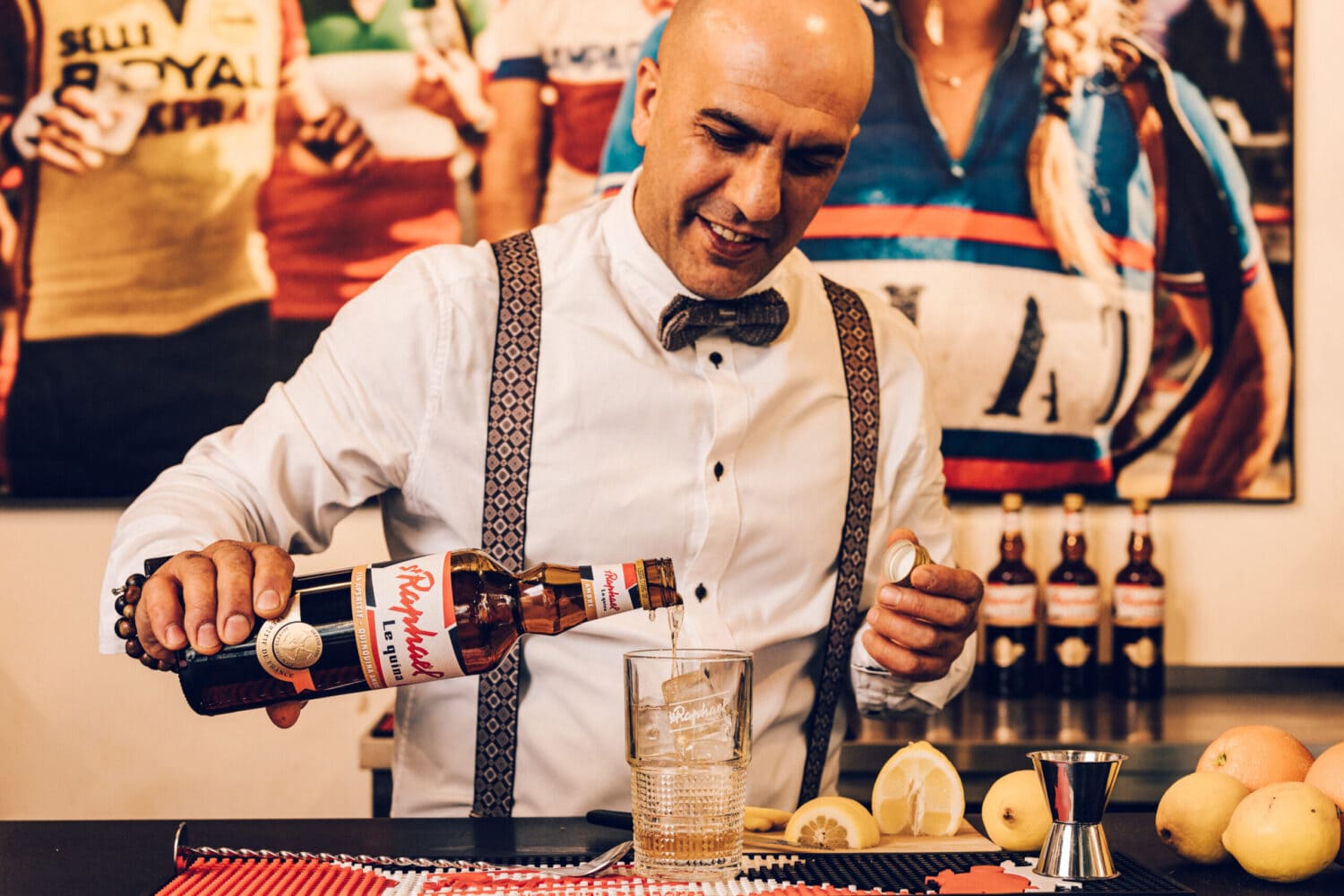
La Martiniquaise-owned aperitif St Raphaël has seen a rise in online sales in its native France during the pandemic, a trend international craft from France brand ambassador Donatien Ferrari attributes to the rise of the ‘hometail’. He says the brand also has potential in Japan and the US and is making the most of its cycling sponsorship in Belgium, a key market.

“We are proud of the partnership between St Raphaël l’Apéro du Vélo and the 2021 UCI World Road Championships in Belgium,” he explains. “As the official supplier, St Raphaël was the official drink for all the VIP guests. During the Tour de France, St Raphaël is a must drink. The link between St Raphaël and cycling is historic and the brands share the same value. In the UK, there was also a partnership with the Vermuteria café and bar in London during the Tour de France.”
Push to improve profile
Consumer knowledge around the rich history of vermouth and its use in a wide variety of cocktails is still comparatively poor in many markets, producers acknowledge. Consequently, family owned Italian aperitif brand Cocchi has introduced a pack of five 5cl miniatures in the UK to encourage at-home cocktail enthusiasts to experiment with different types of vermouth. Priced at £23.50, the pack includes 5cl bottles of Cocchi Americano, Cocchi Rosa, Cocchi Vermouth Di Torino, Dopo Teatro and Barolo Chinato.
“It’s the first time we’ve released our range in a miniature format, which is also pretty rare in our category,” says Cocchi managing director Roberto Bava. “We hope this convenient format will encourage enthusiasts across the UK to explore our range further.”
For El Bandarra’s Owen, the simplicity of the signature serve in markets such as the UK is key to vermouth’s wider acceptance. “Unlike many vermouths, El Bandarra’s primary serve is simply over ice with a slice — orange for Rojo, lemon for Blanco and grapefruit for Rosé. Sure, you can use it in cocktails, but this is how it is drunk in Barcelona and we believe this is the best way. Probably the biggest challenge in many markets is that ‘vermouths’ are not widely understood, often being associated only with cocktails or for older people.” El Bandarra’s success should give hope and inspiration to other vermouth producers. It seems this fortified wine, misunderstood and underappreciated for years, is now being given fresh impetus by the revival of classic cocktails, increased interest in lower-ABV drinks and consumer interest in its craft credentials. ●