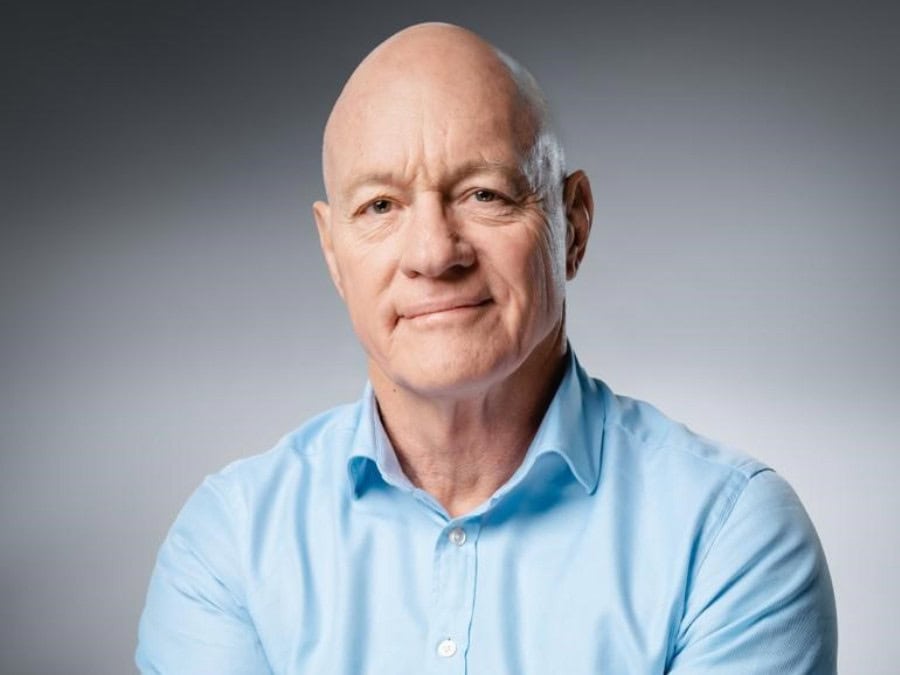
In July last year, Damian McKinney was the latest CEO to step down at Stoli Group. Fast forward to last month and McKinney unveiled his new venture, Dionilife, which will focus purely on non-alcoholic adult beverages. Global Drinks Intel sat down with the co-founder to learn about his aspirations for the business.
Global Drinks Intel: It’s been 15 months since you left Stoli Group. What have you been up to?
Dionilife co-founder Damian McKinney: I didn’t leave Stoli because it’s a bad company. What’s become even more important to me is a sense of building a company that isn’t just about commercial success – a Patagonia-type organisation. That’s what I’ve been looking at.
Last September, I had lunch with the then-CEO of IWSR and we were talking about this. He suggested I look at the non-alc area, because it fits. There’s a whole data set that suggests the consumer movement into non-alc, but one can look somebody in the eye and say they’re not trying to poison them! That triggered a thought around, wouldn’t it be great to create a company that has no baggage, a full portfolio and breaks the stigma around people who don’t drink?
It’s still about fun and socialising, but doing it in a different way. This feels like a once-in-a- lifetime opportunity.
GDI: Isn’t that stigma only really around among older LDA consumers?
DM: That’s very true. However, it’s still out there. There’s a shift among younger drinkers, but culturally it’s still out there that having fun equates to consuming alcohol.
At the beginning of last year, when I was still with Stoli, we were starting to see sales decline. There were lots of reasons being given – the supply issues due to the Ukraine war and Suez Canal blockage, the overstocking in the run-up to Christmas – but every time I turned the stone over, these weren’t the reasons. There was something else going on that I’d never seen before, and it was that people are choosing to moderate. It felt like there was a reaction to the excesses that went on during the pandemic.
Then, there’s IWSR data showing that in the US, 54% of 21-to-30-year-olds haven’t touched a drop of alcohol in six months. That’s staggering! The consumer is voting with their feet and wants to see alcohol in a very different way. That doesn’t mean they don’t want to socialise, they want to moderate in a healthy way. So, for me, it suddenly became so obvious that this is the way to go.
GDI: Who’s the ideal consumer for Dionilife?
DM: At the moment, it’s the moderator – those who choose not to drink during the week, for example. That’s the typical audience, in most cases. There are a lot of people now who’ve never drunk alcohol, and that’s growing. But there’s still a massive group that I call moderators, or substitutors.
GDI: They’ll likely give you short-/medium-term success, but how will you position the company for younger consumers?
DM: The way in which people are engaging with adult beverages is going to be very different in ten years’ time to the way we’re experiencing it today. Part of our role will be to watch that journey and try to work with it.
With non-alc today, I believe there’s a bit of ‘gatewaying’ going on – that’s why I’m concerned about the ‘zero’ on the bottle. On the other hand, all the big alcohol companies spend a lot of time and effort trying to understand what the consumer likes to drink.
We all know that adult consumers have a preference for the taste of alcohol. It’s not necessarily the alcohol ‘high’; it’s the smell, the taste, the mouthfeel. It’s almost gastronomic! There may be some truth in the belief that consumers are going to drink something completely different, but we don’t have to throw the baby out with the bathwater.
On top of all of that, people are looking for healthier alternatives and they want to know the ingredients of what they’re drinking. The functional benefits, then, are absolutely where we’re going to be working.
GDI: Dionilife looks to be quite asset-light. What’s the company structure?
DM: Our original model was to create a stable, then go out and find the best of the best and bring them in. Then, we’d look to get the best brand builders, the best route to market, the best liquid experts, everything. We’d just enhance it and then away we’d go.
What we found in the end was that it’s not quite so simple! It’s easier with beer, which is why Mash Gang is the first to come in. But we struggled when it came to spirits. We actually had three spirits that we were working through due diligence to buy, but we kept going back to the liquid.
That was the moment where we said, what the hell are we doing? Why are we trying to compromise? We’ve got to have that gold standard, it’s just not good enough. So, we’re going to create our own new-to-world spirits brands, unless we come across something that absolutely meets the bar.
We have a 15-to-20-year horizon. I’ve never had one that long before! We went out and talked to a lot of financiers – we deliberately kept away from venture capital because of the length of the plan. We don’t want to have to go out every year to look for more funding.
We’re not doing this to sell as fast as we can – that in itself creates a flaw in your system. Nor are we looking to own breweries and distilleries. We want to build deep foundations with real consumer pull and rate of sale. So, you need a partner who’s evergreen, with a reputation for hanging in there and building with you. I’d not come across (equity investment company) Invus before; they’re famous for buying into the Blue Buffalo pet food brand when it had annual sales of US$5m and made a profit from its sale 12 years later of $5bn.
They tend to look for companies that break the mould, and typically invest in one company a year – They really put us through our paces!
GDI: How confident are you that Dionilife can succeed against the alcohol-free extensions of existing beverage alcohol brands, which have a head-start on you?
DM: Of course they do. The pandemic took a lot of people back to trusted brands. However, who’d have ever thought a company could produce a premium tonic, for example, and become one of the biggest in mixers? So. I’m not worried by that. I don’t need to worry about alcohol and non-alcohol sales; I can just focus on my non-alc portfolio and make sure I’m producing the best liquids and brands.
The way the big companies have built their brands has been phenomenal. But, this is a different category and a different way of thinking. We’ve come in as an outsider, but I’ve never been afraid to take on the big guys. So, this is an opportunity, but we need to do it in our own way.
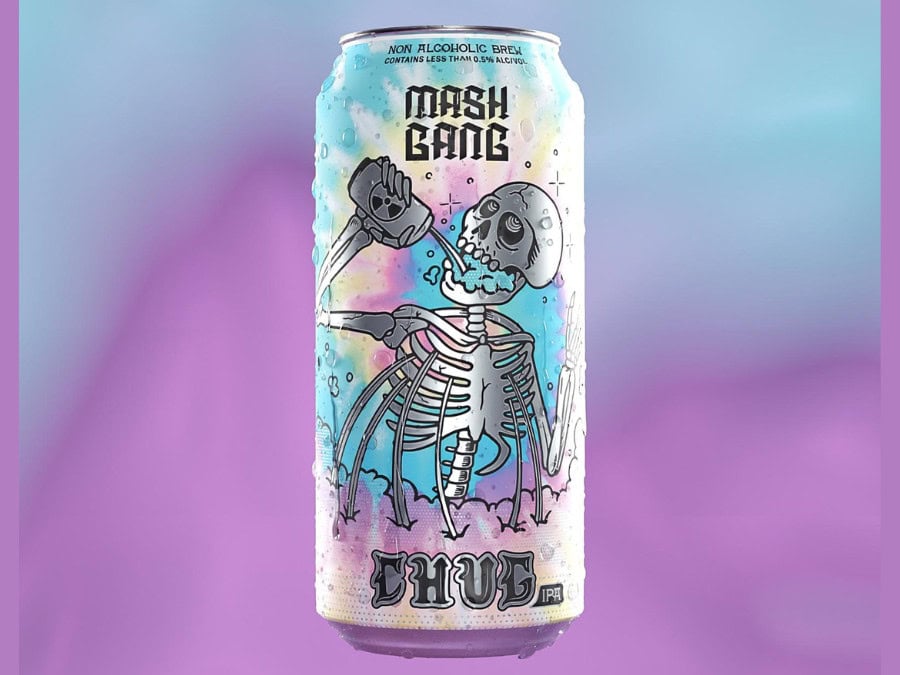
GDI: What was the appeal of your first acquisition, Mash Gang?
DM: There’s been a lot of compromise in this category around liquid experience, which has been one of its biggest obstacles. But it’s been abating faster in beer, where non-alc beers have become successful because they taste like real beer.
If we wanted to get a bit of a head start, what we needed to do was find a great tasting liquid with a brand that speaks to culture and cuts through. We looked at a lot of US non-alc beers, some of which are already out of our range. Then, we came across Mash Gang by accident, because it’s almost too small. This was a diamond in the rough; when I first tasted it, I didn’t know it was a non-alc beer.
Then, there’s its branding, which jumps off the shelf. In beer, a lot of the branding is actually quite bland. The folks behind Mash Gang are band people – they’re into heavy metal, they’ve got tattoos. These are creative individuals with lots of passion and expression. And it came across in the pack.
GDI: How will you be looking to flesh out the Dionilife portfolio?
DM: Spirits is next. Without giving the game away, you can look at one of the most popular spirits categories in the US and one of the most popular cocktails – that’s where we’re going to be heading.
GDI: How does a fledgling non-alc brand get on to your radar?
DM: LinkedIn has been extraordinary! If you really want to reach that gold standard, then I’m definitely interested.
One thing I’ve learned is that single brands on their own are very hard. At some point, you need to go into a system and you need to be part of a team. That’s where we can really help and add a lot of value.
This article is available to Global Drinks Intel members only.
Click below for details on how to join the Global Drinks Intel community.
Already a member?
Log in here to read the article in full.
If you work for any of the following corporate subscribers to Global Drinks Intel, head here to activate your access.
- AB InBev
- Bacardi
- Campari Group
- Diageo
- Moët Hennessy
- Pernod Ricard
- Proximo Spirits
- Suntory Global Spirits
- William Grant & Sons