

This article was initially published in the December/January issue of Global Drinks Intel magazine. For details on how to subscribe, click here.
Imagine you’re in a quiet church. The priest is softly reciting the Lord’s Prayer when, suddenly, a woman bursts in from the back of the church and screams an expletive. Everyone in the congregation turns and stares. It’s awkward and uncomfortable, but the woman leaves, the congregation turns back and finishes the service.
It’s easy to get people to stare.
This is a similar approach to that taken by BrewDog, Pepsi and Oatly to build their brands. At one point or another in their respective histories, they all acted as anti-establishment provocateurs and have become the poster children of challenger brands. This gutsy, rogue behaviour earned them a fanbase and catapulted them into popular culture.
The ‘any news is good news’ mantra has become the rhetoric of the marketing function, with the warm, fuzzy feeling that somehow Byron Sharp, director of the Ehrenberg-Bass Institute, was observing their progress with a giant thumbs up.
At some point, however, this brand strategy needs to evolve. Often, a disruptor brand becomes the people’s champion, with consumers’ love and admiration adorned unconditionally on the brand. The cracks start to show, however, when consumers see through this disruptive behaviour.
One of BrewDog’s recent activations is a textbook example of this.
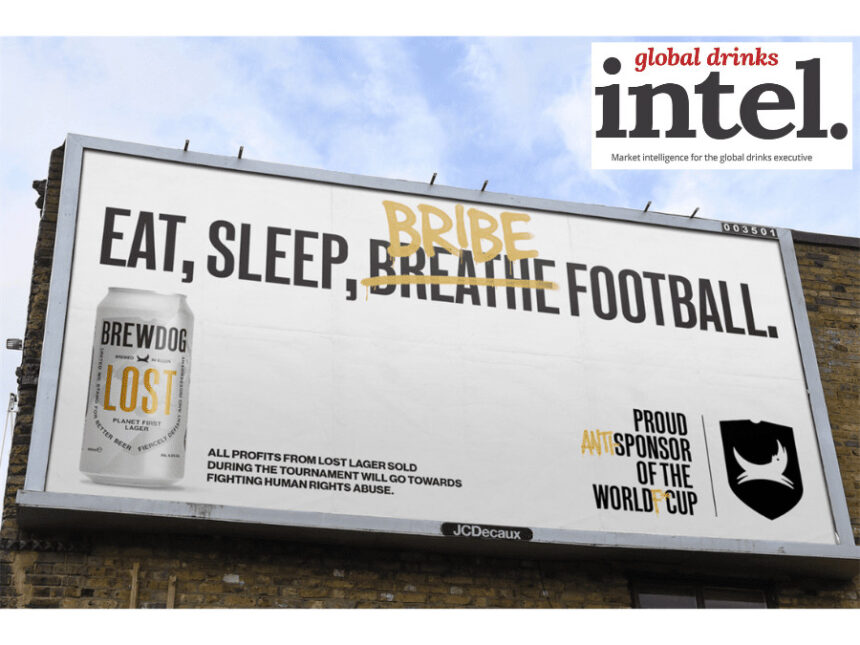
For the FIFA World Cup in Qatar, rather than rejoicing in how the world comes together through the beautiful game, the UK-based craft brewer chose to pick a fight with FIFA. After all, antagonistic behaviour has worked before, so why not now? Huge billboard adverts appeared on buildings calling out Qatar for “corruption, abuse and death” in what the company billed as “anti-sponsorship” of the controversial tournament.
The cracks in BrewDog’s brand integrity quickly started to show. Its campaign seemed to stem from good intentions, but as the story unravelled, its anti-World Cup stance seemed to be little more than a marketing stunt.
BrewDog showed the games in its own pubs and sold its beer in Qatar. On top of that, the brewer faced calls to get its own house in order after hundreds of former employees last year accused the firm of having a “toxic attitude” and operating a “culture of fear” – all while pointing a finger at human rights abuses in Qatar.
While you would think CEO James Watt would align brand, commercial and HR, the different arms are clearly not in sync. To make matters worse, it’s not even a real campaign – the “anti-sponsorship” work is just mocked up in situ to look like a big media spend. Even with the concept of advertising, BrewDog seems willing to disregard integrity to gain maximum commercial gain.
Just because your brand lacks a strong point of difference doesn’t mean you should give up on creative ambition. Gaining an excess share of voice through rule-breaking is a powerful formula. The trouble is brand management teaches us to be very risk-averse, when the truth is consumers often couldn’t really care less.
Ben & Jerry’s Ice Cream launching dog food and KFC creating gravy candles are successful examples of risky and challenging brand behaviour that gained a greater share of voice. While BrewDog’s campaign probably succeeded in growing market share, I would suggest brands should apply a sense of morality to their advertising approach. You can, of course, scrape data like Cambridge Analytica or offer unfair terms on payday loans, but I think we need to challenge the morals and ethics of our profession.
Brands have great power to do good in the world. So, while we can all swear in church to get everyone to look [and grow our market share], we should question if brands should have greater authenticity and a tangible moral code.
Just, don’t make that an excuse for doing dull work.
A 2019 study by marketing language optimisation specialist Phrasee found that almost two-thirds (62%) of UK consumers believe that brands using negative emotions are, in part, responsible for harming people’s mental health. Three-quarters of those surveyed said that brands exploiting their emotions negatively would lose their trust and loyalty.
As Google’s founders once enshrined in the company’s official code of conduct: “Don’t be evil.” Or, to put it more bluntly: “Don’t be an idiot.”
This article was initially published in the December/January issue of Global Drinks Intel magazine. For details on how to subscribe, click here.