- UK consumers continue to invest in premium spirits, especially tequila and single malt
- The rise of low- & no-alcohol and functional soft drinks is reshaping NPD
- The UK hospitality sector is shrinking – more than 1,000 pubs went out of business last year
- EPR fees, alcohol duty hikes and packaging reform are escalating costs across the supply chain
In the UK, the beverage alcohol category is starting to resemble a worn-out punching bag. A flurry of hefty blows – rising prices, the cost of living crisis, a hike in alcohol duties and a shrinking hospitality sector (more than 1,000 pubs closed last year) – have left the world’s third-largest alcoholic beverage market by value reeling.
Amid the turbulence, the no- & low-alcohol segment stands out as a welcome bright spot. Driven by Gen Z preferences, IWSR projects a robust CAGR of 19% for this segment over the next three years.
Agave-based spirits are also gaining momentum. More than one in ten cocktails served in the UK now features tequila, with the margarita rising to become the nation’s ninth most popular cocktail serve, according to research from French syrup brand Monin.
Regulatory pressures weigh heavy
The UK government’s introduction of a strength-based alcohol duty system in August 2023 – accompanied by the largest tax increase in the sector in half a century – continues to draw the ire of industry leaders.
A further set of changes in February this year, including the end of an “easement period” for certain wine categories and a general 3.65% duty increase on non-draught alcohol, have added further strain.
“The government continues to claim that the tax hikes are part of their big plan to plug the black hole in the public finances, but a series of record-breaking tax levies are doing the exact opposite,” says the chief executive of the UK’s Wine & Spirit Trade Association (WSTA), Miles Beale, highlighting a GBP209m (US$283m) decline in alcohol tax receipts over the last nine months of 2024.
“It’s estimated that some of the major retailers will be facing millions of pounds in losses,” he adds. “This will have a knock-on effect on producers and distributors who will also find their profits plundered.”
Further complicating matters is the Extended Producer Responsibility (EPR) scheme, which came into effect in April. This environmental initiative imposes significant packaging waste fees on suppliers, with glass recycling now nearly seven times more expensive than plastic.
“EPR is an inflationary new tax that’s being implemented before it’s properly finished and shares a similar fiendish complexity with the big recent hikes in wine duty,” says the CEO of wine retailer Laithwaites, David Gates.
“Combine them both with the chancellor’s increase in national insurance [tax on earnings and self-employment profits], and our family wine business is left facing an extra GBP10m in taxes year on year.”
Beyond regulatory challenges, businesses continue to grapple with broader economic headwinds. “Inflation has increased our cost of goods and put pressure on margins,” says the co-founder & director of Devon-based Salcombe Distilling Co, Howard Davies.
“Wherever we can, we have tried to drive further efficiency in our supply chain process to try to counter the impact of inflation. Nonetheless, we did have to increase some of our pricing at the beginning of 2025. It just isn’t possible to continually try to absorb inflation.”
Tequila trumps gin & vodka
Agave-based spirits is one of the few categories finding consistent favour with UK consumers. Tequila-led cocktails, for example, are increasing in popularity, often replacing vodka and gin.
“Tequila continues to benefit from consumer curiosity and trade-up behaviour, especially among younger legal-age drinkers who are exploring more refined, high=integrity spirits,” says Gareth Williams, global brand director at Pantalones, an organic tequila co-founded by US actor Matthew McConaughey that launched in the UK off-premise in May.
Williams notes that the brand’s approach aligns with multiple consumer trends: organic production, clean-label spirits and mindful drinking. “We believe this positioning will only grow in importance and it continues to guide our innovation roadmap and communication tone,” he says.
Meanwhile, Stock Spirits Group, the owner of mainstream brand Sierra Tequila, expanded its UK presence this year with the acquisition of independent importer and distributor The Drinks Co. The move has helped Stock to bring its distribution in the country in-house.
“It also improves our return on investment, which means we can commit more to the brand over time,” says a company spokesperson. “Sierra is already a market leader in the off-trade, and we see that as a strong foundation to build from, both for Sierra and for expanding our wider portfolio.”
No & low shows staying power
The non-alcoholic category continues to thrive in the UK on-premise, with CGA by NIQ reporting sales surpassing GBP4.6bn in the 12 months to February. Almost half (46%) of the country’s LDA consumers now opt for an alc-free drink when out, with a third doing so more frequently than a year ago.
Availability, a long-standing issue for the category, appears to be improving too. According to Monin’s ‘Autumn/Winter Drinks Trends’ report, 55% of consumers report now seeing non-alcoholic cocktails on menus.
The co-founder of spicy soda brand Picoso, Tom Bowerman-Wake, sees a generational shift. “There’s a rightful move away from a binge-drinking mentality to flavour-focused drinking,” he says. Picoso, launched earlier this year with spicy lime and mango variants and features UK-grown scotch bonnets, Mexican habaneros, electrolytes and natural agave.
Now stocked in Selfridges and upscale on-premise venues like Circe’s Rooftop in London, Picoso offers what Bowerman-Wake calls “cocktail-quality spicy drinks for all drinking habits, without the hassle”. A fashion collaboration and new multipacks are slated for later this summer.
Whiskey/whisky faces mixed fortunes
Whiskey/whisky producers across the UK have not been immune to recent pressures. For the 12 months of last year, according to Statista, UK whisky reached of the spirit was down 16% from 2019 at 47.3m litres.
Some producers have responded by scaling back: Welsh distiller Penderyn paused production at its Swansea facility last year, for instance, while Brown-Forman shifted Glenglassaugh, its Highlands distillery, to a “shared production model” with peer Benriach in January.
Yet not all brands are struggling. Whyte & Mackay, for instance, continues to see success across its core portfolio: The Dalmore, Isle of Jura, Fettercairn and Tamnavulin.
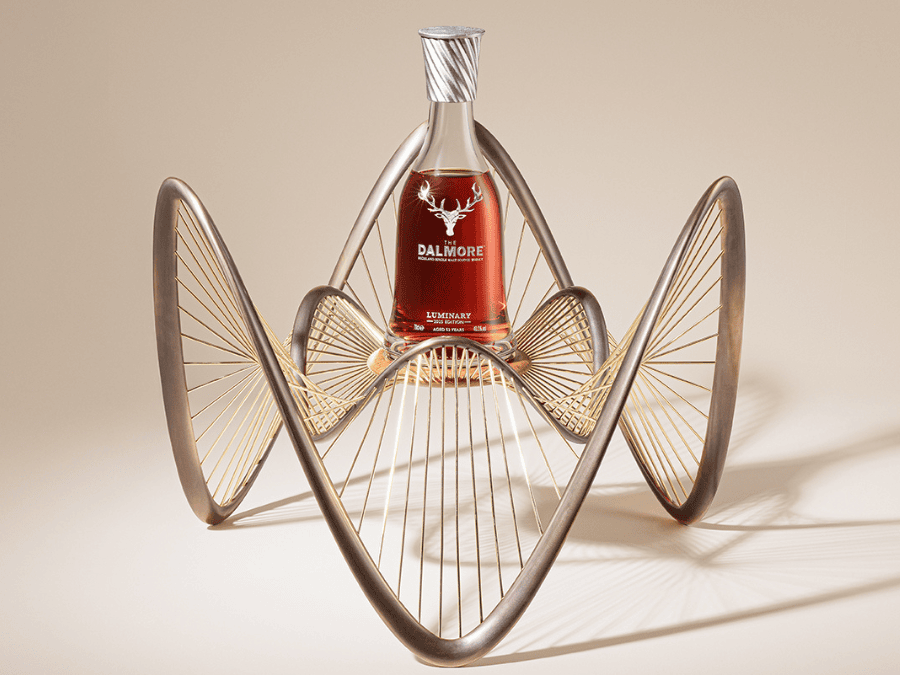
The company’s head of whisky discovery, Kieran Healey-Ryder, points to enduring demand at the luxury end of the market, citing the six-bottle Fettercairn 200th Anniversary Collection (GBP100,000) launched last year, and the third and latest edition of The Dalmore Luminary Collection (above), produced in collaboration with architect Ben Dobbin, which went for auction in May.
At more accessible price points, supermarkets remain a crucial channel for Whyte & Mackay, Healey-Ryder insists. He also sees a significant growth in localism: “Consumers are sticking with their retailer of convenience or on-trade place of convenience more than they did pre-Covid,” he says.
This shift, he argues, benefits local specialist bottle shops, especially those that offer deep product knowledge and storytelling, providing a strong platform for provenance-driven brands like Isle of Jura and Fettercairn.

Still a strategically important European market
Regulatory pressures and inflationary costs demand continuous adaptation and efficiency from businesses. Yet for many brand owners active in the UK, with its upscale on-premise channel in London and key cities, the country remains a lodestar European market.
Echoing broader sentiment, the Stock Spirits spokesperson says the UK remains core to its European strategy.
“It’s one of Europe’s largest spirits markets, projected at US$17.7bn by 2025 [Statista],” the spokesperson says. “[The UK’s] dynamic consumer environment and strong trade channels provide insights and opportunities that directly support our broader European ambitions.”
UK free trade deals ‘a win-win all round’
May saw a landmark moment for UK trade policy, with the Government agreeing three bilateral free trade agreements (FTAs): a limited FTA with the US, a more comprehensive deal with India and a post-Brexit trade reset with the EU.
Most industry attention has focused on the potential benefits of the India deal for UK whisky and gin producers targeting the country. But Ipe Jacob, principal co-founder of Maharaja Drinks, an importer and distributor of craft Indian drinks brands, also sees opportunity for Indian brands eyeing the UK. “Unfettered by tradition and blessed with faster maturation, [Indian brands] are set to race forward,” Jacob says. “Free trade is a win-win all round.”
Jacob adds that while smoother logistics are not yet in place, momentum is building. “The agreed reductions are a sensible first step,” he says. “There is further to go – non-tariff barriers deserve a mention too – but freer trade will ineluctably lead to greater consumer exposure and choice.”
Maharaja’s UK-imported range includes gins, fruit wines and kombuchas, with feni (a traditional Goan spirit), vermouths and liqueurs due later this year. “Feedback suggests coffees, kombuchas and gins have been particularly nice surprises for many,” he notes.
EU-based brands, too, are cautiously optimistic. Stock Spirits Group, for example, is taking a measured approach to the EU-UK reset, but expects to see fewer border checks and less paperwork, both welcome developments.
“Doing business in Northern Ireland isn’t as easy as we’d like, but on the positive side, we continue to import our goods and market them effectively across the UK,” a spokesperson adds. “Any improvement in efficiency or reduction in bureaucracy is welcome.”