Last year, a raft of premium spirits brand owners, including Diageo and Rémy Cointreau, accelerated plans to remove secondary packaging to help meet their sustainability targets. However, the humble glass bottle, the preferred container for all manner of alcoholic drinks since the early 17th Century, is proving harder to dispense with.
Solid, robust and, above all, inert, glass was once considered the ideal packaging format, but despite being endlessly recyclable, glass bottles are heavy to transport and use an enormous amount of energy during the production process. At the same time, the mining of silica sand needed for glass production can also cause significant environmental damage, ranging from land deterioration to the loss of biodiversity.
Bacardí and Diageo invest in glass production
About 70bn single-use wine and spirits glass bottles are produced annually, resulting in tens of millions of tonnes of carbon emissions. Major drinks brand owners are determined to improve on these worrying figures.
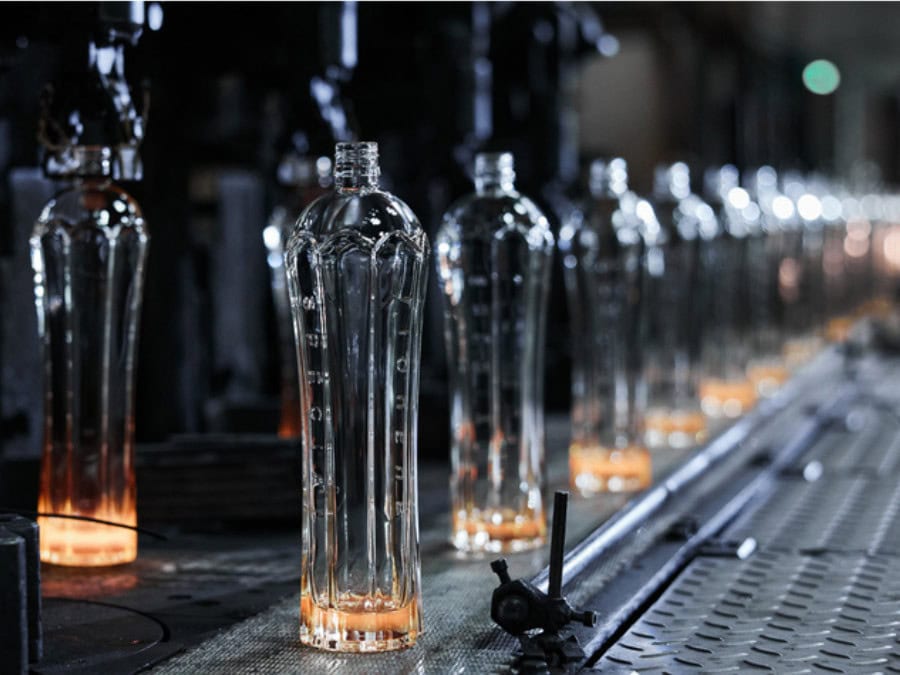
Late last year, Bacardí announced the world’s first commercial production of a glass spirits bottle fuelled by hydrogen. The company worked with premium glassmaker Hrastnik1860 to pioneer new technology that powers a glass furnace with hydrogen as its primary energy source rather than natural gas at Hrastnik’s Slovenian facility.
The pilot produced 150,000 70cl glass bottles for Bacardí’s St-Germain liqueur brand (above), with hydrogen contributing 60% of the fuel for the glass furnace. Greenhouse gas emissions were cut by more than 30%.
On a broader scale, Diageo announced last summer that it was working with glass manufacturer Encirc to build its own hydrogen and green-powered furnace in the UK that will start producing bottles for its Smirnoff, Captain Morgan and Tanqueray brands in 2027. Using the furnace will reduce carbon emissions by 90% compared with standard methods, with carbon capture technology handling the remaining emissions by 2030.
For smaller brands, a more viable option to reduce the carbon footprint of glass bottles is to switch to lightweight glass bottles or bottles made with a high percentage of recycled glass. A prime example is UK-based Ellers Farm Distillery, now co-owned by comedian Ricky Gervais, which uses a lightweight brown bottle for its Dutch Barn Vodka that provides better protection for the vodka and is made with 60% recycled content.
Is paper the way forward?
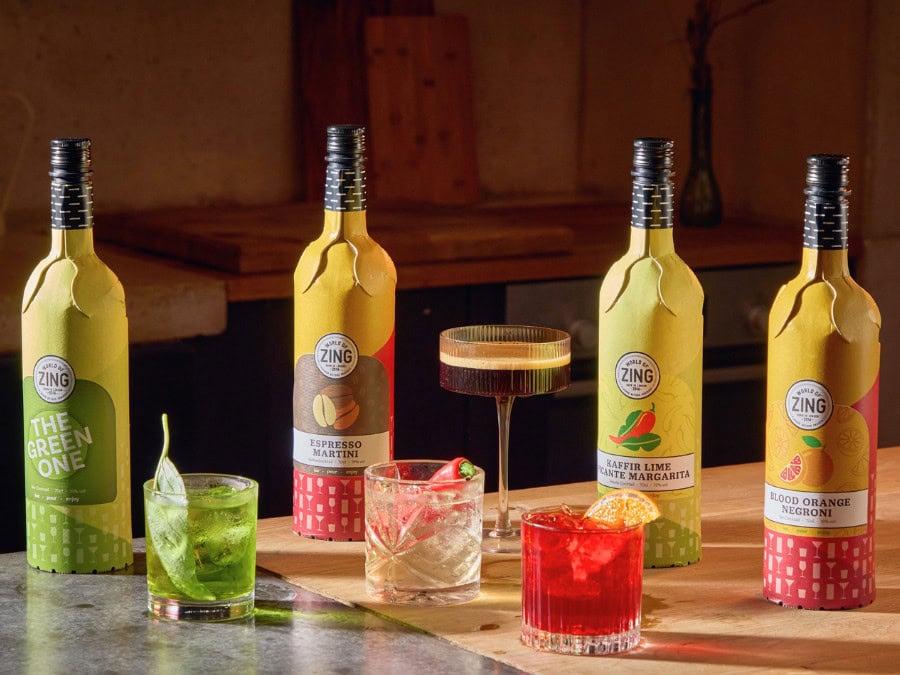
Other spirits companies have opted to package brands in paper-based bottles, notably Pernod Ricard, which trialled a paper bottle roll-out for Absolut Vodka with off-premise multiple Tesco in Manchester last year. Similarly, in January this year, craft bottled cocktail company World of Zing launched a range of 15 premix cocktails in Frugal paper bottles that are made with 94% recyclable cardboard. The bottles have a recyclable plastic liner, use 77% less plastic than a plastic bottle, are five times lighter than a traditional glass bottle and require less protective packaging, reducing transport costs and resulting in a carbon footprint six times lower than a glass bottle. Furthermore, the empty bottles can be flattened to reduce space requirements once used, in turn decreasing waste costs.
Not everybody is enthusiastic about the trend towards paper bottles or sustainable packaging, however. “Eco-packaging may or may not be a trend for 2024, but there’ll be no shortage of businesses espousing its importance and merits,” says Elliott Wilson, strategy director at branding design firm The Cabinet Agency.
“My prediction is that until drinks packaging is so desirable that people want to reuse it (or return it for refill), it won’t work for premium brands. The drinks industry needs to take a leaf out of the luxury cosmetics brand playbook and get to grips with refills. Standard eco-packaging solutions will never offer the premium expression that consumers demand and we need to think differently about this,” he adds.
“As far as I’m concerned, light glass/paper solutions are not the answer.”
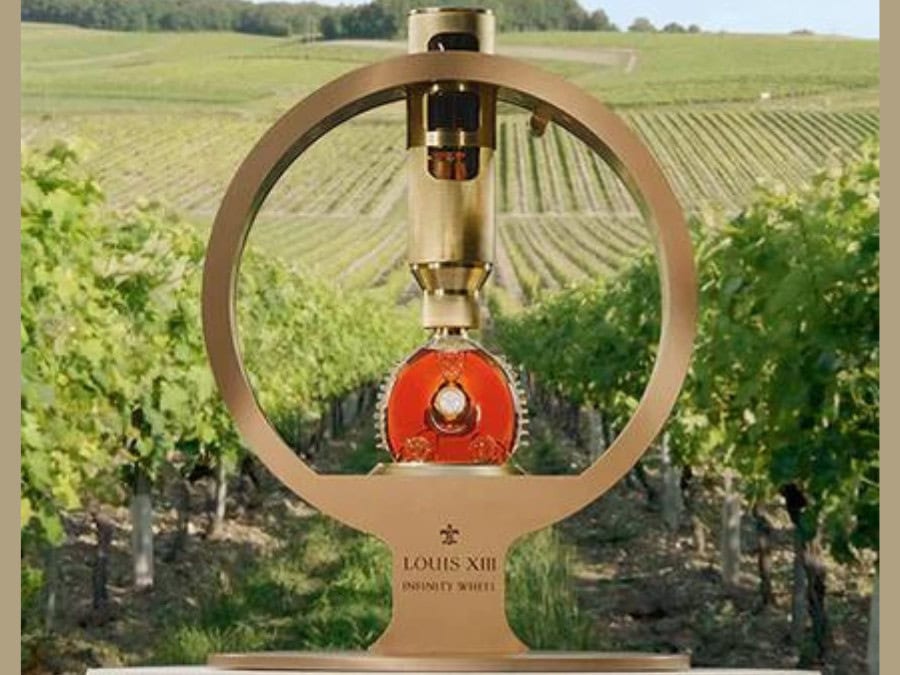
Louis XIII and the Infinity Wheel
In fairness, spirits brands are increasingly experimenting with the idea of refills, most notably Rémy Cointreau’s Louis XIII cognac, which ran a promotion over Christmas last year at London department store Harrods. Consumers could have their Louis XIII decanters inspected, cleaned and refilled via a specially designed ‘Infinity Wheel’ dispenser.
The filling process finished with a specially-engraved medal transferred onto the decanter. Billed as the “world’s first refill experience for the luxury spirits industry”, the service has also been made available in Louis XIII’s boutiques in Cognac and Beijing.
The alternative closed-loop distribution system set up by Singapore-based firm EcoSpirits, in which Pernod Ricard owns a stake, champions a future where single-use glass bottles become obsolete. The circular business model centres around reusable EcoTote containers that are used for the delivery of wine and spirits to on-premise outlets. Once empty, the EcoTotes are returned to the company’s ‘EcoPlant’ facilities, to be cleaned, refilled and sealed.
More than 2,000 bars, restaurants and hotels worldwide have already adopted the EcoSpirits system. In December, Diageo announced an agreement with EcoSpirits to use its circular packaging technology in 18 markets over the next three years.
EcoSpirits CEO Paul Gabie is confident the circular distribution model can also work in the off-premise. The company has developed a ‘SmartKiosk’ for retail settings, currently being trialled in Singapore, and has commenced a retail programme in Europe.
“EcoSpirits France and La Maison du Whisky recently launched a programme in France, offering low waste, premium and exclusive spirits for the retail sector,” says Gabie. “This marks the first time the EcoSpirits closed-loop technology has been available to retailers in Europe. It features limited-edition spirits brands which have been produced specifically for the EcoSpirits system, and which cannot be purchased in a traditional glass bottle format.
“The spirits are delivered in EcoTote format and dispensed in-store via SmartPour 2.0S technology. Consumers can choose from three sizes of EcoSpirits-branded bottles and are encouraged to fill these themselves, directly from the SmartPour.”
Supply headaches lead to strategy shifts
While alternatives continue to grow in popularity, glass still dominates, remaining the packaging choice for more than 90% of spirits, according to some estimates. However, the supply and availability of glass bottles remain inconsistent due to supply chain issues compounded by geopolitical tensions in the Middle East and drought conditions in the Panama Canal.
“With the supply chain issues in bottle production, it can easily take over a year to get a product onto shelf,” says the founder of drinks design agency Stranger & Stranger, Kevin Shaw. “Designers have to be very careful about designing things that could date quickly.
“The interesting issue is that there is now such a dearth of good, reasonably-priced stock bottles that it makes creating bespoke glass all the more appealing. The difference between the prices of stock and bespoke bottles has come down enough to make it an interesting decision.”
The global trade volatility of recent years has highlighted the vulnerabilities of extensive offshoring for packaging needs. As a result, more drinks companies are considering reshoring or near-shoring strategies to shorten their supply chains. This approach can also provide environmental benefits, according to Robert Hicks, the co-founder of Highland Liquor, producer of Scottish craft gin Seven Crofts Gin.
“With varying costs, particularly in transport due to Brexit, we are moving our packaging production to the UK, which in the long term will work out cheaper,” he says. “The positive effect of this means that we will cut our carbon footprint.”
Supply chain issues and rising costs aside, glass seems set to stay as the preferred packaging choice for alcohol producers and brand owners. Alternatives are clearly gaining ground, however. As they do, greener ways to make glass will continue to take on greater importance.
This article is available to Global Drinks Intel members only.
Click below for details on how to join the Global Drinks Intel community.
Already a member?
Log in here to read the article in full.
If you work for any of the following corporate subscribers to Global Drinks Intel, head here to activate your access.
- AB InBev
- Bacardi
- Campari Group
- Diageo
- Moët Hennessy
- Pernod Ricard
- Proximo Spirits
- Suntory Global Spirits
- William Grant & Sons