

- Range rationalisation – Contracting volumes and rising costs have led mega-distributors to consolidate and purge slower-moving lines
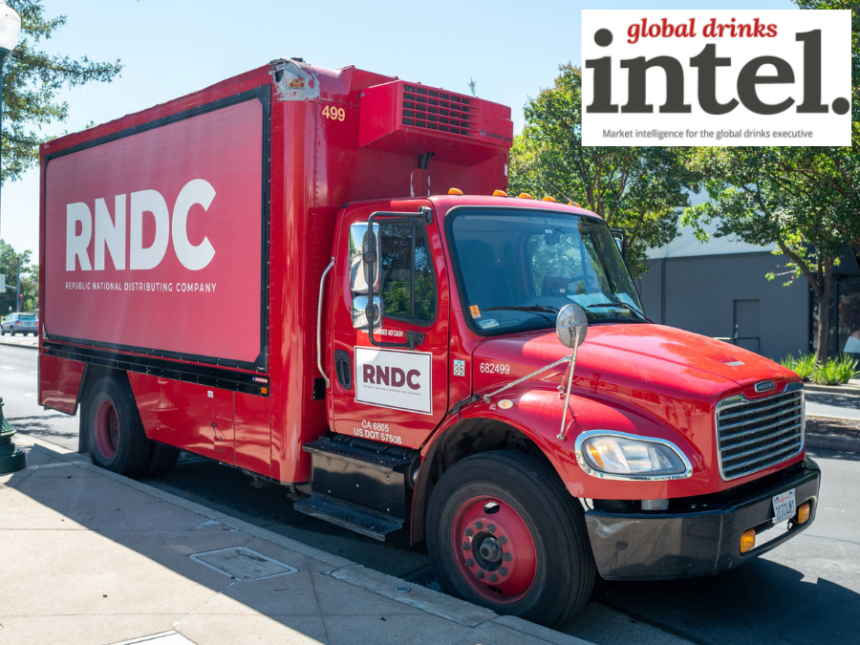
- Redrawing the map – The ongoing break-up of RNDC has allowed rival distributors to grow their market share
- Larger minimum orders – To offset overheads, consolidated distributors are raising minimum order requirements, pushing inventory risk on to stakeholders in the other two tiers
- Operational discipline – Craft brands must now prove they can sell out quickly, or pivot to direct-to-consumer and retailer platforms.
As mega-wholesalers consolidate and market volumes contract, the US’s historic distribution system for alcohol is fracturing, creating challenges for smaller brand owners.
Since its inception in the early 1930s in the messy aftermath of Prohibition, the US three-tier alcohol distribution system has functioned like a well-regulated, if somewhat rigid, plumbing system. Put simply: producers have been making it, wholesalers have been moving it, and bars and retailers have been selling it.
For decades, this system has worked well.
Forcing alcohol through a central chokepoint – the distributor – allowed the easier collection of excise taxes, while a transparent paper trail prevented counterfeit alcohol from entering the market and, in theory, smaller producers could build distribution because wholesalers acted as their sales force.
However, by mid-2026, the three-tier system has been springing leaks, cracking under the pressure of multiple adverse factors impacting the country’s alcohol industry. Trading conditions are tough: according to IWSR’s ‘US Navigator’ data service, total beverage alcohol volume in the US last year contracted by 5%, with wine (-6%), spirits (-4%) and beer (-5%) all suffering.
The rising cost of living pulled the brake on sales – 31% of US drinkers cited this as a reason for drinking less, IWSR discovered. Increased moderation is another drag on the industry, especially among younger Millennial and Gen Z LDA consumers, with nearly half of Gen Z consumers planning to reduce alcohol consumption, according to a major report on US drinking habits by Datassential released at the start of the year.
Throw in rising production and labour costs to this toxic mix, and then stir in US tariffs on imported brands, and it’s no surprise the tectonics of the three-tier system shifted.
On one side, mega-distributors are consolidating power to handle heavyweight multinational-owned brands. On the other, small- and mid-sized craft brewers, boutique spirits brands and independent wineries are finding themselves stranded in the logistical Death Valley of a consolidating wholesaler tier, struggling to find a distributor that recognises their worth.
RNDC hits the skids
The most visible fault line in the wholesaler tier has been the ongoing travails of the Republic National Distributing Co (RNDC), once the country’s second-largest alcohol distributor.
Last year proved an annus horribilis for RNDC. In Q1, major brand owners, including Tito’s and Brown-Forman, ditched RNDC as their Californian distributor. Further departures saw RNDC pull out of the state, the country’s largest alcohol market, entirely in June. This allowed competitors, such as Breakthru Beverage Group, Reyes Beverage Group and Southern Glazer’s Wine & Spirits, to pick up displaced portfolios.
In January this year, RNDC seemed to rally, announcing it had secured new financing from lenders to stabilise operations. According to CEO Marc Sachs, the deal would allow the company to “deliver against” its priorities and “pursue opportunities” that strengthened its business.
Yet its break-up has continued at pace, with rival Reyes Beverage Group subsequently purchasing 11 markets from RNDC (Arizona, Colorado, Florida, Louisiana, Hawaii, Maryland, Oklahoma, South Carolina, Texas, Virginia and Washington DC).
A cluster of further announcements in April effectively confirmed a piecemeal liquidation strategy, with RNDC signing a deal to sell 17 control-state markets to Massachusetts-based Martignetti Co’s, the country’s sixth-largest distributor with operations in six New England states.
In the same month, RNDC agreed to sell its Oregon and Washington markets to Portland’s Columbia Distributing, while its New York joint venture with fourth-generation, family-owned Opici Family Distributing unravelled and Manhattan Beer & Beverage Distributors swooped in to onboard some of the castaways.
Short-term disruption and long-term challenges
For small and mid-sized producers, this rapidly changing distribution landscape has created short-term operational disruption.
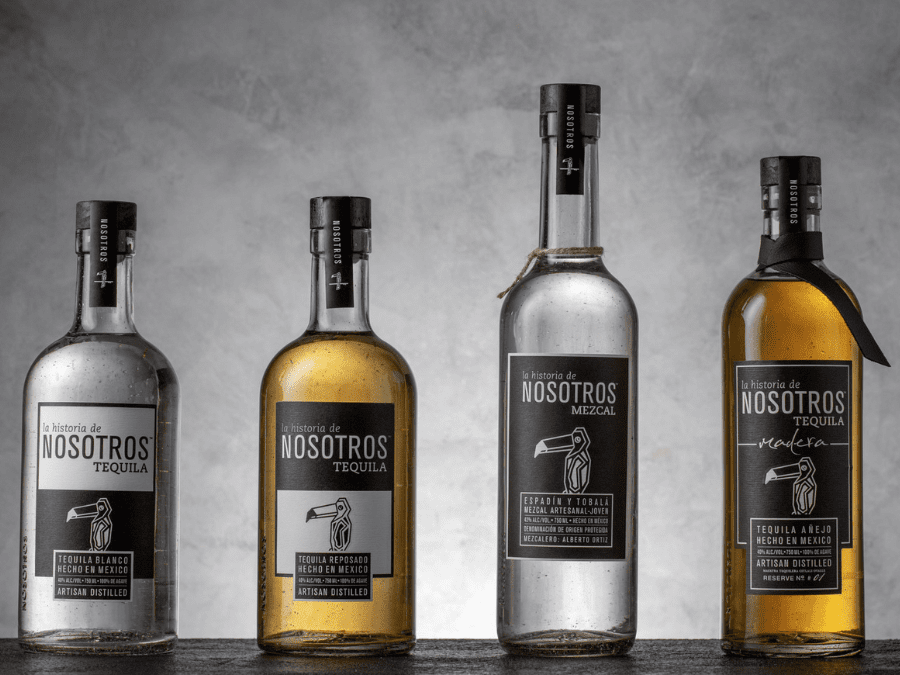
Nosotros Tequila & Mezcal (above), a brand with over 2,000 Californian customers, revealed it was given 90 days last year to find an alternative distribution solution following RNDC’s exit – a dilemma that saw the company return to its previous distributor, Park Street.
“The biggest worry for us was really being able to take care of our customers,” chief revenue officer PJ Dwyer recalled in a post on Park Street’s website. “We understand that when a transition like this happens, you’re talking about 500-plus other brands. You’re going to have a lot of customers that are upset, confused and don’t really know what to do.”
Distributor consolidation also poses longer-term strategic challenges, cautions Los Angeles-based advisory, tax and accounting firm drinks industry specialist GHJ. “Many smaller and mid-sized brands have less leverage today,” argues GHJ partner & CPA Maria Pearman.
“In addition to a larger portfolio, distributors are consolidating and prioritising high-velocity categories like tequila, RTDs and large national suppliers. Smaller brands are finding it harder to earn attention unless they can prove depletion velocity, geographic concentration and marketing support. The old pitch of ‘we’re a great craft brand’ is far less effective than it was five years ago,” she adds. “I might go so far as to say there’s no value in that today.”
Small brand owners repeatedly voice fears of a ‘great purge’, with larger distributors cleaning house, dropping non-core brands that don’t move enough volume to justify precious warehouse space.
The founder of both Sicilian aperitif brand See the Elephant Amaro and South Carolina-based HTH Imports, Kyle Harder, has first-hand experience of this disconcerting process. After finding his brand buried in a New York distributor that was restructuring around volume, he recently made the difficult choice to pivot to a smaller, curated distributor (Massanois).
“Consolidation is bad for small brands in the short term – most founders in our position know that, but won’t say it out loud,” he ventures. “When distribution books get absorbed into mega-houses, niche brands get buried. The math is simple: more SKUs, same number of reps, same number of selling hours. Something has to give, and it’s never the high-velocity tequila brand paying for programming.”
At functional adult energy drink brand Mōcean Drinkwerx, CEO Tony Vieira mourns the loss of sales rep expertise and dedicated focus that often arises as a result of wholesaler consolidation.
“A rep who actually knows your product can walk into an account and make something happen,” he says. “But when that person is suddenly managing double the portfolio, your brand becomes an SKU number. Delivery problems you can work around. Losing someone who could actually tell your story? That takes a long time to fix.”
Increasing drop sizes and sourcing issues
Beyond the loss of expertise, there is also a mounting financial squeeze for retailers in the shape of minimum order requirements. To offset rising labour and warehouse costs, consolidated distributors are increasing ‘drop sizes’ – the minimum amount a retailer must buy to get a delivery.
“It hits the smaller retailers hardest, which is exactly who carries brands like ours,” says Vieira. “They’re being asked to take on more inventory risk at the same time that their margins are getting squeezed. That’s why we’ve kept our direct channels active. If the traditional route stops making sense for a retailer, we need another way to get the product to them.”
The on-premise is also having to adapt to changes due to distributor consolidation. In Salt Lake City, the owner of The Break Downtown, a high-volume sports grill across from the Delta Center (a major sports venue and home of the NBA’s Utah Jazz team), says he has effectively become his own amateur logistics manager.
“To keep our taps flowing during distributor exits, I lean on our local character to foster direct relationships with regional breweries near our location,” Ryan Oliver reveals. “When a mid-sized distributor exits the market, we prioritise local craft brands that can deliver to us directly, ensuring our guest experience remains consistent regardless of corporate volatility.
“Sourcing niche products like specific craft IPAs has required us to pivot toward direct-to-retailer platforms,” he adds. “These platforms act as a necessary bypass to ensure our menu doesn’t lose the premium variety that Utah Jazz fans expect when they visit us before a game.”
Why D2C isn’t a magic bullet
As the traditional middle tier has become more challenging for craft brands, many have switched to direct-to-customer (D2C) shipping as a much-needed safety valve.
Yet only a handful of states allow interstate spirits shipping. The situation is much better for wineries – most Americans can have wine delivered to their door – but GHJ’s Pearman is sceptical of the channel.
While D2C can be a useful way to “build customer data” and “reduce wholesale dependence”, Pearman warns that the approach carries the risk of aggravating wholesale partners who might view it as competition.
“Other reasons that this isn’t a replacement for traditional distribution yet are regulatory friction, customer acquisition costs and limited scale,” she says. “In my opinion, D2C is unlikely to ever rise to be more than a small slice of the overall sales.”
If there is a unifying theme, it’s the disappearance of the ‘comfortable middle”. Mid-sized distributors – like Long Island’s Clare Rose, acquired by Southern Glazer’s Wine & Spirits in March – are under pressure. Mid-tier brands are losing leverage, and the system is becoming less forgiving. For large suppliers, consolidation offers efficiency and control. For retailers, it delivers both convenience and constraint, but for smaller brands, it raises the stakes.
“The biggest winners will be the most operationally disciplined brands,” observes Pearman. “The ones that know exactly where they win, protect their cash and avoid overextending themselves in unstable markets.”
Members-only intel
Keep reading this members-only article – and every one like it
- ✓All paywalled news and interviews
- ✓Category and market data
- ✓Monthly GDI magazine
- ✓Full archive + daily newsletter
Secure checkout · Cancel any time · Company invoices available
Already a member? Log in
See all plans, incl. 10-reader and corporate
Check if your company already pays for you Your company may already give you free access.
Corporate subscribers: AB InBev, Bacardi, Campari Group, Diageo, Moët Hennessy, Pernod Ricard, Proximo Spirits, Suntory Spirits Group, William Grant and Sons.
Activate company accessNot ready yet? Get the headlines free in our daily newsletter.
Sign up free