

This article has been available to Global Drinks Intel subscribers since October. For details on how to join them, please click here.
When does that holiday feeling start? The moment the suitcase trundles out of sight at check-in? Clearing security? Stepping onto the plane? These analogue moments still define travel, but airport retailers are increasingly using technology to reach out digitally the moment a flight booking is confirmed. Those that don’t are increasingly being left behind.
“Digital is now part of the fabric of everyday life and travel retail is no exception,” says Pernod Ricard Global Travel Retail’s head of global traveller connection, Irina Negoita. She calculates that 54% of duty free shoppers will engage with pre-trip communication touchpoints before arriving in-store. That’s an enormous proportion.
Never before has the traveller been so engaged, but the competition for pre-flight mind share has also increased. It’s a fight that’s resulting in remarkably innovative marketing tactics in an industry traditionally not known for being digitally savvy.
From fun experiences to that FOMO feeling
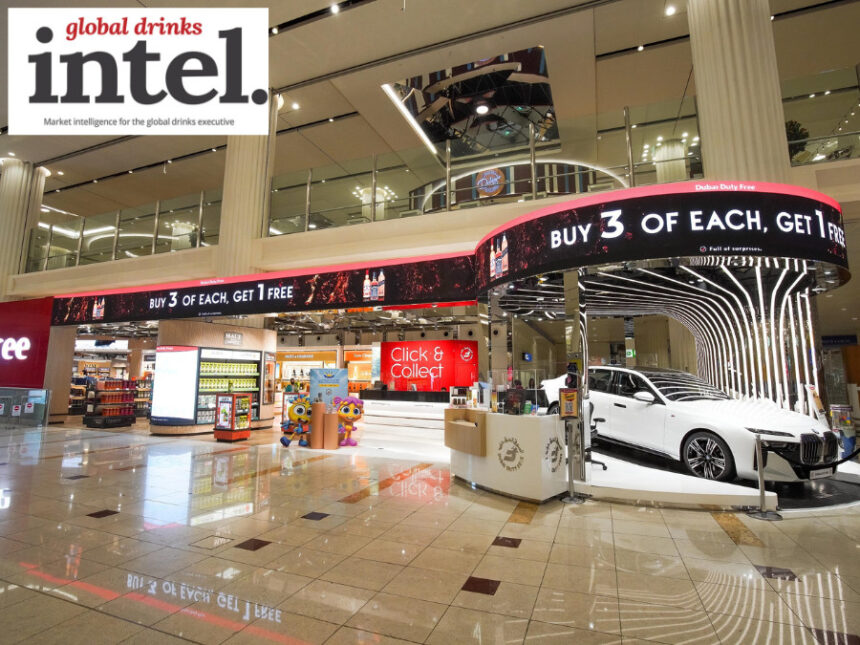
“Our objective is to showcase online what is in-store as much as possible,” says Dubai Duty Free’s senior VP for purchasing, Sharon Beecham. A recent example of a successful digital activation was ‘Destination Champagne’, where customers were served a personalised ‘match’ after responding to a series of questions.
“Being able to seamlessly move through various digital environments to deliver enhanced experiences will result in high customer interaction and sales,” says Beecham.
Over at Gebr Heinemann, digital is driving the retailer’s ‘Heinemann & Me’ loyalty programme. “With the introduction of early access campaigns, we offer our members exclusive access to special products and new launches,” says head of category experience Lars Ziehn. He cites last year’s launch of Jack Daniel’s American Single Malt as an example. “It creates a VIP feeling for members, and a fear of missing out (FOMO) that triggers non-members to convert, especially for products that sell out quickly.” The new expression was exclusive to the Heinemann web shop throughout August – and sold out in the first week.
Dufry’s World Duty Free took the brief and ran with it for its annual Whisky Festival last year. From videos and masterclasses to podcasts and promotions, the campaign didn’t just comprise online and offline engagement, it also spanned 36 airport locations in 19 countries.
“We wanted to bring the world of whisky to life for everyone with [last] year’s festival and to really connect with our customers via in-store activations, as this is the best way to really elevate the travel retail experience for them,” says Dufry global marketing director Augusto Deymonnaz.
“With whisky, there’s so much to learn and discover and through the combination of experts, live tastings, immersive virtual experiences and digital content, we want to connect with as many of our customers as we can.”
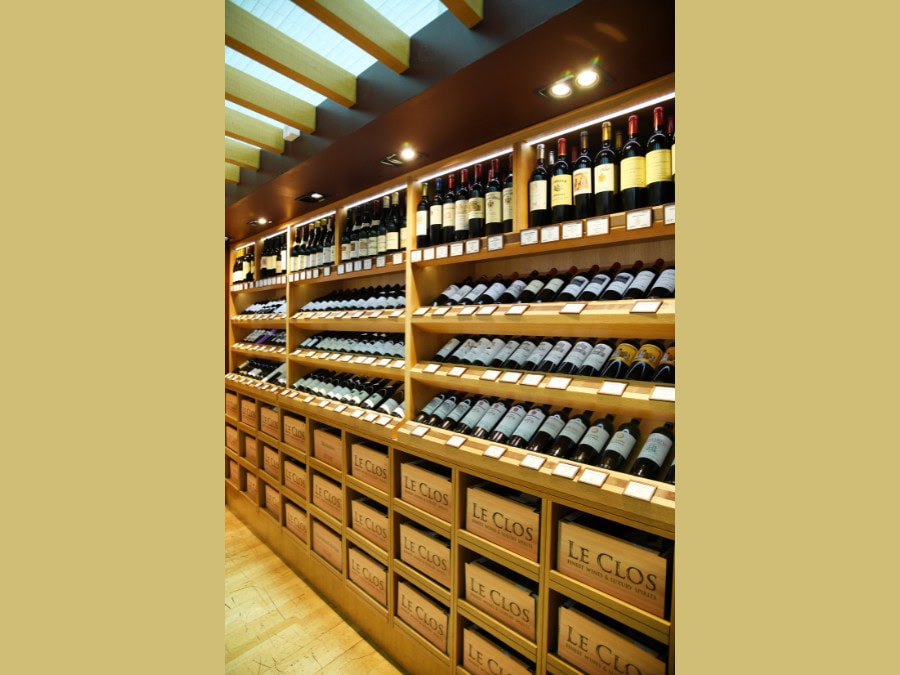
Back in Dubai, this time with fine wine & spirits retailer Le Clos, and the team has created a docu-series with the objective of both engaging consumers and building brand awareness. “We’re not trying to be technical, we’re trying to be human,” explains Manjot Riyait, group head of marketing & communications at Le Clos parent MMI & ELR. It’s all about showing the human behind the bottle, she explains. The films, produced in partnership with the likes of Château Margaux and The Macallan, transport Le Clos customers into their world.
“The idea is that wherever they are on that whole path-to-purchase journey, we want the consumer to know about the wines and spirits, before they even get to our shop,” says Riyait.
There’s an education element as well. Topics tackled include which producers to visit while travelling, a grape varieties explainer, and even landscapes and terroir. “We make sure that content is either really snackable and digestible where we cater to let’s call them enthusiasts,” Riyait explains. “But where your level might be a bit more advanced, for the connoisseur or the collectors, we’ve created more long-form content in our CRM.”
Problem-solving through digital
While it’s correct that digital plays a huge role in attracting the consumer (“We don’t want to do content for the sake of content,” says Le Clos’s Riyait), it also offers practical solutions. Data acquisition is one. In such a multi-stakeholder industry where insights aren’t always shared, both loyalty programmes and content offer remarkable opportunities to get to know consumers at a granular level.
Getting creative in the space also offers retailers a tool to reach consumers even in highly regulated markets. Simply honing a relatively straightforward email strategy can reap rewards. Dubai Duty Free has cultivated a growing database that it says has resulted in better rapport with consumers than previously.
“Given local restrictions around the promotion of liquor, it’s very important that the recipients are bona fide Dubai Duty Free liquor customers,” says Beecham. “This is achieved by a long-running sign-up strategy that to date has resulted in a 41,000-plus database of loyal liquor customers.”
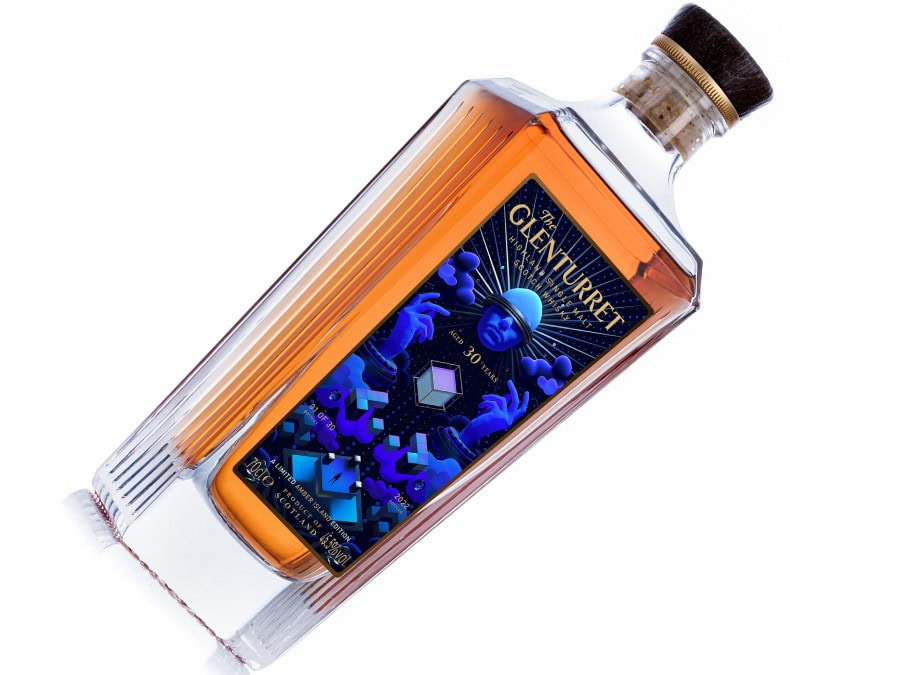
Amber Island made headlines when it launched in mid-2022. The brainchild of Gebr Heinemann’s Gharage vision hub, the web3 platform is essentially an online whisky community that combines physical bottlings with NFTs. Its mission is to make collecting safer, and it does this by utilising blockchain.
“We are not a crypto project,” explains Gharage’s Shenr-Jye Hon. “The blockchain technology allows us to make whisky collecting easier, safer, more accessible and transparent.”
This ‘tooling’ is a great measure to combat counterfeiting. Every bottle sold through the platform gets an accompanying NFT. The bottle stays in storage until the NFT is ‘redeemed’, then sent to the purchaser (solving the storage issue too). There’s also a content platform for members and access to tastings and events.
Twelve months ago, Amber Island partnered with The Glenturret to release a 30-year-old expression to its members, and it sold out within minutes. “The biggest hurdle was the NFT part,” Hon says. Anecdotally, consumers less used to the concept of blockchain and cryptocurrencies needed help setting up a wallet. The team is looking at bridging solutions to increase accessibility.
“I think it’s proof of concept,” he continues. “There are so many traditional people interested in a new approach.”
Now the team knows it works, there’s the opportunity to roll the Amber Island concept out more widely. “We as a team believe that technology really allows so much,” says Hon. “And I think for players like us, it’s now super-interesting to see how we can reduce the complexity for the user to allow them to benefit from the technology.
“Once you have the community, there is so much you can do.”
It’s a sentiment that broadly rings true. Le Clos is exploring both click-and-collect and an in-flight e-commerce solution where passengers can purchase the wines that they’re drinking, in real time. Gebr Heinemann is looking at leveraging AI, Ziehn reveals. “Virtual reality and augmented reality will continue to improve and can enhance our travellers’ experience and how they explore and select spirits,” he says.
Customer acceptance of digital solutions has never been higher – yet retailers should perhaps be careful to ensure the product remains front and centre. “In our industry, digital is never going to be able to replace that level of holding the glass, nosing, experiencing it on the palate,” concludes Le Clos’s Riyait.
For wine and spirits consumers, it’s fundamentally about speeding up access to that experience.
This article has been available to Global Drinks Intel subscribers since October. For details on how to join them, please click here.