


The percentage of American adults who claim to drink alcohol has sunk to 54%, the lowest figure since 1939, according to a recent poll.
US analytics firm Gallup revealed in its annual ‘Consumption Habits’ survey that the figure fell to 62% in 2023 and to 58% in 2024, before reaching 54% today. Prior to the most recent poll, the rate has dropped below 60% fewer than ten times, including 58% in the company’s initial 1939 poll and a one-time low of 55% recorded in 1958.

The retreat from alcohol use has been most pronounced among female consumers, whose reported drinking rate has fallen 11 percentage points since 2023 to 51%, compared to a five-point drop among men to 57%. By ethnicity, non-Hispanic white adults have recorded the sharpest decline, down 11 points year-on-year, while alcohol consumption among people of colour has remained steady at about 50%.
Generational patterns are also shifting, according to Gallup: young adults, already less likely to drink alcohol than previous cohorts, have seen their rate drop from 59% in 2023 to 50% today – placing them behind both middle-aged and older adults, who have also recorded declines over the past two years.
The researcher noted that the trend is not linked to a rise in recreational marijuana use; while cannabis consumption is higher than a decade ago, it has been broadly stable over the past four years.
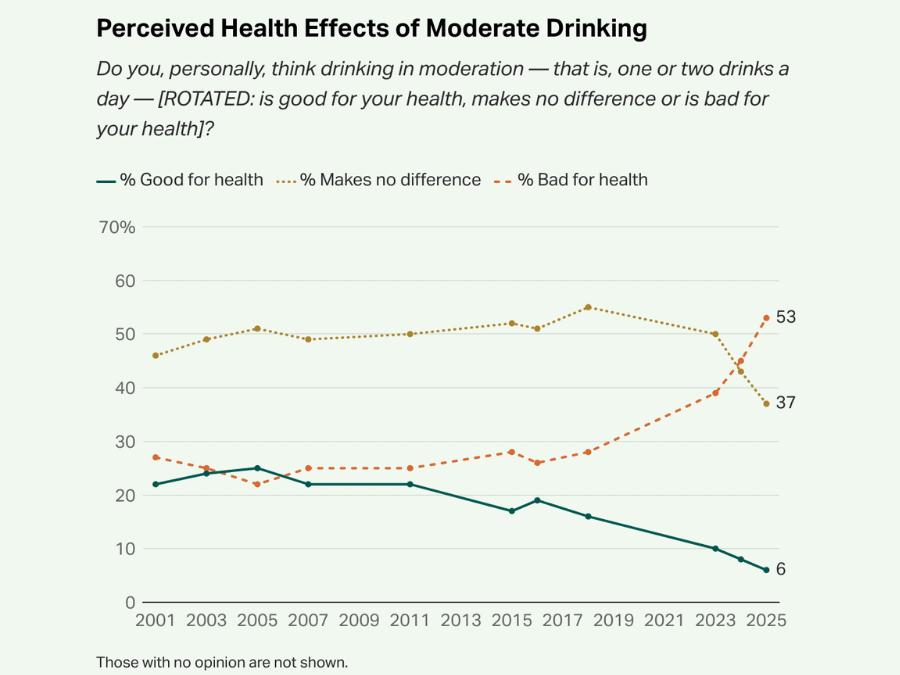
The overall decline coincides with a shift in public health messaging, as recent advice has challenged earlier claims that moderate drinking may carry protective benefits, pointing instead to health risks at any level of consumption. As a result, for the first time in Gallup’s trend, a majority of Americans (53%) said they believe drinking alcohol in moderation, or “one or two drinks a day,” is bad for one’s health.
The poll was conducted between 7 and 21 July, but Gallup did not disclose how many US adults were surveyed.
This is undoubtedly a strange time for the alcohol industry. In recent weeks, a report claimed that the US Government was planning to update the recommended daily alcohol consumption limits in its revised dietary guidelines.
Shortly after, The World Health Organization (WHO) revealed its latest initiative that urges countries to implement higher taxes on alcohol. The agency’s ‘3 by 35’ proposal encourages governments to leverage the price of alcohol, as well as tobacco and sugared drinks, and raising them by at least 50% through “health taxes” by 2035.