

The roots of Chilean pisco trace back hundreds of years. While the term was first formally recorded in Chile’s Elqui Valley in 1733, Spanish settlers had already been distilling wine into grape brandy since the 16th century.
In the hundreds of years since its origin in the country, pisco has become synonymous with Chilean culture and heritage. The South American nation officially established a legal Denomination of Origin for pisco production in 1931, and it remains the country’s national spirit today.
Now, the next stage of evolution for Chilean pisco is beginning. Though recognised internationally through cocktails like the Pisco Sour, sales of the spirit have been largely confined to its domestic market. That is, until recently, when efforts by national promotional organisation ProChile began boosting its international footprint.
Last year, global exports of Chilean pisco reached US$4m, up 28% compared with 2024 and 70% compared with 2023. The number of exporting distilleries has also risen, climbing from 20 to 24 year-on-year in 2025 to reach a total of 40 international markets.
‘Chilean Pisco: First Spirit’, a campaign designed to build knowledge and develop international distribution for the spirit, is to thank for this impressive growth. Its target markets include China, where Chilean pisco exports registered an astronomical rise of 460% last year, making the Asian nation one of pisco’s largest international markets alongside the US, Canada, Germany, Spain, Argentina and the UK.
This last market, too, provides a bright spot for pisco. Since the start of the ProChile-led promotional campaign in 2023, the number of Chilean pisco brands present in the UK market has doubled and exports have risen 70%.
UK market boost
Over the coming years, the campaign will continue to be supported by the Government of Chile, and ProChile intends to build on this early success to cement pisco as a must-have spirit both on cocktail venue backbars and retail shelves.
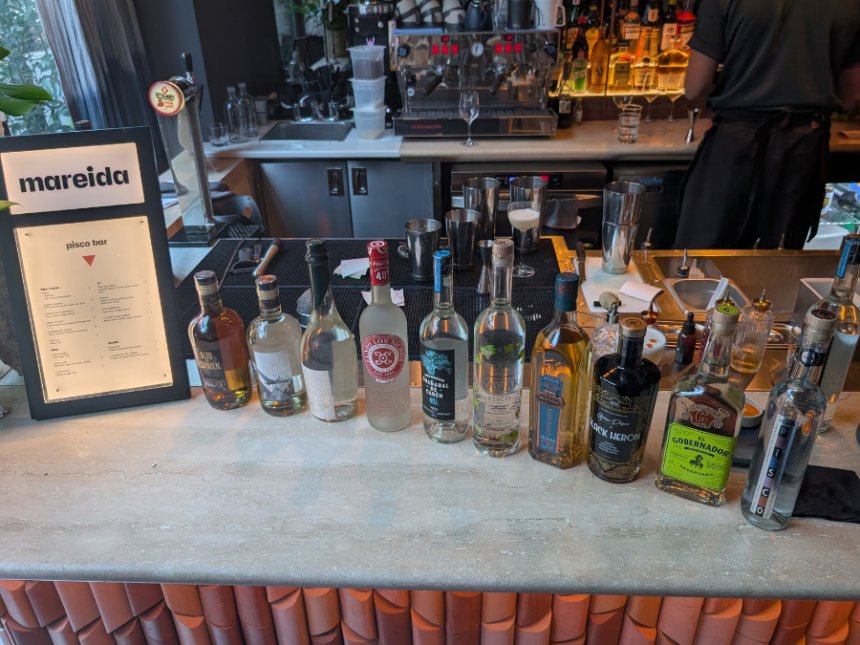
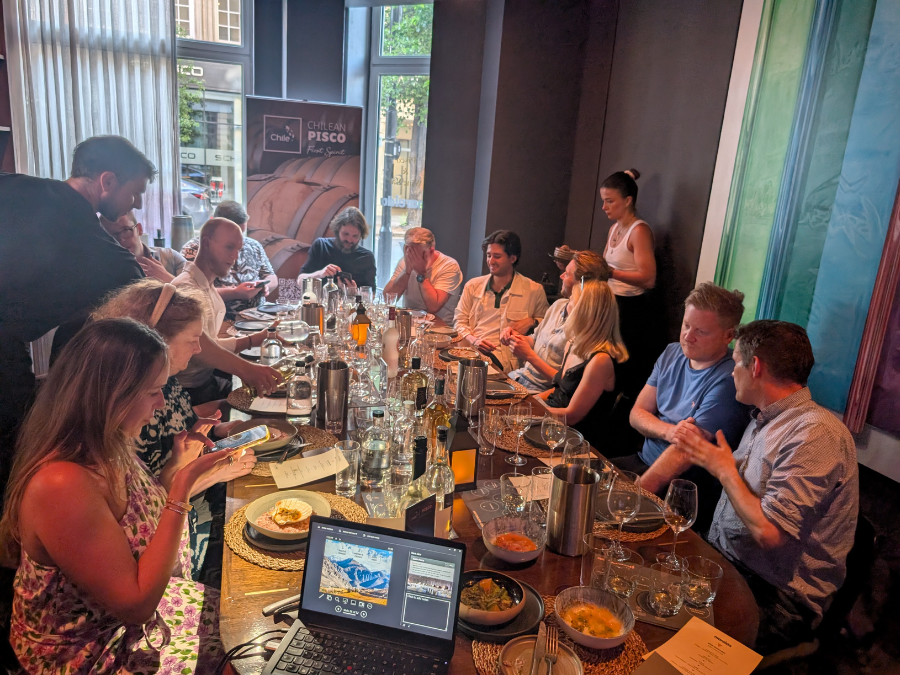
It was with this goal in mind that the organisation held a London tasting event in June (above). Hosted at Fitzrovia restaurant Mareida, which became the first Chilean restaurant in the UK to be recognised by the Michelin Guide in April, the masterclass was paired with Chilean dishes prepared by head chef Nicolás Einersen. Guests explored Chile’s main pisco valleys through six selected labels, moving from crystalline, cocktail‑friendly piscos to deeper, oak‑aged styles.
The first example tasted at the event was produced by Chañaral de Carén. Founded in 1985 by brothers Julio and Marcial Taborga, who purchased the original Limarí Valley property, Julio’s son later drove the brand’s formal commercialisation, growing it from a local farm project into a boutique brand now exported to the US. The entire distillation process is described by the family as “pure alchemy” and every brick of the facility and the copper pot stills were built by hand. Floral, citrus and crystalline, the Reservado 40° Transparente tasted at the London event is perfect for elevated pisco sours and highballs.
Next up was small‑batch ‘pisco de autor’ Reservado 40° Transparente from Kentaurus. A boutique, modern Chilean pisco distillery in Guayacán, Coquimbo, Kentaurus deliberately shifts away from traditional Spanish copper methods to combine northern Chilean grapes with traditional Charentais alambique, the historic double-distillation still legally required to produce Cognac, yielding a mineral and silky spirit.
Chile’s oldest active distillery, Destilería Los Nicho, was also present at the event, pouring its Reservado 40° from the Elqui Valley, a pisco with high‑altitude freshness and a complex, expressive profile. Named for its underground cellars, the estate originally belonged to Rigoberto Rodríguez Rodríguez and was once known for producing the legendary Tres Erres (3R) pisco before that brand name was sold to a large conglomerate. The distillery remains a bastion of pre-industrial tradition – historic copper pot stills are fired with local wood rather than gas or electricity.

Oak-aged pisco’s potential
Aged pisco was also in the spotlight at the London masterclass this summer. Despite its ubiquity among Chilean drinkers, a negligible percentage of UK on-trade listings for pisco are aged spirits, suggesting it’s a near-empty category in the market. However, this creates a genuine white space for the sub-category, with potential to build on the already rising awareness of pisco among UK consumers.
Mistral Especial 35°, for example, is aged in American oak, producing a spirit both golden and smooth, with soft vanilla and dried‑fruit notes. Owned by beverage giant CCU and headquartered in a restored century-old estate in the town of Pisco Elqui, Mistral is one of Chile’s most dominant commercial pisco brands, and a pioneer of American oak barrel aging in Chilean pisco.
Wood used for aging ranges from American to French to local Chilean native raulí. Gran Pisco Profeta 43° uses wood‑fired French oak. The result is a rounded, vanilla‑tinged example of the spirit made from a blend of hand-selected Moscatel de Alejandría and Moscatel.
Rosada grapes. Profeta (“Prophet”) is an artisanal pisco from the independent boutique company Limarí Soul, produced in the rugged commune of Monte Patria in the Limarí Valley.
The day’s final pour was Bou Barroeta ‘Cofradía’ 40°, the only sample produced in the Atacama Valley, which spent three years in raulí wood. The family estate has gained global acclaim in the century since it was founded by Antonio Bou Suñer in 1922, a master distiller who emigrated from Mallorca, Spain, to the Huasco Valley. His son Francisco Bou Barroeta took over after Antonio’s death in 1961, formalising the family brand known today.
None of these six piscos are available in the UK yet, opening the door for conversations with importers, distributors and on‑trade partners interested in bringing these terroir‑driven spirits to British consumers.
As part of the event, Mareida also unveiled its Pisco Bar, which has since become the most successful point of sale for pisco in the UK.
For many spirits categories, consumer consciousness begins in the bar. In the case of the Chilean national spirit, a cocktail is the first touchpoint for drinkers to get familiar with its base spirit. For pisco, potential growth will likely be driven by cocktail culture and bartender demand for versatile, heritage-rich spirits as consumers seek new and interesting serves.
As agave and rum interest matures, drinkers are actively seeking the ‘next’ category, and pisco is well placed to capture that curiosity
Head here to learn more about the campaign and contact ProChile directly by clicking here