

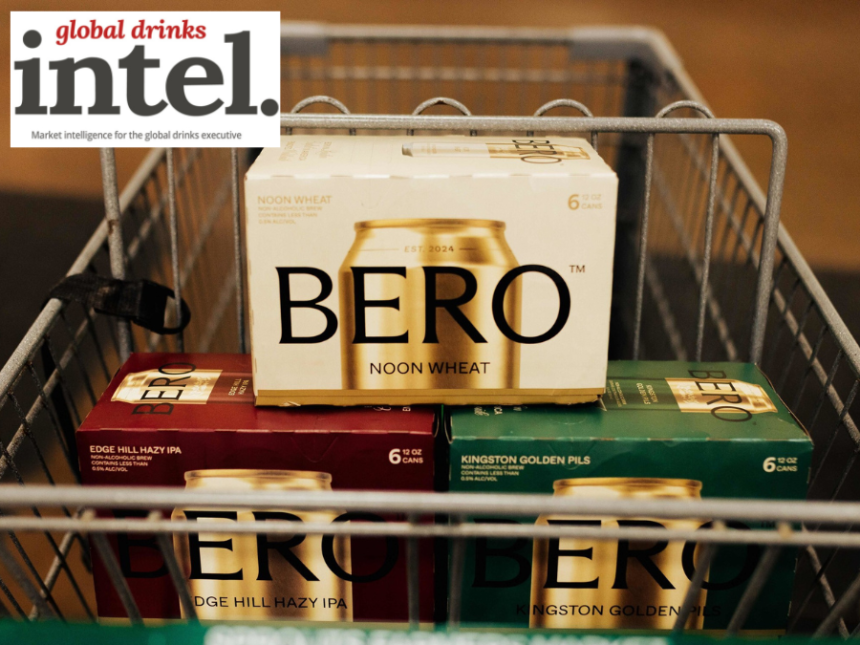
While the launch of a new alcohol-free beer brand isn’t necessarily cause for much excitement these days, Bero has a very high-profile sales cue. Earlier this month, the brand’s co-founder & CEO, John Herman, talked Global Drinks Intel deputy editor Jess Broadbent through how Bero has been deploying that web-shaped cue.
You quit Nutrabolt, where you were company president, in mid-2023 to focus on Bero. How helpful has it been to the brand to have (actor) Tom Holland as its co-founder?
Bero’s not quite two years old yet. Growth- and distribution-wise, we’re in the position we are today because we have a super-credible, involved and authentic partner in this business. Tom isn’t a celebrity collaborator. I don’t call him and say: “Hey, you owe me a social post.” He’s the guy who was texting me late last night with naming suggestions for a new flavour of shandy!
The brand’s acceleration and that spotlight have been wonderful, but I do believe that if a brand is built with a celebrity tie-in that doesn’t have credibility or a soul or quality or operational capabilities, it will fail. A celebrity can’t get a brand everywhere. That’s where, when a consumer walks into an on-premise location, they’ll see through your brand really quickly – sometimes, they’ll even judge you as being just a celebrity brand.
Being co-founded by Tom (below, left) has brought Bero a lot of opportunities, but the reality is that on-premise beverage directors worry about their guest experience a great deal, so the brand has to stand on its two feet.
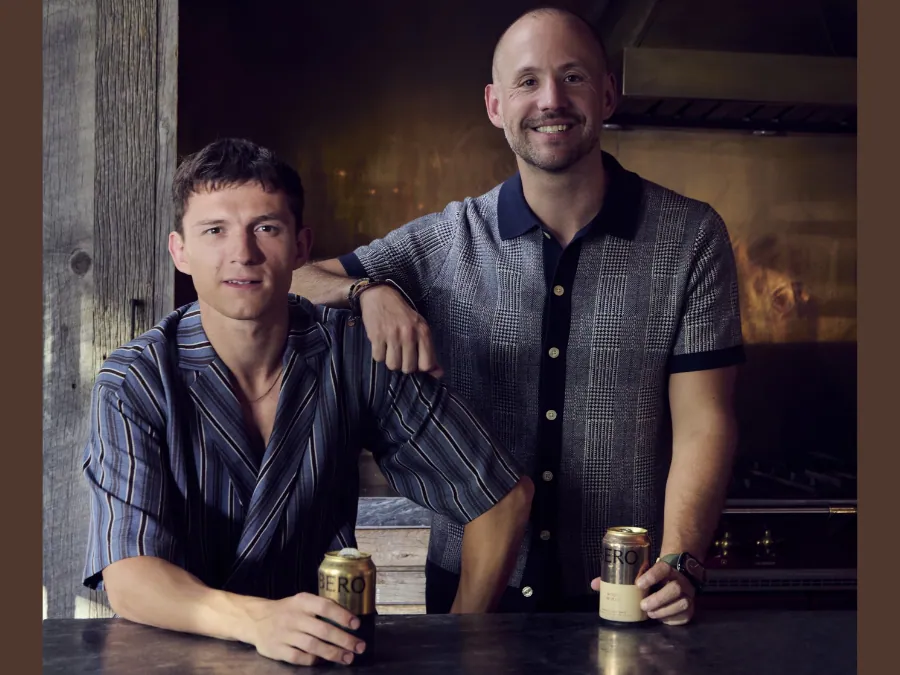
Will we see more celebrity-backed non-alcoholic brands going forward?
Many celebrities look for a hot category where they can make a potentially quick buck. There have been other celebrity-linked entrants since Bero came out. If the brand’s grounded with great liquid and it can live without a celebrity five or ten years from now, and if it has a team behind it that knows how to operate in a high-growth, stressful industry, then it has a shot.
If it’s fully dependent on a celebrity name, I think it’ll fall apart. Consumers are too smart for that now.
More broadly in non-alc beer, how concerned are you that the ongoing gold rush could over-dilute the segment?
This is less of an issue today than it was three years ago, when brands were rushing into the space with a bad product. It was risky back then because it increased the likelihood of a consumer’s first experience with the category being negative. I don’t see that as being a major factor anymore, because the quality in non-alcohol as a category has improved.
There will always be three to five ‘winners’ that come out of it, but I don’t think having new entrants is a bad thing at all.
How has the non-alcoholic beer category fared so far this year?
No-alcohol has become a really strong segment of the overall beer category. It’s now viewed less as a tertiary category or separate entity and more as a subset within total beer. While you’re seeing craft breweries close and legacy beer brands decline around the world, non-alcoholic beer continues to grow in the high double-digit range, which is extremely encouraging.
At a channel level, there are new brands entering into the space and we’re all telling our unique story to the consumer we’re trying to attract – this is the best thing possible for a category that while it’s growing, remains a very small part of the total. We need it to grow faster and become much more meaningful, so that more consumers understand its role within the total set, while more bartenders and buyers are thinking about it also.
In the US, the segment is seeing a lot of its growth in the country come from the on-premise. Earlier, the adoption of brands in the legacy beer space, along with brands such as Athletic, saw the off-premise lead the way. Today, the on-premise is really the vehicle that can grow the segment further. Indeed, while the US off-premise is in the plus high single/low double-digit range, the on-premise this year is growing at 45%.
That’s extremely important, because more often than not, the first introduction to a brand happens in the on-premise channel. By having a stronger on-premise business, brands can have greater velocity in distribution and on-shelf at retail. So it becomes a very healthy cycle that hopefully brands can lean into. It’s certainly one that we’re trying to lean into.
The consumer trend of ‘zebra-striping’ appears to be a really strong opportunity for Bero and for non-alc beer.
Around 90% of our consumers still drink. While Tom’s teetotal, if I go out with my buddies, part of why I’m out is to have a little escape. I don’t want to have five beers and not be able to remember things, so the idea of having a 4%- or 5%-ABV beer and then a non-alc fits my lifestyle.
Nowadays, it doesn’t take an Oura ring to know that when you drink (too much) alcohol, you sleep poorly and feel bad the next day. All these things are leading people to make better decisions about what they put in their bodies. Whether you call it zebra-striping or a normal lifestyle, that’s just how people are reacting.
Has the segment’s historical dynamic of ‘off-premise first, on-premise second’ changed recently?
For Bero, the off-trade’s still ahead of the on-trade. However, we want to flip that in the very near term. We’re aggressively working to build the brand in the on-trade.
In the US, the on-trade is still, to some extent, the Wild West: Drinks menus are developing, with not just one non-alc beer to check a box and with non-alc beer being combined with non-alc cocktails and with functional drinks. Brands like Athletic are starting to get into that space, and we’re focused on getting into it too. I think it’s going to become very crowded, so a brand’s distinctiveness – and its succinctness – is paramount.
In its aesthetic and its look, we’ve been developing Bero for the on-trade since day one. Our introduction of a bottle (earlier this year) was a pretty big undertaking, given that glass bottles were largely taken out of the supply chain here during the craft beer boom.
We’re not completely sold yet on draught, but we’re exploring this for the longer term. Ultimately, non-alc beer needs to become a higher-velocity play before it can warrant the tap space. Beyond the complexity of putting non-alc in draught, that’s the bigger hurdle we need to solve first.
In Europe, it’s a completely different story, as the segment is much more developed than in the US. In Spain, for example, over 10% of overall beer sales are non-alc, and there’s a similar story in France and Germany. The UK isn’t quite as developed, but you can’t walk into a bar, pub or restaurant and not find a few non-alc options available on draught. That makes Bero’s relationship with the UK much more on-premise-dominated; we’re in about 1,300 locations.
Members-only intel
Keep reading this members-only article – and every one like it
- ✓All paywalled news and interviews
- ✓Category and market data
- ✓Monthly GDI magazine
- ✓Full archive + daily newsletter
Secure checkout · Cancel any time · Company invoices available
Already a member? Log in
See all plans, incl. 10-reader and corporate
Check if your company already pays for you Your company may already give you free access.
Corporate subscribers: AB InBev, Bacardi, Campari Group, Diageo, Moët Hennessy, Pernod Ricard, Proximo Spirits, Suntory Spirits Group, William Grant and Sons.
Activate company accessNot ready yet? Get the headlines free in our daily newsletter.
Sign up free