


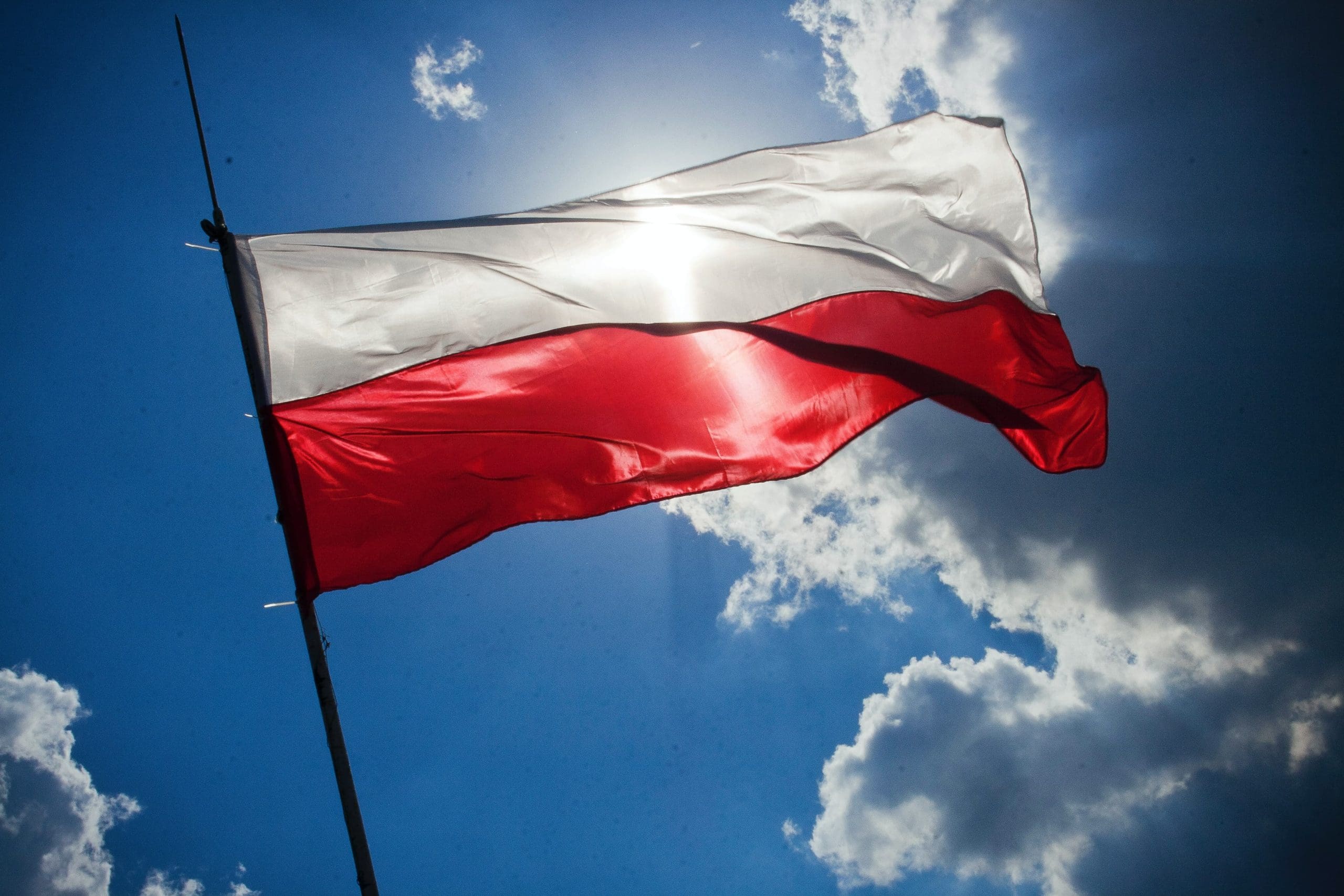
Despite the challenges facing the market — from the pandemic to controversial government legislation — Poland is a land of opportunity for the spirits category. Agata Andrzejczak reports
The spirits market in Poland has transformed thoroughly since the fall of communism. First, the state-owned spirits monopoly was divided into individual entities which were then sold off gradually, through long bureaucratic processes, to multinational drinks companies and other investors.
Then, as Poland began to be considered a ‘safe’ country, most of the big international brands started to look into entering this large and populous market for the first time. This in turn meant that Poles’ drinking repertoire started to broaden outside vodka, a process that is still taking place.
While the country’s economy has understandably been hit by the Covid-19 pandemic, drinks companies in Poland seem to have responded reasonably well and have adapted to the new situation.
Some companies, mainly premium spirits importers, performed better than expected. A series of important recent trends make Poland’s spirits market interesting. One key development likely to reshape the industry is the controversial small bottle tax introduced at the start of this year. The reason for specifically targeting small bottles of alcoholic beverages, bottles, 50cl and cheap and strong (above 5% ABV) beers”.
The Association of Employers of the Polish Spirits Industry (ZP PPS) claims that the Polish government favours beer, the most popular alcoholic beverage in the country. Although beer contains the same amount of ethanol as spirits, it can be freely advertised and promoted in ways other alcoholic beverages cannot. Because of this, claims ZP PPS, most Poles do not associate beer with alcohol.
Moderate vodka growth
Poland is the largest market for vodka in Europe, representing over 35% of sales in the region. After years of decline, the market for vodka has been growing moderately since 2017. Growth is driven by the mainstream and premium-and-above segments, while the value segment continues to decline. The Żubrowka brand remains the market leader with over 20% of the vodka market in Poland.
An interesting trend that is creating known colloquially as małpki (monkeys), is that these are seen by the government as particularly attractive to young people and the heaviest drinkers.
The additional fee means that alcoholic drinks sold in bottles of under 30cl now have an additional charge of PLN25 ($6.50) per litre of alcohol content. This means that, for example, a 10cl bottle of vodka with an alcohol content of 40% is PLN1 ($0.26) more expensive. After the tax was introduced, sales of small bottles declined by as much as -30% in the first two months of 2021 compared with the same period last year.
Krzysztof Kouyoumdjian, external relations director of CEDC, the leading spirits company in Poland, explains the controversy surrounding the new law: “It is difficult to understand the purpose of the new legislation which was meant to limit alcohol consumption. The situation might in fact be the opposite. After price increases for small bottles, consumers are likely to switch to larger spirits bottles, 50cl and cheap and strong (above 5% ABV) beers”.
The Association of Employers of the Polish Spirits Industry (ZP PPS) claims that the Polish government favours beer, the most popular alcoholic beverage in the country. Although beer contains the same amount of ethanol as spirits, it can be freely advertised and promoted in ways other alcoholic beverages cannot. Because of this, claims ZP PPS, most Poles do not associate beer with alcohol.
Moderate vodka growth
Poland is the largest market for vodka in Europe, representing over 35% of sales in the region. After years of decline, the market for vodka has been growing moderately since 2017. Growth is driven by the mainstream and premium-and-above segments, while the value segment continues to decline. The Żubrowka brand remains the market leader with over 20% of the vodka market in Poland.
An interesting trend that is creating interest in vodka is a newly developed segment of clear vodka with natural extracts. Soplica originated this trend back in 2017 with Soplica with pear extract, but other leading brands have also appeared on the market: Żubrowka infused with the herb bison grass (also known as vanilla grass), among others.
The number of premium-and-above local vodka launches, such as very successful Biały Bocian and, most recently, Czarny Bocian, accelerated as consumers started to experiment more. Brands such as Belvedere, Beluga and Chopin have been very active on social media to entice young consumers to the category. In the imported segment, traditionally dominated by Absolut and Finlandia, several brands, such as Stumbras, Hlebniy Dar, Russian Standard and Nemiroff, have been active in traditional retail.
Flavoured local low-strength brands (seen by consumers as vodka but ranging 25% to 32% ABV) which are line extensions to traditional full-strength vodkas continue to grow, driven by the Soplica range, Żołądkowa Rześka, Żubrowka, Lubelska, Barmańska, Saska and Krupnik.
From citrus to chocolate, the range of flavour offerings available is certainly impressive and may be one of the largest in the world. All brands come in several flavours, with the largest flavour range represented by CEDC’s Soplica.

Kouyoumdjian says: “We have been introducing new flavours every year, with the latest addition being the Smaki Przyjemności line. The range includes three interesting dessert flavours — cherry and chocolate, almond and caramel, and nut and chocolate. Another innovation we have is the Rajska range — an interesting combination of citrus and exotic flavours.”
Small bottle formats (10cl and 20cl) used to account for most of the volume in the vodka segment. This has been changing due to the introduction of the small bottle tax. It is unlikely that the small bottle segment will ever enjoy the growth it once did, but some companies were fortunate to have developed a 35cl bottle size several years ago and this format could do well as an alternative for consumers who favour smaller bottles.
Pandemic fast tracks trends and distribution changes
The pandemic has accelerated trends such as premiumisation and wellness, and sped up distribution channel changes in Poland, just as it has in other parts of the world. The rise of the premium segment is a particularly important development. Since the start of the pandemic, many industries have been negatively affected, the horeca (hotel/restaurant/café channel) in particular, but demand for luxury goods in Poland has been steadily growing.
Most premium drinks categories have been showing growth — a trend that has been present for a while. Many industry figures predict this growth will continue as the drinking-less-but-better trend is likely to accelerate.
Vodka and beer have always been Poles’ favourite alcoholic beverages, but other categories, such as whisky, gin and rum, have increasingly attracted consumers as the premiumisation trend gathered pace. Whisky had another excellent year in 2020 and is still enjoying solid growth, especially in the premium-and- above segment. Growth is due to several reasons, including key retailers expanding their whisky SKUs. This, in turn, has led to consumers treating themselves at home more often.
Over the last five years, several private label whisky brands were launched by key retailers — Biedronka and Lidl — which offer good quality and prices affordable for most Poles. Both companies have also consistently been expanding their whisky offering to premium international brands. Another reason for whisky’s appeal has been growing interest among younger consumers who have had more time to learn about whisky through social media and other online sources during lockdown. Many younger LDAs also tend to have embraced the drink-less-but-better-quality ethos and whisky perfectly fits this trend. Scotch malt and Irish and US whiskies are seeing good growth in the Polish market this year, with some brands continuing to sell large bottle sizes.
The growing popularity of gin and rum has been driven by a rise in mixing drinks at home, a trend that became more evident during lockdown.
Premium gin attracted many new consumers with innovative labels, unusual colours and new flavours previously unknown to the Polish palate. Although the category is relatively small, volumes have been increasing steadily. Despite the fact that gin’s growth was being driven by the on-premise, the pandemic does not seem to have affected sales which moved to retail as consumers looked for the brands they could see on social media. This switch to the off-premise has been key for ‘Western’ brands that actively promote in this channel.
Imported premium-and-above dark rum performed well, mainly in the on premise, prior the pandemic. Similar to gin, rum sales successfully moved to retail when lockdowns hit.
Many industry insiders believe that Poland will follow a trend seen in Spain where rum has gradually been taking share from premium whisky. This is because the two categories share a similar consumer profile — the 30-plus male who, as he becomes more affluent, is constantly looking for novelty and something unique in his alcoholic beverages. In addition, many rum brands communicate quality by using age and craft statements — something that whisky consumers have become familiar with.
The premiumisation trend has also seen growth in the cigar market — Mordor Intelligence forecasts that the global cigar market will grow at a CAGR of 4.2% between 2019-24. In Poland, the premiumisation trend has boosted sales of premium rum and whisky, both seen as go-to pairing spirits for cigars.
Conversely, the pandemic has also created a greater focus on healthier living. The words ‘immunity’ and ‘wellness’ have been on everyone’s lips for a while, but the healthier living trend seems to have accelerated in the shadow of Covid-19. Many Polish consumers limited their alcohol use, moved to low alcohol offerings, began to exercise more or started dieting.
Polish on-premise small and underdeveloped
Globally, the pandemic prompted channel switching from the on-premise to take home alcohol consumption. But in Poland, the on-premise market for alcohol has traditionally been small and one of the least developed in Europe. This is true for all categories in terms of sales, but very important in terms of promotional activities. Unlike beer, the horeca is the only channel in which any promotional activities for wine and spirits are legally allowed to take place. Since the pandemic started, all spirits companies suffered as they have not been able to promote their existing, and more importantly, new products.
There were some other key changes in distribution channels prompted by the pandemic. Traditional retail has been affected by restrictions such as opening hours, limits on the number of shoppers and the closing of shopping centres where some of the large retailers, such as Carrefour and Auchan, are based.
Convenience stores benefited as a result. Lockdown and shopping restrictions meant that retailers like the Żabka chain, which always offered quick and convenient shopping, extended their range of products, including alcohol, and added services such as takeaway fast food and postal services.
Most in the industry are not keen to speculate on the future of the Polish spirits market. Apart from the Covid-19 pandemic, the current government continues to establish new laws — viewed by many as illogical — in an unpredictable manner which makes any forecast challenging.
Many spirits companies agree, however, that what is very encouraging — and challenging — is the fact there remain many undiscovered spirits categories in Poland, and among existing large categories there are undiscovered formats, ways of drinking and flavours.
The vast vodka and beer segments will certainly continue to dominate for a while, but the small per capita consumption of other spirits categories, including fast-growing Scotch, bodes well for the future. What will be incredibly challenging for spirits companies is how to make the most of new product launches if the horeca remains closed.
Most of all, it must be remembered that Poles have historically been spirits drinkers and it will take a generation —or a few — to change this. ●