


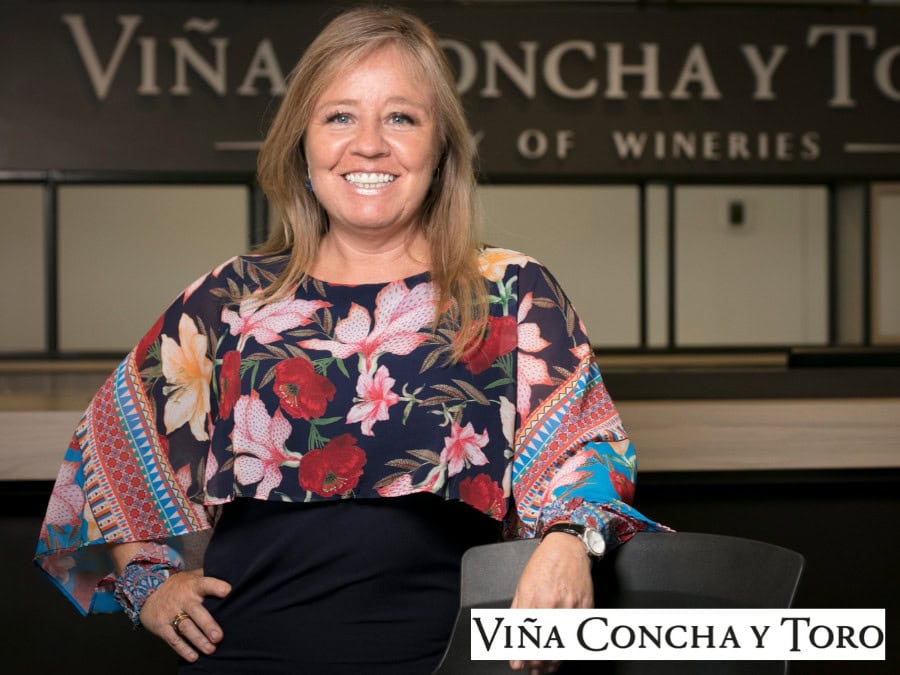
Last month, Viña Concha y Toro released its latest corporate sustainability strategy, in which the Chilean wine major increased targets around carbon emissions, water consumption and regenerative practices. During a trip to the B Corp-certified group’s recently opened visitor centre in Chile earlier this month, group sustainability director Valentina Lira (below) spoke to Global Drinks Intel’s deputy editor, Jessica Broadbent, about how she’s going about delivering the strategy across one of the world’s largest wine businesses.
Concha y Toro has increased several of its long-term sustainability targets, including pledging to reduce CO2e [carbon dioxide equivalent] emissions by 42% by 2030 and achieve net zero by 2040 – ten years earlier than initially planned. Which area is the furthest from meeting your goals?
When you measure carbon footprint, you have different categories, and the one which is the most difficult – because we depend on them 100% – is marine transportation. We’re one of the largest wineries in the world, but if you consider the activity of wineries compared to other industries, we are very small. We don’t have the opportunity to negotiate.
The International Maritime Organization (IMO) has renewable energy goals for 2050, so that’s good news, because it means they’ll start incorporating renewable energy.
Are you having conversations with your shipping suppliers to try to apply a bit of pressure?
Not pressure, but we’re trying to do something together. Maybe we will run a pilot.
If the IMO targets are for 2050, are you concerned you won’t meet your own goals?
The thing is, when you work with the net-zero standard, you don’t need to go to zero emissions. It’s not the same. It means: ‘I can have some, but I need to visualise my captures.’ That’s why we are also working in captures to prepare for net zero.
So, even if the marine industry isn’t able to reduce [emissions] at the rate that we require, we still have the opportunity to [use] carbon captures to make net zero. By 2050, maybe Concha y Toro can be net positive. That’s the idea.
By ‘captures’, do you mean the act of extracting CO2 from the atmosphere and storing it?
Yes. Concha y Toro is sequestering carbon using nature-based solutions. If we have well-implemented regenerative practices in place, we should see an increase in the carbon that we’re storing in the soil. [To achieve net-zero status, a business must cut total emissions by at least 90%, with the final 10% offset using captures.]
How do businesses measure their individual marine emissions if they have one container on a huge ship?
In marine transportation, carbon emissions are measured by the weight of the boxes or the products, and the distance travelled.
This is all very complex. How do you communicate your sustainability work to the end consumer?
The only way is through certifications. We have a certified carbon footprint from the International Wineries for Climate Action, but we aren’t promoting it at the bottle level, because it’s really complicated and we need to deliver simple messages.
What we are delivering to the final consumer today is only the B Corp certification, meaning: ‘We are a good company.’
What message are you sending to retail buyers?
The retailers are the ones that are doing the selection. They are taking the flag, so to speak, of scanning suppliers and presenting [who is sustainable] to the final consumer.
Retail is helping a lot in environmental education.
What’s the most common data point retail buyers ask you for?
Carbon footprint. The most important thing for the end consumer is nature. Carbon footprint is something that only a few people understand – consumers aren’t really worried about the weight of the bottle because they don’t make the connection – but there is something about nature.
Everyone feels a connection with nature when they see trees, birds or a healthy ecosystem – that’s something that we can show to the final consumer. They’re more sensitive to that kind of information.
Concha y Toro aims to make its labels more accessible. How can it communicate the ‘nature’ element on-pack?
We have some very interesting ideas, but we can’t show you yet!
Members-only intel
Keep reading this members-only article – and every one like it
- ✓All paywalled news and interviews
- ✓Category and market data
- ✓Monthly GDI magazine
- ✓Full archive + daily newsletter
Secure checkout · Cancel any time · Company invoices available
Already a member? Log in
See all plans, incl. 10-reader and corporate
Check if your company already pays for you Your company may already give you free access.
Corporate subscribers: AB InBev, Bacardi, Campari Group, Diageo, Moët Hennessy, Pernod Ricard, Proximo Spirits, Suntory Spirits Group, William Grant and Sons.
Activate company accessNot ready yet? Get the headlines free in our daily newsletter.
Sign up free