- Craft spirits producer numbers in the US are falling – The country had 2,131 active craft distillers in August, down 6.6% year on year
- Distribution is harder to secure – Distributor consolidation is limiting smaller producers’ access to market, while wholesalers are prioritising bigger brands and retail buyers are taking on fewer new products
- Craft distillers taking a more hands-on approach to distribution – Smaller producers are increasingly expected to provide clear sales plans, support account relationships and invest directly in helping distributors sell their products
- Rise of direct-to-consumer sales – D2C shipping offers an alternative route-to-market, but restrictive state laws limit its potential
- Rising pressures are reshaping the economics of craft spirits – Falling volumes and value, intense competition, regulatory hurdles and cost pressures are creating a difficult trading environment, leaving smaller producers disproportionately exposed
The number of craft distillers in the US is shrinking. As of August, the number of active producers sat at 2,131, a 6.6% decrease August 2025, marking the first time that closures have outpaced distillery openings. “[We’re facing] challenging times,” admits American Craft Spirits Association (ACSA) CEO Emily Pennington (below).
“I don’t think it would be realistic of me to say that the category is thriving.”
American craft spirits also faced volume (-8%) and value (-3.7%) declines in 2025, according to the organisation’s recently released ‘Craft Spirits Data Project 2026’, casting a depressing light on trading conditions for small-scale producers.
So what factors are behind this gloomy state of affairs?

Distribution – a distiller’s ‘greatest challenge’
Competition from larger brands with greater volume capability, more revenue potential and stronger negotiating power has always been a challenge for smaller producers looking for a route-to-market, and Pennington says distribution is now “far and away the greatest challenge” craft distillers face.
At the wholesale level, distributors are increasingly streamlining operations and “narrowing their focus on the biggest brands”, she says. At a retail-tier level, buyers are picking up fewer new products “and have higher expectations for performance when they do take on new ones”.
More broadly, the US three-tier system faces structural challenges, including the consolidation of mega-wholesalers, which contributed to the collapse this year of Republic National Distributing Co (RNDC), which was once the country’s second-largest alcohol distributor. RNDC’s bankruptcy reverberated across the industry, even down to craft distillers who weren’t on the giant’s roster.
Of those who were, Pennington predicts “few, if any, have fully recovered at this point; they’re still in triage mode, trying to find new routes of distribution”.
Wholesaler consolidation has flooded mid-tier distributors with larger brands. The co-founder of Californian amaro brand Brucato, Sierra Clark, argues that craft-sized businesses that previously had “a chance to be taken seriously” by boutique and mid-level distribution companies are now being overshadowed. “Suddenly, a lot of mid-levels are paying attention to bigger brands,” she says.
Brucato produces 2,500 nine-litre cases a year, putting it into the ‘small’ producer tier under ACSA’s definition, which accounts for 90% of distillers. A part of the problem, according to Clark, is that small distillers “are never going to be the priority for a sales team”.
“We’re the first to get cut usually, and we’re the first to be deprioritised if we’re not being cut,” Clark notes. “As everything is changing in the industry, it’s hitting the craft distillers the hardest.”
In New York State, Hillrock Estate Distillery founder & CEO Jeffrey Baker believes distributor consolidation “generally has not been a good thing”, having witnessed “the service and the ability to hand-sell evaporate” for distillery peers.
“These mega distributors have gobbled up so many smaller distributors and, at the same time, taken on many more suppliers,” he says. “They just simply don’t have the time or capability of servicing smaller suppliers anymore.”
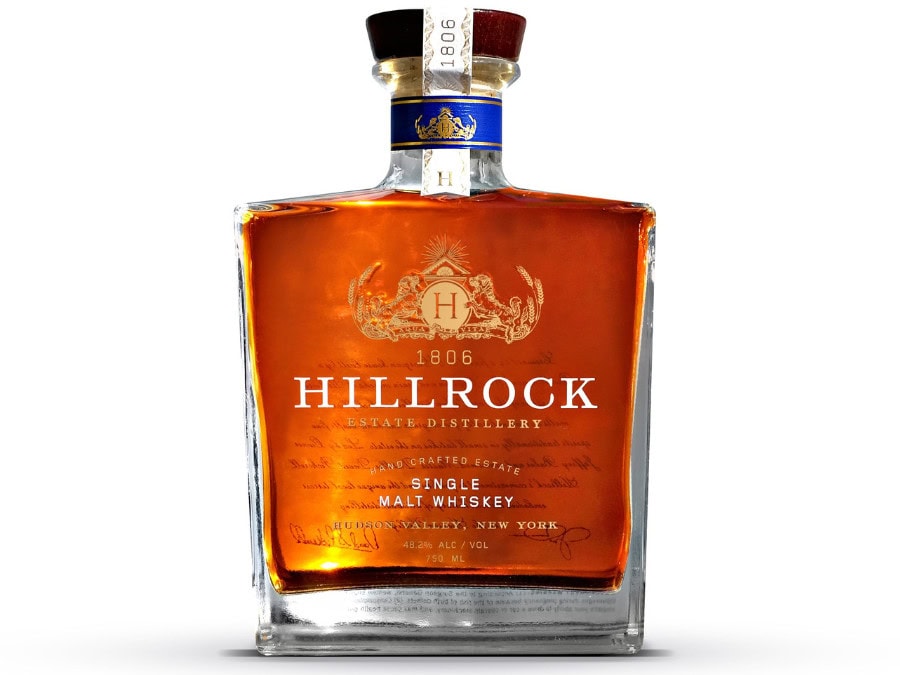
Hillrock Estate Distillery is a medium-sized distillery producing around 20,000 nine-litre cases of whisky (below) a year, and works with both small and larger distributors across the US. In today’s market, however, regional, family-owned distributors “are better suited for serving smaller suppliers and telling a story”, says Baker.
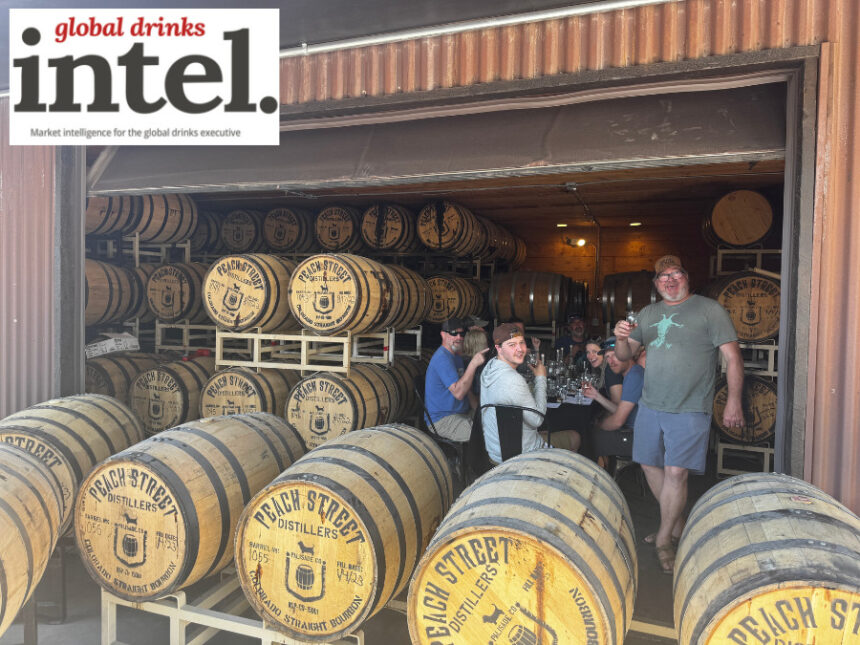
In Colorado, Cody Butters Lewis has spent her career working for multinational brand owners such as Molson Coors Beverage Co and, latterly, Mast-Jägermeister. Now the owner of a craft business, having purchased grain-to-glass distillery Peach Street Distillers (main image) with her husband Michael Lewis last year, she agrees that when it comes to finding distribution, “you’ve got to be really smart about who you choose”.
A brand like Peach Street (also the name of the distillery, which produces around 4,000 nine-litre cases per year) is looking at smaller distributors than the likes of Jägermeister. Still, Butters Lewis is clear on what the business needs from a distributor in order to grow. “They can’t be inefficient,” she says. “They need to have a chain [account] team, and they need to have the appropriate amount of calls per account per week.”
Boots on the ground
As the US wholesaler landscape faces seismic shifts, the need for craft distillers to strengthen their ties with both wholesale teams and retail accounts has grown.
Having moved into the sector from a multinational background, Butters Lewis has noticed craft producers often expect too much of their distributors. “A lot of craft suppliers go in [to wholesalers] and go: ‘Oh my God, I can’t wait to be a millionaire. Here’s my brand, grow it,’” she says. But, she warns, “you need a plan for the distributor to go out and execute, and then you have to hold their feet to the fire”.
“You end up doing probably 75% of the work. But once you get there, it becomes easier.”
Clark at Brucato agrees, arguing that the distiller–distributor relationship relies on mutual support. “Our investment is increasingly going to be supporting our distributors and making sure that they know we’re in it with them,” she says. “We’re going to support them any way they want.”
With two young children at home and limited capacity to travel, Clark and husband James plan to grow their sales team – although “the days of flashy sales ambassadors [across the industry] are over”.
She says: “Those positions work when people are drinking at high volume. You need to constantly show face, and there’s enough income to justify it. But it’s not a laser-sharp approach.”
If a distiller has a limited budget, she advises: “Go all in on supporting the distributor.”
D2C hurdles
Though by no means a silver bullet for craft distillers, direct-to-consumer (D2C) shipping “could help with longevity” for struggling businesses, according to Pennington. Butters Lewis at Peach Street agrees, advising brands to “self-distribute as long as you can, because you get to keep all that margin”.
The ACSA is advocating for the expansion of D2C laws across the US. At present only ten states plus Washington DC allow it and to varying degrees, with some only permitting home-state delivery.
In California, a one-year D2C pilot scheme (an expansion of an order signed during the Covid-19 pandemic) will expire at the end of the year. It seems unlikely the trial will be extended; a “particularly rough blow to the craft distillers in California, as they had some of the most progressive D2C regulations in the country”, Pennington says.
Clark points out that the changing law will have a knock-on effect on marketing strategy, including with social media, which Brucato uses to direct consumers to its website for D2C options. “It feels like the industry is, from a legal perspective, picking on the little craft distillers,” she says. “It’s a problem for us economically, but it’s also just a situation where you don’t feel supported by the industry writ large.”
Meanwhile in New York, where D2C shipping to some states is permitted, Baker says Hillrock’s direct sales “have been expanding rapidly”. He predicts “this trend will continue” across the craft sector, particularly if wholesaler contraction continues.
While distribution may be one of the most pressing issues facing craft distillers, they also contend with industry-wide regulatory pressures, rising costs and shifting consumer habits – all of which hit harder when budgets and teams are smaller.
Alongside pushing for expanded D2C laws, Pennington says the ACSA is “spearheading” the proposed Spirit Act, which would offer tax relief to distillers using US-grown materials, while also campaigning for a study of the three-tier system and its impact on small producers’ market access.
“We’re not asking for small businesses to be handed success,” she says. “We’re asking for a level playing field to be able to compete.”
Members-only intel
Keep reading this members-only article – and every one like it
- ✓All paywalled news and interviews
- ✓Category and market data
- ✓Monthly GDI magazine
- ✓Full archive + daily newsletter
Secure checkout · Cancel any time · Company invoices available
Already a member? Log in
See all plans, incl. 10-reader and corporate
Check if your company already pays for you Your company may already give you free access.
Corporate subscribers: AB InBev, Bacardi, Campari Group, Diageo, Moët Hennessy, Pernod Ricard, Proximo Spirits, Suntory Spirits Group, William Grant and Sons.
Activate company accessNot ready yet? Get the headlines free in our daily newsletter.
Sign up free