Behold: The time to rejoice is upon us. The end is not nigh after all. For Gen Z actually do drink alcohol!
That’s the key finding from IWSR’s most recent global ‘Bevtrac’ announcement, and one that significantly shifts the tone of an industry that has consistently cast the youngest cohort of legal-age drinkers as a generation of abstainers.
With this groundbreaking news, let’s spare a thought for the executives who have wasted countless hours in boardrooms plotting a shifting strategy that totally disregards all of those in the LDA to 29-year-old age bracket due to them not touching alcohol.
Except that never really happened. And if it did, then it most likely didn’t work.
If we’re being honest, we should admit that we knew all along that Gen Z were drinkers really. Of course, not admitting it made for a handy excuse for slow sales or poor strategic choices.
The latest data from IWSR show that the ‘participation levels’ (the proportion of consumers who drink) of Gen Z consumers are up eight percentage points to 74%, bringing the figure more or less in line with the general population at 76%. According to IWSR’s MD, Marten Lodewijks, this means “the narrative that Gen Z is the ‘generation of moderation’ is now conclusively debunked”.
Hooray!
In that case, let’s roll out once again the sales strategies aimed at the youngest, easiest to target and most receptive consumers for some of that sweet, sweet, easy growth.
Not quite. Looking at the data myself, I must respectfully disagree with Mr Lodewijks. The narrative that Gen Z is the generation of moderation is far from debunked and, if anything, is actually strengthened.
The very same study indicates that the youngest LDA consumers are the most likely to heed government advice regarding limiting their consumption levels, while we’ve seen Gen Z lead the charge towards what we at Wilde Toast are terming a ‘flexitarian approach’ to alcohol consumption.
There are a number of reasons why Gen Z’s drinking habits are different from their predecessors’, many of whom are shaping genuinely healthy relationships with alcohol. With a far more mature understanding than their parents that drinking to excess is a bad thing, while also having grown up during a pandemic that limited opportunities to meet some mates in a park to enjoy the thrills of underage drinking, their attitude towards alcohol is fundamentally different.
I have long argued (including in this very column) that Gen Z are indeed drinkers, but critically, they’re intentional drinkers. Choosing when and – more importantly – when not to consume alcohol is a conscious and considered decision, which does have implications for drinks brands.
Perhaps we need to get back to the boardroom after all.
The main consequence of a growing section of our consumer base picking and choosing when to engage with alcohol is a decrease in the total number of alcohol occasions. With that, there’s also a greater likelihood of a decline in the range of need states and brands chosen by consumers.
Like a compressed accordion, the sales density of particular days or occasions is spiky and volatile, with key trading days becoming more important as the days when consumers choose, en masse, to interact with alcohol. The brands that activate to win on those big occasions are the ones that will increase their share overall.
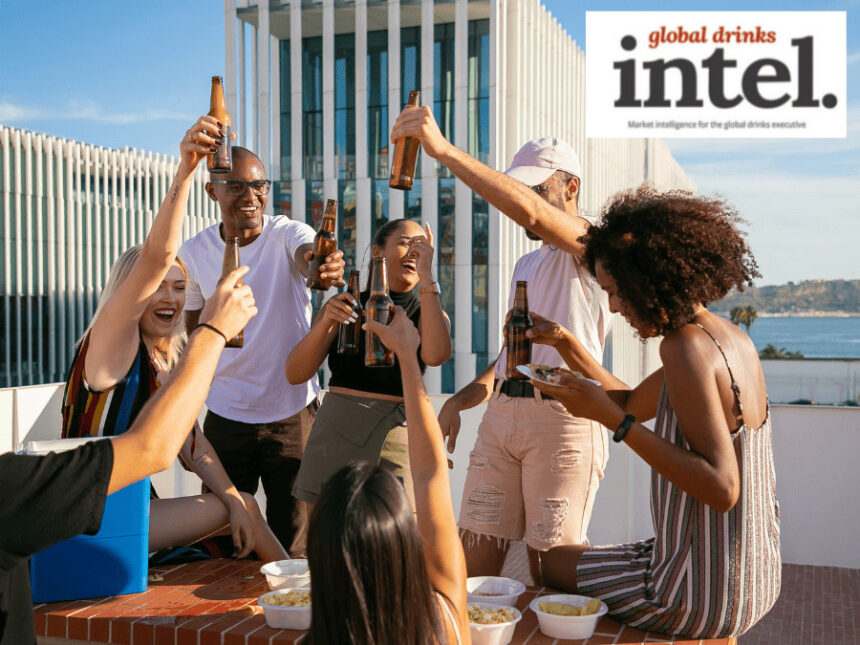
The on-premise is a clear beneficiary of this, with Gen Z consumers looking to make the most out of their permitted alcohol occasions to facilitate connection and celebration – need states that are more attainable in bars, restaurants and pubs than at home.
A secondary impact of this flexitarian approach to drinking alcohol is, of course, a switch in drink choices. If consumers are selecting occasions on which to drink and not to drink, it’s inevitable their choices of drink will change accordingly.
This is part of the reason why no- & low-alcohol options have grown so quickly over the past decade, but it also shows up behind the cocktail growth across many global markets.
While not quite ‘go hard or go home’, Gen Z consumers are making the most out of the occasions on which they drink, opting for more expensive, social-media-friendly and social-currency-enhancing drinks, of which cocktails are a perfect fit. Indeed, the Gen Z cohort is the first to have higher rates of cocktail drinkers than beer drinkers in the on-premise globally.
As with any consumer group, generalisations of Gen Z are all too easy. Subsequent one-size-fits-all strategies are doomed to failure. A starting point based in the reality of alcohol consumption, however, is most certainly a good place to start.
Members-only intel
Keep reading this members-only article – and every one like it
- ✓All paywalled news and interviews
- ✓Category and market data
- ✓Monthly GDI magazine
- ✓Full archive + daily newsletter
Secure checkout · Cancel any time · Company invoices available
Already a member? Log in
See all plans, incl. 10-reader and corporate
Check if your company already pays for you Your company may already give you free access.
Corporate subscribers: AB InBev, Bacardi, Campari Group, Diageo, Moët Hennessy, Pernod Ricard, Proximo Spirits, Suntory Spirits Group, William Grant and Sons.
Activate company accessNot ready yet? Get the headlines free in our daily newsletter.
Sign up free