

The premiumisation of the fast-expanding no-alcohol space is firmly underway. The era of cheap, overly sweet imitations of full-strength alcoholic beverages is over, making way for a new generation of sophisticated, high-margin brands, spanning spirits, wine, beer, RTDs and adult functional beverages. Cold-distillation, state-of-the-art dealcoholisation technology, rare botanicals and more premium packaging materials are all pushing up prices, as are the more general cost pressures facing the wider drinks industry.
Recent data lays bare the upward direction the no-alcohol category is moving in. IWSR, for instance, has reported that premium-and-above brands now account for two-thirds of UK beer volumes, while a report last month by Metaclade Research, based on data from 190 operators, brands and distributors in Europe and the US, revealed that premium no & low products grew 24% by value in 2025, more than three times the rate of the broader beverage market.
Yet as average price points rise, a category-wide challenge persists: consumer scepticism. There are still drinkers who struggle to understand why an alcohol-free cocktail or craft beer costs as much as its full-strength counterpart, viewing the absence of alcohol primarily as a reason for a discount. Premiumisation doesn’t necessarily mean consumers are happy to pay more simply because something is alcohol-free. In fact, 2025 research by NielsenIQ highlighted that the non-alcoholic category has issues around “value for money, quality of serve and overall excitement”.
A critical job of education remains for on- and off-premise buyers. Justifying top-tier pricing during this month’s Sober Curious September and beyond requires staff and menus to actively communicate the value in every glass served, moving the conversation away from ‘what’s missing’ and toward origin, flavour complexity and production costs.
To help this process, here is Global Drinks Intel’s guide to the latest premium-plus releases, the ideal serves to showcase them at their best, and top tips from brand owners on the menu strategies needed to win over those sceptical guests.
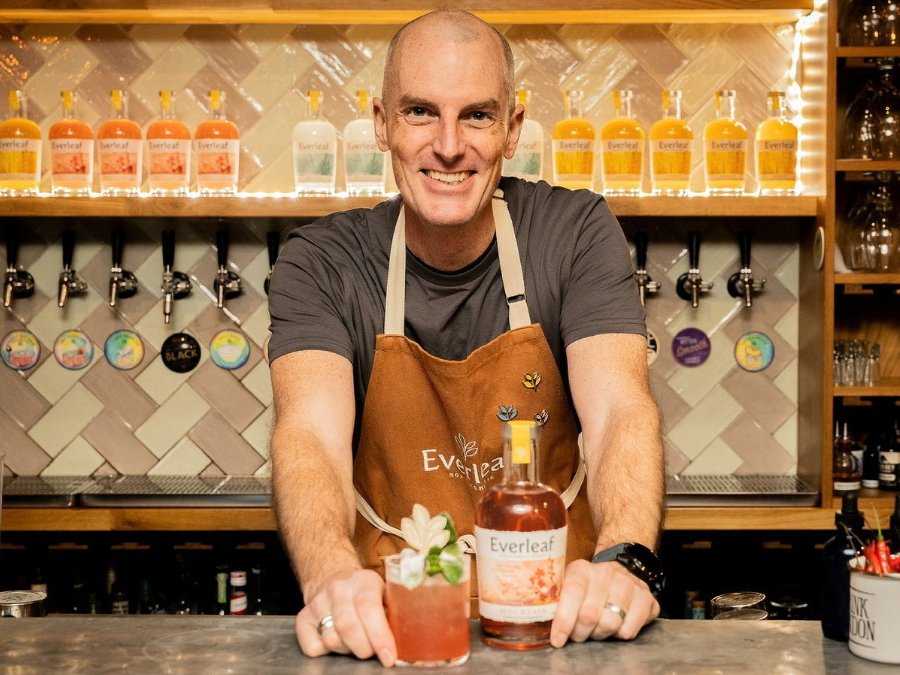
Spirits and aperitifs – Crafting the story with Everleaf
Since the brand’s launch in 2019, the premium British non-alcoholic aperitif Everleaf has enjoyed seven consecutive years of sales growth, winning over bartenders with the company’s complex, multi-layered spirits made from 100% natural ingredients. Along the way, Everleaf has won critical acclaim, picking up awards with the International Wine & Spirit Competition and the World Alcohol-Free Awards among others, while international distribution has grown to include the US and China, as well as European markets such as France, Italy, Belgium and Norway.
The brand’s most recent release is the limited-edition Forest Chipotle Hot Honey, made with English sauce brand JD’s Hot Honey sauce, unveiled this month in 50cl bottle format. The new ‘swicy’ expression is a twist on Everleaf’s existing Forest expression, combining bittersweet botanicals such as saffron, Madagascan vanilla, and honeyed orange blossom with the fiery addition of smoked chipotle peppers and hot honey.
For company founder, ex-biologist & bartender Paul Mathews (above), Everleaf’s aperitifs command a higher price point by prioritising sustainable, world-class ingredient sourcing. “We use two of the world’s most expensive spices in Forest– saffron and vanilla. For our vanilla, I’ve been out to Madagascar to meet the farmers and other producers in the supply chain and visit the protected forests that border the growing areas.
“Our most expensive ingredient is our Japanese cherry blossom in Mountain, though, made in Shizuoka, home of Mount Fuji,” he adds. “That’s harvested once a year when the sakura [cherry tree] blooms, then is brined and fermented over a four-month period to develop the flavours. We have to order a year and a half ahead of time, so our forecasting has to be spot on!”
To drive sales and overcome potential consumer pushback, Mathew stresses the importance of storytelling. “Everleaf has a story to tell, and stories add value,” he insists. “In some of our best-performing venues, non-alcoholic cocktails with Everleaf are around 80% of the price of alcoholic cocktails, with a description of the ingredients, and in some cases a note about our sustainability credentials. Guests know they’re getting something created to celebrate that non-alcoholic choice, not an imitation of what they’d usually drink, so not only can you charge more than standard soft drinks or non-alcoholic equivalents, guests feel like they’ve been thoughtfully considered and invested in by the venue.”
When it comes to recommended serves for Everleaf, Mathew suggests simple spritzes or highballs, elevated with fresh garnishes that reflect the spirit’s flavour profile. “For example, Forest [pairs well] with light tonic or ginger ale, garnished with a slice of orange; Mountain with lemonade or tonic and strawberries, or Marine with soda or Mediterranean tonic with lime and cucumber or mint. Our Everleaf flavours are pretty complex with 15-plus plants in each, so complicated serves aren’t necessary to make them taste delicious.”
Sparkling wine – Protecting the ritual with Henkell-Freixenet
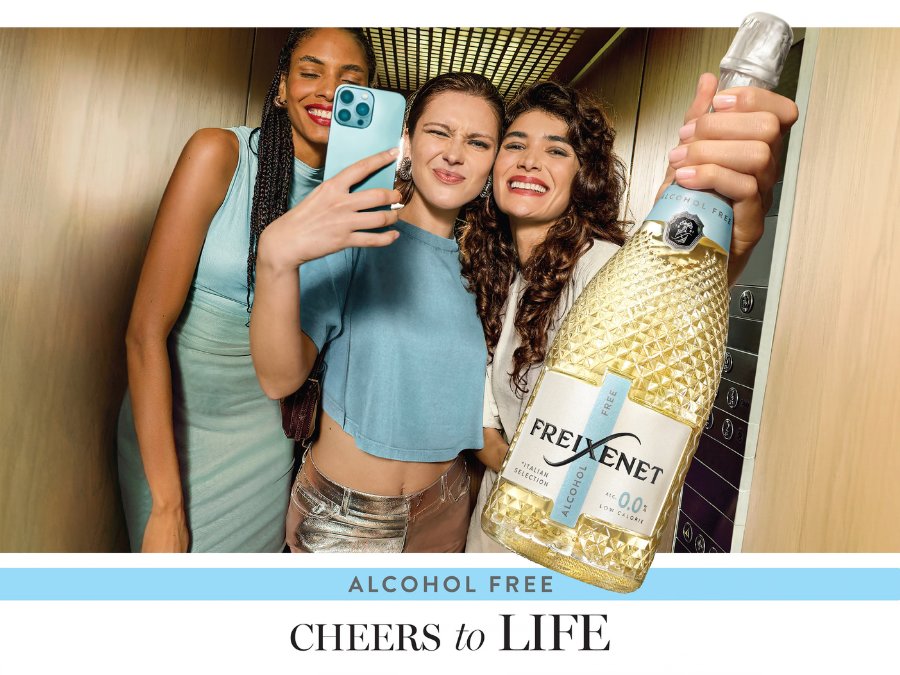
Henkell-Freixenet, the world’s largest sparkling wine producer, has over 30 years of experience in producing non-alcoholic wines. Through recent launches such as Freixenet Diamond 0.0% (above) and Mionetto 0.0%, the group continues to grow its presence in the non-alcoholic space, focusing on quality and premium positioning.
“Our alcohol-free sparkling wines start from selected base wines and are then gently dealcoholised with the aim of preserving the character, aromas and mouthfeel of the original wine as much as possible,” says the company’s head of communications, Vanessa Lehmann. “This requires specific expertise, careful product development and a high level of quality control. Quality is therefore extremely important to us – and we are proud that [German wine competition] Mundus Vini named us ‘Best Producer Alcohol-Free Sparkling Wines’ in its summer tasting.”
Overcoming any consumer hesitation around 0.0% sparkling wine relies heavily on communicating the ritual and technical production costs, Lehmann argues. “A premium 0.0% sparkling wine gives operators an opportunity to meet a genuine consumer need while protecting the value of the occasion. Many guests are moderating their alcohol intake, alternating between alcoholic and non-alcoholic drinks, or choosing to avoid alcohol on a particular occasion, while still looking for a high-quality experience.
“A branded 0.0% sparkling wine offers these guests something more compelling than water or a standard soft drink,” she adds. “It keeps them within the sparkling wine and aperitif occasion and can help protect average spend when a guest switches to a non-alcoholic choice. Products such as Mionetto 0.0%, Freixenet Cordon Negro 0.0% and Freixenet Diamond 0.0% also benefit from strong brand recognition, which gives operators a clear premium cue on the menu and makes it easier to communicate the offer to consumers.”
When it comes to recommending specific serves, Lehmann argues any strong “alcohol-free hero serve” should be simple, premium-looking and easy to replicate at the bar. “For our spritz recipes, we follow the simple 3-2-1 principle,” she says. ‘For the Mionetto Orange Spritz Alcohol Free, for instance, this means three parts Mionetto 0.0%, two parts Mionetto Aperitivo Alcohol Free and one part soda water. It should be served well chilled in a large wine glass with plenty of ice and garnished with an orange slice.”
Beer – Beyond celebrity hype with Bero
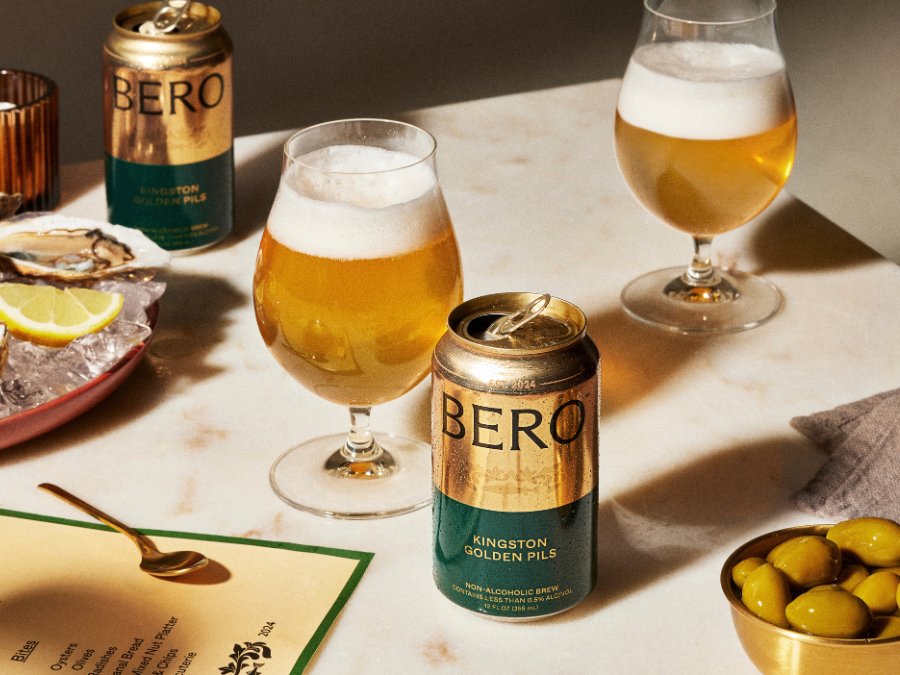
In its first year on shelf in the UK and US, Bero (above), the premium, non-alcoholic beer range co-founded in 2024 by UK actor Tom Holland and company CEO (and drinks industry veteran) John Herman, generated sales of nearly US$10m. The Spider-Man star’s close involvement with the project is undoubtedly a key element of the start-up brand’s early success, but according to the commercial director for the UK, Will Bucknall, in today’s commercial environment the brand must “stand independently”.
“We have an exceptional master brewer in Grant Wood, an experienced team behind the business and, most importantly, a beer we believe competes with the best products in the category,” says Bucknall. “When we speak with buyers, Tom is a part of the commercial conversation, but buyers want to understand the liquid: how it tastes, how it’s brewed, the quality of the ingredients, how it performs commercially and whether the brand aligns with their customer and their own point of view.”
Bero recently expanded into glass packaging specifically to target high-end bars, hotels, and restaurants, an important step in the brand’s aim to ensure that choosing a non-alcoholic beer is not a lesser experience. “Glass was a natural extension for Bero because it allows the brand to sit seamlessly within premium hospitality environments,” says Bucknall. “High-end bars, restaurants and hotels are incredibly thoughtful about every element of the guest experience, and packaging needs to meet the same standard. We designed the Bero bottle to feel at home in those environments and to give both operators and guests the same sense of occasion they would expect from a premium alcoholic beer.”
Any on-premise venue serving Bero should treat it with the same care they would any premium beer, says Bucknall. “If your standard beer serve uses beautiful stemware, use it for Bero. If a classic beer glass is more appropriate to your establishment, use that. We also offer a Bero-branded Spiegelau tulip glass, which we believe provides an exceptional serve for the beer, although we recognise that some premium establishments prefer not to use branded glassware.”
RTDs – Uncompromising convenience from CleanCo
Since its launch by TV reality star Spencer Matthews in pre-pandemic 2019, UK alcohol-free spirit brand CleanCo has gained considerable traction. Earlier this year, the brand was available in around 20,000 distribution points in the US and the UK, including high-profile off-premise listings with UK retail multiple Tesco and with Total Wine, the largest independent alcohol retailer in the US.
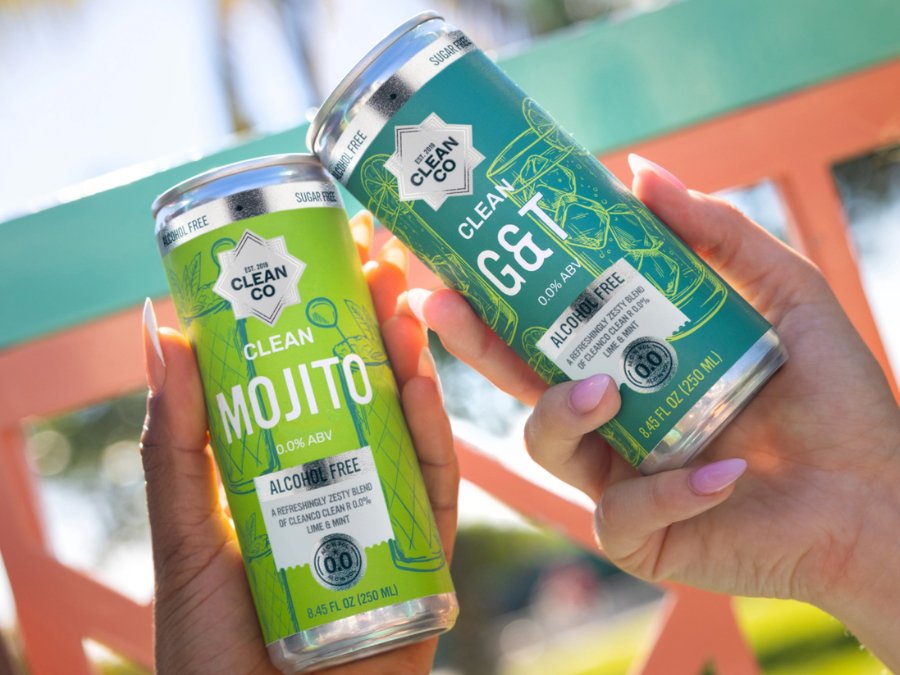
In June, CleanCo unveiled a new canned RTD line (above) featuring four variants: Clean Margarita, a bright, tangy blend of Clean T, lime and salt; Clean Mojito, featuring Clean R, lime and mint; Clean G&T, billed as a balanced blend of Clean G and premium tonic water; and Clean Italian Spritz, a blend of a bittersweet, citrus-led blend of Clean G, citrus and botanicals.
“At CleanCo,” says CEO Billy Paretti, “we’re not positioning ourselves against sugary soft drinks, but against great-tasting cocktails, as that’s the experience we’re delivering for the end consumer through a range of Clean cocktails free from compromise: alcohol-free, sugar-free, calorie-free, and free from artificial ingredients.
“Getting here wasn’t simple. Both alcohol and sugar usually carry flavour, body and mouthfeel, so our R&D team had to build those from scratch, testing ingredients and ratios extensively to get the nose, taste and finish right for each of the cocktails we have replicated. That process, alongside all-natural flavourings (rather than cheaper artificial alternatives), and tactile packaging that further communicates the elevated cocktail experience for the end consumer, is reflected in our pricing.”
When it comes to serve recommendations for the new RTD range, Paretti says it’s early days for the off-premise, and the company’s approach is shaped by each venue’s existing service style. “Some pour straight from a chilled can as you’d see at a poolside bar or cinema bar, others, like country clubs and terraces, want the full glassware & garnish presentation.
“Our ideal serve recommendation is always the same: treat it exactly as you would the full-strength version of that cocktail. If a G&T comes in a highball with ice and a slice, that’s how a Clean G&T should be served too. The format shouldn’t change the experience – only the ABV.”
Next-gen botanicals – Leading with liquid at Niets
Niets Spirits, a pioneering Belgian botanical distillery founded in Brussels and specialising in authentic, premium 0.0% ABV non-alcoholic spirits, is unapologetic about its premium positioning. The brand tackles consumer scepticism through liquid education and transparent pricing maths.
“We lead with the liquid rather than the label,” explains partner & commercial director Harry Verhoeven. “Every trade conversation begins with a blind side-by-side; one of our expressions against a cheaper 0.0% alternative, tasted neat first, then in a build. The gap in aroma length and in mouthfeel does most of the selling before I’ve said anything.
“We support that with a one-page technical sheet per SKU: botanical origin, maceration time, distillation method, cask time where it applies,” he adds. “And we’re equally explicit about what isn’t in the bottle; no flavour compounds bought by the kilo, no glycerine added to fake body, no sugar doing the work that structure should be doing. A large part of this category is water, flavouring and sweetener.”
Craft production processes lie at the core of the way the Niets ranges are categorised, dispensing the need for the fake use of standard labels such as “gin” or “rum”. Thus, the three Garden expressions are distilled with botanicals; The Cellar is dealcoholised and oak-aged, while The Orangery is macerated. “A consumer told they’re buying a gin will taste it as a failed gin,” says Verhoeven. “A consumer told they’re buying a triple-distilled botanical spirit tastes it for what it is.
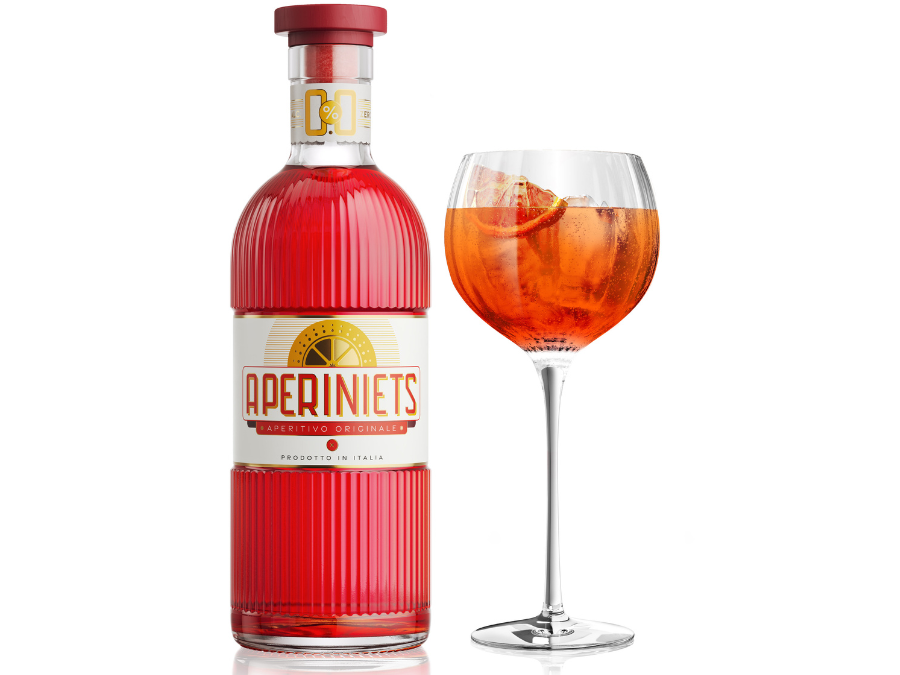
Any bar serving Niets must treat it as a spirit, not a soft drink, Verhoeven insists. “The ritual is where the price is justified.” For the company’s popular Aperiniets expression, a macerated Orangery spirit, he recommends a spritz: 6cl serving over ice, with an alcohol-free sparkling wine, a top of soda, a dehydrated orange wheel, and a green olive. A higher-margin, stirred version features both Aperiniets and Botaniets, as well as a bitter cordial, stirred down, with orange oils added as a last step.
Buyer takeaways for long-term growth
To build a resilient non-alcoholic beverage programme that bridges that all-important consumer education gap, on-premise buyers and professionals focus on three core principles:
- Train staff to sell the craft – Educate floor team members on distillation methods, botanical sourcing, and production costs so they can confidently explain price points to curious guests. “We love coming to do training and drinks development, as well as all sorts of other bartender advocacy work,” says Everleaf’s Mathews
- Prioritise structural integrity – Tasted neat or diluted over ice, premium liquids must maintain mouthfeel and structure without relying on artificial sugar or glycerine. “We know most alcohol-free cocktails are drunk as part of zebra-striping lifestyles, alternating alcoholic and alcohol-free drinks,” says CleanCo’s Paretti. “We’re not just competing with other alcohol-free options on the shelf, we’re competing with the full-strength alcoholic drink someone might otherwise have chosen”
- Maintain pricing and service parity – Treat 0.0% ABV drinks with the same premium glassware, elevated garnishes, and menu prominence as full-proof spirits to reinforce perceived value. “Don’t downgrade the ritual,” urges Bero’s Bucknall. “The glassware, temperature, presentation and service should reinforce that the guest has made a positive choice, not a sacrifice”
- Promote all-year-round – Dry January, Sober October and Sober Curious September remain incredibly valuable as discovery moments for consumers, but non-alcoholic products are no longer a seasonal proposition. “September and January are peaks, not a business,” says Niets’ Verhoeven. “The venues and retailers performing well in this category run a permanent zero-proof section with the same pricing discipline they apply to alcohol. That is what makes it resilient instead of seasonal”