

It is a testament to the beverage alcohol industry that barely a week goes by without news of one brand or another reducing the weight of its glass bottle.
In June, Scotland’s Loch Lomond Group incorporated “lighter glass” into a rebrand for its Ben Lomond Gin range. A month earlier, Spiribam reduced the weight of Martinique’s Rhum Clément bottle by 23% to 675g. Earlier in the year, Pernod Ricard developed an (unspecified weight) “ultra-light” pack for Martell, and UK producer Crush Wines employed what it claimed was the “world’s lightest” flute bottle (410g) for wine brand Bijou.
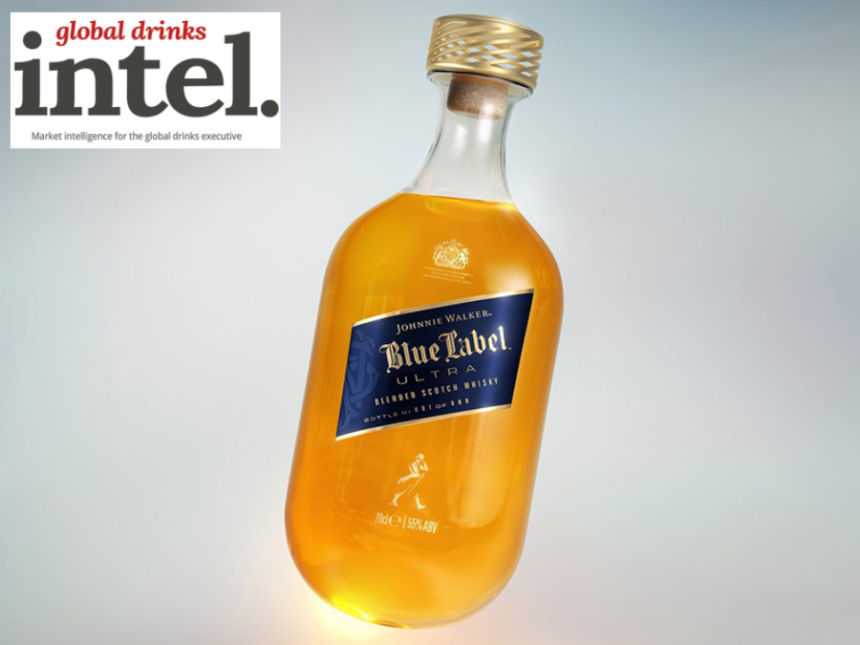
Last year, Diageo set a Guinness World Record for the lightest 70cl glass bottle with a 180g limited-edition Johnnie Walker Blue Label Ultra. The group does not have plans to extend the 888-bottle run — perhaps because the lightweight “teardrop” shape cannot stand upright, so must sit in a bamboo stand and is so thin that it cannot withstand industrial bottling lines.
Diageo has made the technology available royalty-free, however, and global design director Jeremy Lindley says the “learnings” helped reduce the weight of rum mark Don Papa’s bottle by 30%.
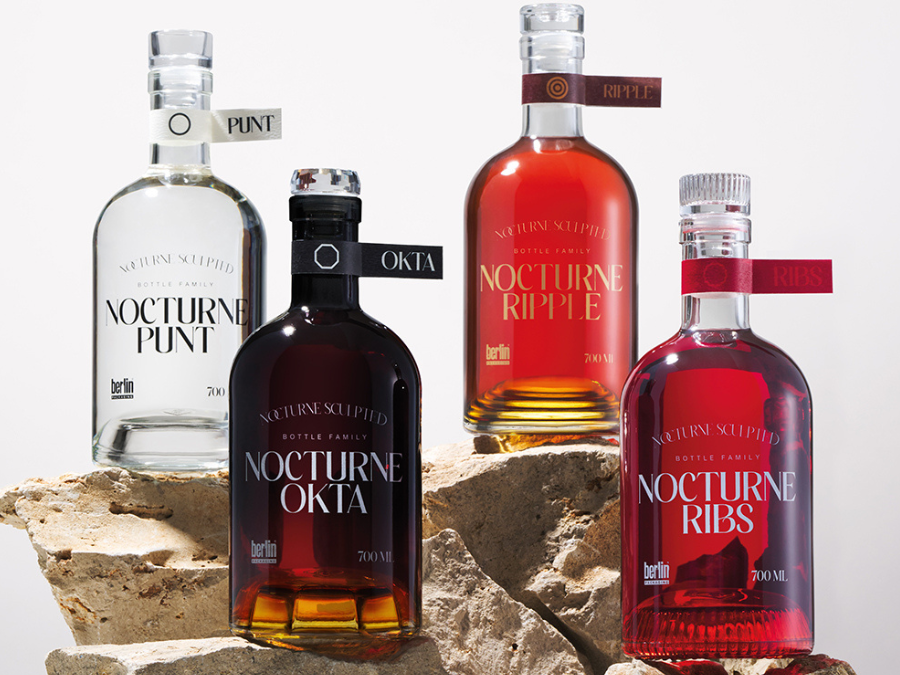
In a more scalable example, Berlin Packaging removed the heavy glass bottom from spirits bottles for its Nocturne Sculpted line (above), released last year.
While preserving a regular bottle shape, the US-headquartered supplier replaced the base with “sculpted punts”, which a company spokesperson tells Global Drinks Intel “reduce the overall glass mass while maintaining the original bottle size and shelf presence”, as well as “introducing a distinctive, custom-looking detail in the base”.
When it comes to the limits of lightweighting glass, Berlin Packaging points out that the aim is not to just go lighter and lighter. “There is a physical boundary dictated by the intrinsic fragility of glass and by the mechanical stresses that containers experience throughout their lifecycle,” the spokesperson says.
“While there is still some room for further weight reduction at the manufacturing level (the recent spread of standard bordeaux bottles at around 300g is a good example), moving beyond this point will not be possible unless the entire value chain is adapted accordingly.”
Stability and branding challenges
Berlin Packaging’s spokesperson admits that the company’s latest process is less accessible for smaller producers operating at lower volumes, as “extremely lightweight containers demand a very high level of process stability during manufacturing”.
“Such stability is typically achievable only with very large production volumes and with relatively optimised, standardised shapes,” they add.
This idea of standardisation also generates challenging questions around branding. Diageo’s Lindley says: “The challenge to lightweighting glass is maintaining the strength of the bottle while respecting the iconic shape of the bottle, a key identifier of our brands to consumers.”
The Berlin Packaging spokesperson agrees. “The push toward further lightweighting tends to conflict with another strong market trend: packaging differentiation,” they say.
“Customers operating on small volumes and requesting custom shapes or distinctive designs are structurally penalised when it comes to extreme lightweighting.”
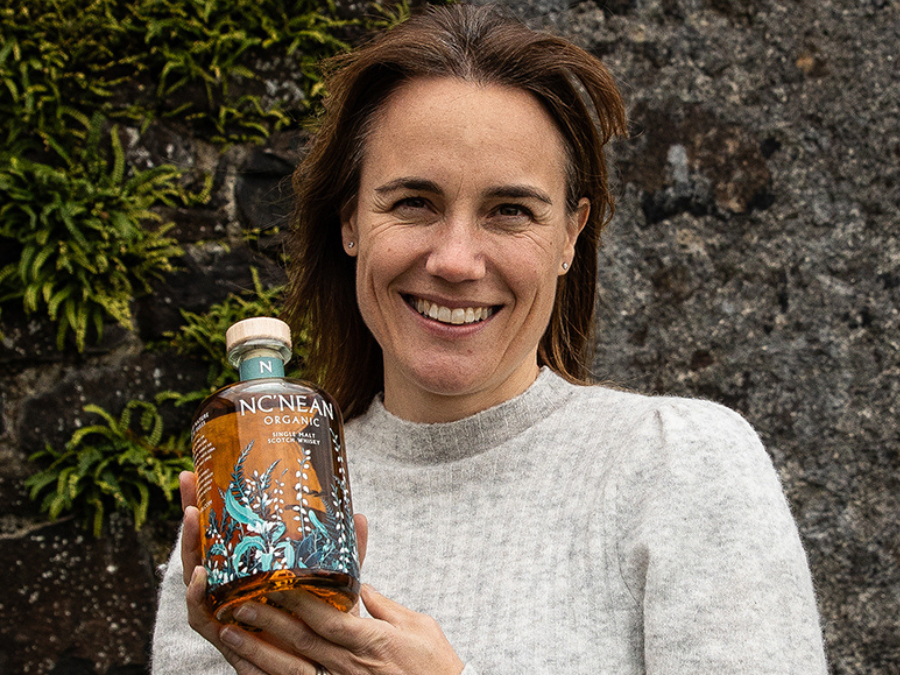
Scotch whisky distiller Nc’nean, whose 530g bottle is produced by Spain’s Estal, also pinpoints this dilemma.
CEO Annabel Thomas (above) says she has had “long discussions” about lightweighting, both to reduce transport emissions and to appease the environmental requests of customers like the Scandinavian monopolies. But the lightest shapes available at present are “very restrictive” and “would be a big move for a brand of our size, where our bottle is recognisable as it is”.
On packaging differentiation, however, Thomas caveats: “Most producers are quite a long way off being so lightweight that we’re all in the same bottle.”
Nc’nean also uses 100% recycled glass, which the company claims saves more than 40% of the energy in the manufacturing process, but is not yet available in the lightest bottles. “We’re already in Estal’s lightest-weight, 100%-recycled bottle.
“Moving would involve giving this up, and to the point about circularity, I believe staying in recycled is important,” Thomas adds. (Nc’nean also offers refills at the distillery, which contribute approximately 18% of bottle sales.)
In an ideal world, all glass bottles would be refilled instead of being recycled or thrown away. In lieu of such dreams, however, lightweighting is one step in the direction of a lower-carbon future.