

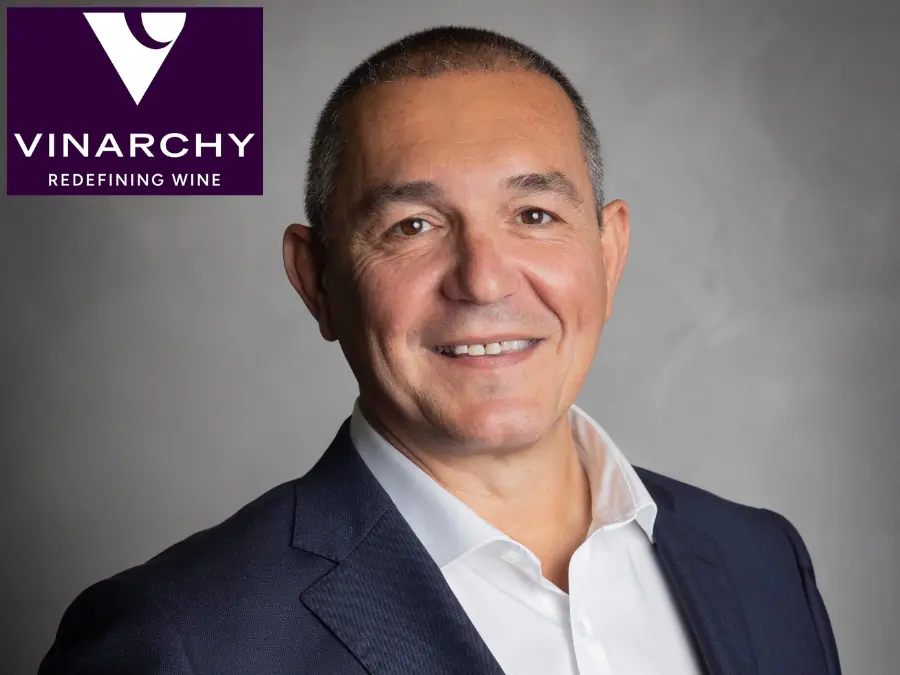
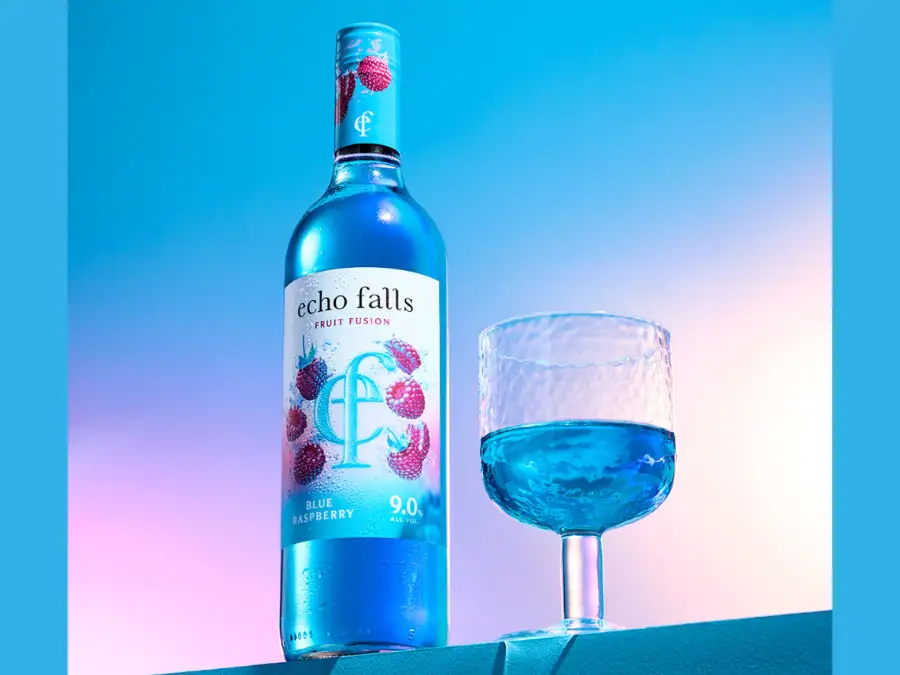
In the second part of Global Drinks Intel‘s exclusive interview with the CEO of Vinarchy, editor Olly Wehring quizzes Danny Celoni (below) on the brand owner’s approach to innovation, its recent repositioning work on flagship Jacob’s Creek and those recent rumours about merger talks with Australian Vintage. The pair also share a glass of Echo Falls Blue Raspberry.
What’s Vinarchy’s innovation strategy?
We want to bring innovation that’s differentiated for our customers and consumers, and is going to add value to the category.
There are different types of innovation, such as refresh, which is an iteration of an existing brand or SKU. Then, there’s reframe, an example of which is where wine operates in a different segment. Then there’s breakthrough, such as the new-to-market Echo Falls Blue Raspberry.
We’ve decided to double down on innovation as well as execute the core really well. There’s a real opportunity in wine for us as an industry to both raise the floor and the ceiling at the same time on how we show up for consumers.
Innovation’s become quite replicative. There’s been a lack of differentiation, which is why we see a lot of clutter. One of the insights that our consumers tell us is that it’s really difficult to shop for wine in the retail environment, because of so many choices on offer.
The main areas we’ve identified for innovation are in refreshment, accessibility, easy & light, bold & fun colours and moderation. We intend to be disruptive – what we do needs to be different. You won’t see us throwing a huge amount at the wall and hoping it sticks; we’ll be very deliberate in our pipeline (which is already 24 months out). We’ll look to have a constant flow of meaningful innovation that we can be collaborative with our customers on, with the intent of driving category expansion.
When I came into wine, I got all the sound bites about why wine’s tough and how wine hasn’t been able to recruit younger consumers. But, when we launched Echo Falls Blue Raspberry [first in the UK in March], 20-to-28-year-olds flocked to the brand. If we as an industry are deliberate in what we do, and if it’s anchored in on the consumer, we have the ability to recruit just as well as – if not better than – any other category.
Whilst I’m respectful of the headwinds, we also see a significant amount of green shoots. There’s an opportunity for us to create a momentous shift in the way people think about wine and use it in their special occasions.
The category’s mood music is pretty loud, though.
I want us to have the humility to acknowledge that there are headwinds, but also to have the resolve at the same time to find a solution.
If we remain absolutely obsessed on growing categories, driving expansion and turning up for the consumer in the right way with the right innovation, we think there’s an opportunity to buck some of those category trends. We’re unlikely to buck them all, but in doing something different to what the industry’s done for a very long time and not showing up as a me-too brand, then what we do can become a great value creator for the industry, for consumers, for our customers and for ourselves.
Have you identified any inorganic opportunities for Vinarchy?
M&A is always part of our growth agenda; we’ll always be on the lookout for opportunities. Right now, though, we see a significant amount of opportunity in building what we’ve got.
At the end of the day, our shareholders and owners need to be comfortable that we have the right level of momentum with our existing portfolio, which is pretty big. There’s still a significant opportunity just in executing the existing portfolio as it stands.
Can you speak to last year’s speculation around merger talks with Australian Vintage?
One of the reasons that Vinarchy came about was because we saw an opportunity to bring together two great organisations to create scale and a meaningful impact with the right level of resources to support global brands.
In the industry, we probably see consolidation playing out a bit more into the future, but we consolidated in order to create one of the largest dedicated wine companies in the world. There aren’t many of us that can have the level of scale that we bring. So, we’ve been focused on becoming a category-growing enterprise organically and through innovation.
You set about repositioning Jacob’s Creek earlier this year.
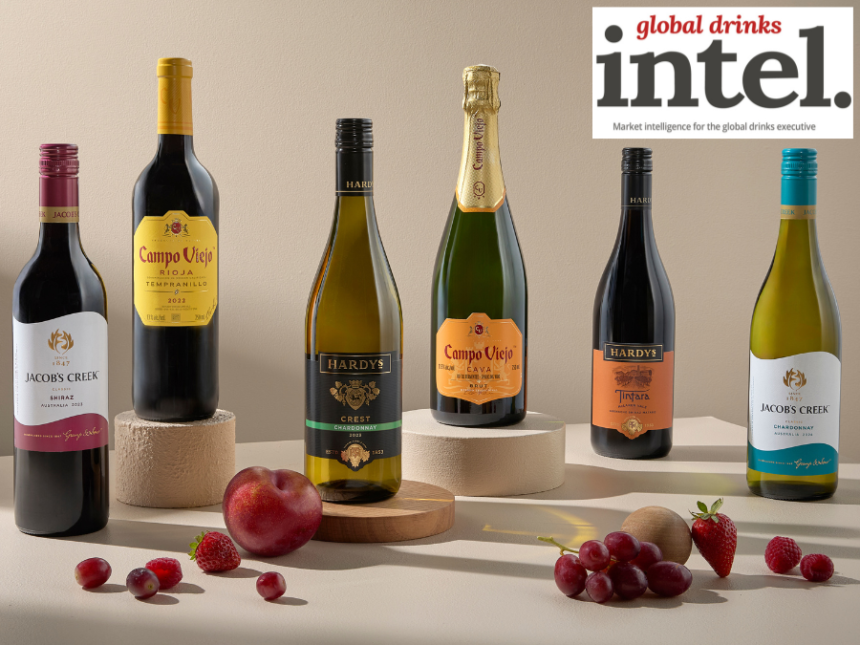
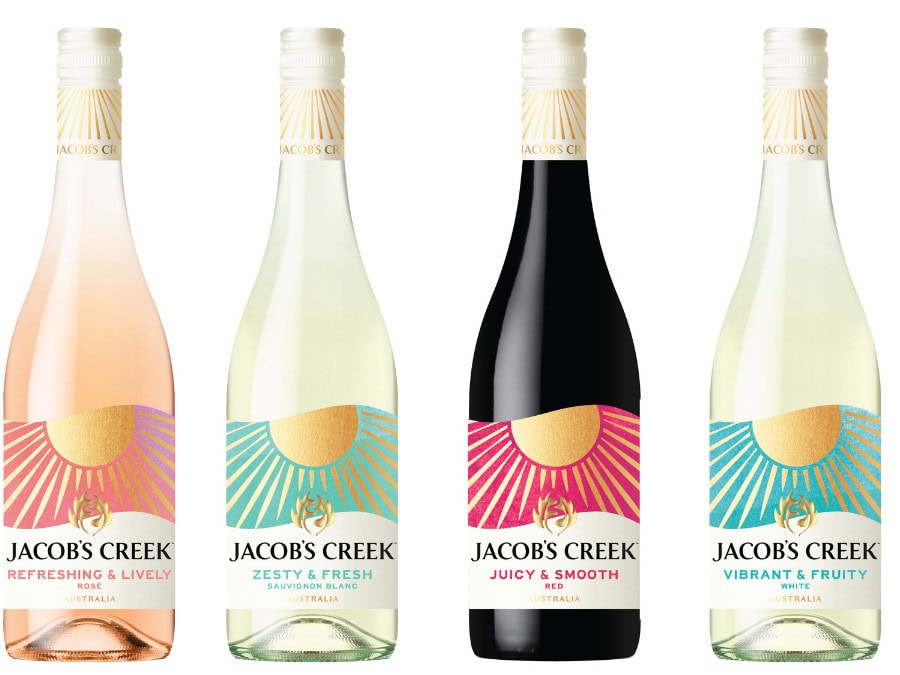
The traditional descriptions used in wine have been about the grape. But our consumers were telling us to keep it simple – ‘I don’t know what a cab sauv or a grenache is, or what it’s going to deliver’. Silly as that sounds, there’s a big cohort of consumers who feel that way.
What we’ve worked to do here is to recognise the tradition of the wine industry while also showing up in a different way that simplifies wine – juicy & smooth, refreshing & lively, vibrant & fruity, or zesty & fresh.
The simplification of wine is critically important – it’s also a significant opportunity for the wider category.
What was your background before joining Vinarchy?
I was CEO of Asahi’s Carlton & United Breweries before this, and CEO of PepsiCo’s beverage and snacks businesses for Oceania before that. I also spent 18 years with Diageo.
With your long history in our industry, how challenging was it to move away from Jacob’s Creek’s traditional positioning?
I just go back to needing to listen to consumers. We do a hell of a lot of research to understand what they really want. The work that’s been executed has really been well thought through and delivered in a provocative way. We’re looking to challenge the status quo.
I remember when the innovation team came to talk to me about Echo Falls Blue Raspberry (below). I saw the liquid and, frankly, at the ripe age of 53, I couldn’t get my head around it! But, they were clear on the consumer they were talking to and how they were going to deliver it. And it’s worked. We’ve now got a pipeline of activity coming off the back of that.
If we stay focused on the consumer and on category expansion, we’ll show up in the right way.
What’s your ‘God’ metric at Vinarchy?
If I’m honest, it’s every line in the P&L!
The reason I talk about growth so much is there’s only so much optimisation or synergistic value you can create. Growing this business starts from volume growth, then net revenue growth, then gross profit growth, then managing costs, then putting more investment in brands, then putting more investment in people and then putting the right talent against the right capabilities.
At the end of the day, we get measured on EBITDA profitability, but I can assure you the tension is on every line. The brief we’ve been given by our owners is that we’re here to leave a legacy and build a business that’s got long-term sustainable growth on all levels of the P&L.
What that says to me is we’re being held accountable for a business that’s going to go well into the future. If it was only driven by one line, I’d ask many questions, but it’s driven from top line right through to bottom line. And it’s all focused on growth, which is an exciting place to be.
Members-only intel
Keep reading this members-only article – and every one like it
- ✓All paywalled news and interviews
- ✓Category and market data
- ✓Monthly GDI magazine
- ✓Full archive + daily newsletter
Secure checkout · Cancel any time · Company invoices available
Already a member? Log in
See all plans, incl. 10-reader and corporate
Check if your company already pays for you Your company may already give you free access.
Corporate subscribers: AB InBev, Bacardi, Campari Group, Diageo, Moët Hennessy, Pernod Ricard, Proximo Spirits, Suntory Spirits Group, William Grant and Sons.
Activate company accessNot ready yet? Get the headlines free in our daily newsletter.
Sign up free