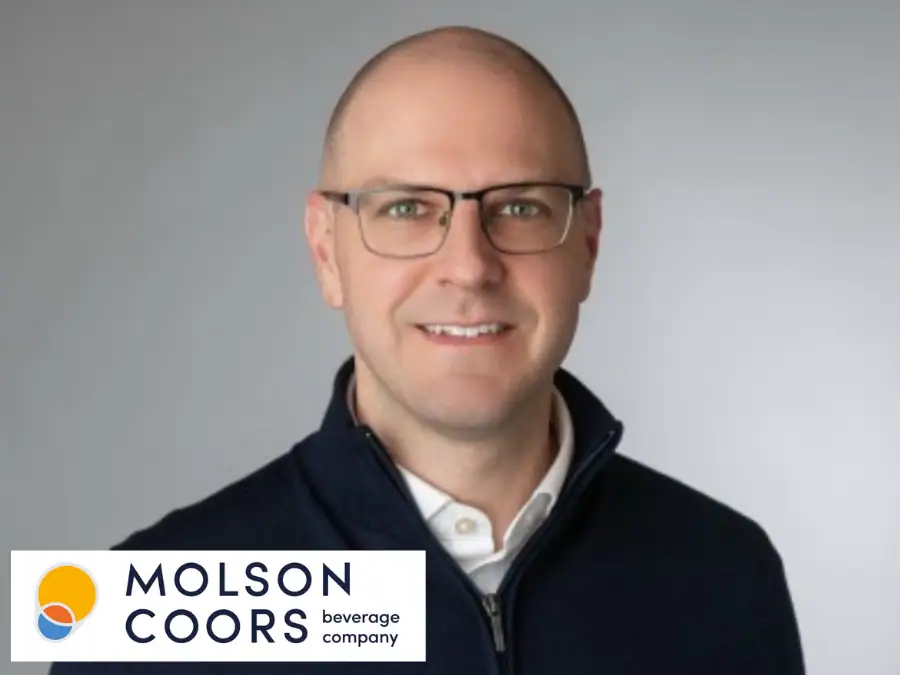
In late March, Molson Coors Beverage Co set the M&A pace for 2026, securing the acquisition of Monaco RTD owner Atomic Brands. The transaction landed 14 months after the purchase of a minority stake in mixers group Fever-Tree. Combined, the two deals prompted Global Drinks Intel editor Olly Wehring to grab the group’s strategic relationships & M&A VP, Andrew Tchadovitch (below), and get the lowdown on what else is keeping him busy.
What is your background and what’s your current remit?
I’ve been with Molson Coors for coming up to three years and report in to the group CFO, Tracey Joubert. Ultimately, I have ownership of anything that’s inorganic for the company; it’s basically the borrow-and-buy activity. I lead on traditional M&A, like the Monaco deal we just announced, but I also lead on our partnerships, like the Fever-Tree arrangement. I’m not involved in the operational day-to-day of these, I manage the relationships with the partner.
The partnership element’s the day job, while M&A becomes the night job!
Back in early 2020, Molson Coors Brewing Co became Molson Coors Beverage Co. Does the name-change continue to influence which categories you’re busiest in?
Beer is always the core of the business – we see ourselves as stewards of the beer category. So, we’ll always look at opportunities in beer. The focus, though, is around how we become more to more people in the beverage space. That obviously leads me more towards thinking about how we build outside of beer, across both alcohol and no-alcohol. For example, we’ve recently plugged a portfolio gap in spirits-based RTDs, which is a space we were behind on, while Fever-Tree is a prime example of a non-alcoholic extension into more occasions.
All of this gives me a pretty broad scope: Where do we have a right to play and where do we have a right to win? We can’t do everything, so we need to be selective in our choices. In some respects, I’m part of the funnel that helps shape and steer Molson Coors.
What impact does the trading environment for Molson Coors have on the group’s M&A strategy?
Inorganic is important for us, as we’ve laid out in our ‘Horizon 2030’ strategy. Probably for the first time in a long time, Molson Coors has been explicit around the fact that we want to drive 1%-to-2% of our top-line growth through inorganic activity.
Portfolio transformation is an important aspect of what we’ve got to do. We see M&A as being more fundamental to what we need to achieve. The world’s changed a fair bit in recent years and the macro environment is different. But, there’s a realisation, particularly with Rahul [Goyal] as our CEO, that M&A will be more at the forefront of reshaping our portfolio to be broader. This applies globally – people are trying different things to reshape their portfolio. Carlsberg’s acquisition of Britvic [in mid-2024] is a strong example of this.
Everyone’s trying to do more and be in a lot of categories.
With Molson Coors’ more explicit level of expectation from M&A, does that increase the pressure for every transaction to be the right one?
There’s always pressure around M&A. It’s so publicly scrutinised that you never want to get any of them wrong. It goes back to having conviction in the strategy and the alignment internally on the categories we want to go after. You need to take a longer-term view on how you’re transforming the company.
It’s hard to say with hindsight whether a transaction was right or wrong. It’s more about whether it gives the business more relevance and more gravitas with the consumer.
What are the key elements on your checklist when considering a transaction?
No one deal is identical – They’re all unique. There are a lot of factors that go into making sure something’s the right deal for us. Our broad-brush guidelines are pretty public, in that we want them to deliver 1%-to-2% top-line growth.
We also want them to be earnings accretive. Bottom-line profitability is of paramount importance. There are a lot of challenges in the new wave beverages that have come through, which are driving a lot of top-line growth and trading on revenue multiples, but don’t have a lot of bottom line. If you don’t have that profitability, then you need to have an identifiable way to drive that profitability, whether at the COGS level or the SG&A level.
Then, we want to see a brand that’s of a sufficient size in terms of volume that we can amplify it through our network. Where do we have a real ability to take that brand into the next echelon of its growth and development?
Other considerations include portfolio fit – does it fill a portfolio gap that we need, and how does it work with the rest of our portfolio? – and whether the brand has longevity in the marketplace. There’s always a risk in this modern age of beverage M&A that brands may not survive in the longer term.
Finally, there’s the cultural compatibility between organisations. Making sure you’re buying a brand or a company that resonates with your ethos and what you’re trying to achieve makes a massive difference. If you’ve got the right people on the other side of the table, you can make a success of a lot of it. If you’ve got the wrong people in for the wrong reasons, it can go pretty pear-shaped pretty quickly.
How does the process work? Do you receive approaches or do you go shopping?
It’s both. If there are categories that we want to build our portfolio in, then the onus is on me to provide my connections in that space. If I don’t have connections, then I have to go and make them. Then, there’s a piece that goes the other way, where people are running a process and ask if we’d like to participate.
On the partnerships front, it’s more about us approaching people rather than them reaching out to us, although we do get companies looking for distribution opportunities too.