
- After strong growth in 2020 and 2021, hard seltzer consumption globally has been in decline, with value down 8% and volume falling 10% from 2023 to 2024
- Competition from other RTD segments has further depressed hard seltzer volumes, with hard teas, canned cocktails and sessionable refreshers gaining ground
- The moderation trend has also given rise to new opportunities for non-alcoholic RTDs, which grew 9% in volume year on year in 2024
- Innovation moves in the on-premise suggest that the future of RTDs will tap into the consumer demand for convenience behind the bar and at home
As consumer demand for hard seltzers continues to soften, thirst for lighter, sessionable beverages and a growing premiumisation trend are keeping the ready-to-drink category in the black.
Previously seen by many to be the poster child of the RTD category, hard seltzers have had a sharp fall from grace. IWSR data show that after strong growth in 2020 and 2021, hard seltzer’s global consumption has been in decline, with value down 8% and volume falling 10% from 2023 to 2024 alone.
“Hard seltzer consumption is concentrated in two key markets, the US and Canada, and has failed to gain significant traction in other RTD markets,” says IWSR head of RTD insights Susie Goldspink.
The category is dominated by big brands that account for most of the market. White Claw remains one of hard seltzer’s leaders, with an estimated 58% share of the market. Having expanded beyond the US in 2020, the brand has become a “significant player” in Canada, Australia and Ireland, according to the marketing director for EMEA at parent company Mark Anthony Brands, Michael Dean. In the UK, “we account for 98% of hard seltzer sales, making the White Claw name truly synonymous with the hard seltzer space there”, he says.
Even so, White Claw has not been insulated from the drop in demand. Early last year, the brand responded to increasing demand for cocktails with cocktail-inspired malt beverage line ClawTails and its first spirits-based RTD range, Tequila Smash. Then in November, Mark Anthony Brands halted production at its Hillside facility in New Jersey, citing “recent alcohol industry slowdown” and cutting 147 jobs.
Even in its biggest markets, hard seltzer is past its prime. Goldspink says: “In North America, hard seltzer consumption peaked during the pandemic, when it was embraced as a convenient, refreshing, flavourful single-serve option. Extremely high innovation rates followed, but these products offered little differentiation and the market became saturated. Recruitment of new consumers slowed and existing consumers became less engaged.”
Competition from other RTD segments has further depressed hard seltzer volumes, according to Goldspink, with premium cocktails and hard teas taking market share.
Indeed, IWSR data shows that hard teas are seeing the biggest global growth of any subcategory, with volume up 27% year on year in 2024. Indeed, over the five years to 2024, the segment has grown at a rate of 26% CAGR.
AB InBev, Diageo bet big
Demand for the RTD category more broadly remains in good health. Between 2019 and 2024, volumes for the category as a whole grew at a CAGR of 9%, according to IWSR, with consumption rising in all of the top five markets – the US, Japan, South Africa, Australia and Canada – over the same period.
Continued investment by multinational brand owners signals that this growth will continue. AB InBev completed the acquisition of BeatBox in February, with the US RTD brand joining its ‘Beyond Beer’ portfolio alongside brands including Cutwater Cocktails, Nütrl, Brutal Fruit and Flying Fish.
In full-year 2025, AB InBev reported sales growth of 23% globally for Beyond Beer, which now represents 3% of the world’s largest brewer’s total top line.
“Our Beyond Beer portfolio continues to drive incremental growth and meet consumer demand, offering options for every taste and occasion, ranging from spirits-based RTDs and real cocktails in a can to malt-based RTDs and flavoured malt beverages, hard seltzers and spritzers,” says AB InBev’s president of ‘balanced choices & beyond’, Bruno Cosentino.
Diageo, too, continues to bet big on the category. After what was a tough 2025, the brand owner is looking to save around US$625m over the next three years. In August, the drinks giant offloaded two Australian RTD brands to Vok Beverages, with then-interim CEO Nik Jhangiani saying at the time that the disposal of “non-core, non-strategic” brands was “moving at pace”.
Diageo’s confidence in the wider category, however, remains strong. “We believe the opportunity in RTDs is significant for Diageo,” says global convenience director Samori Gambrah. Indeed, the group is witnessing continued growth of the category in four out of five of its key regions globally, largely led by Smirnoff Ice, which turns 27 this year.
The rise of no/low and ‘refreshers’
The end of hard seltzer’s heyday has coincided with rising demand for what have become known as refreshers. Defined as light, flavoured, sessionable alcoholic beverages, refreshers have a lower ABV and have gained ground alongside the growing popularity for no- & low-alcohol drinks.
“Strength in performance by hard refreshers is likely driven by their sessionable and refreshing positioning,” says IWSR’s Goldspink. “Like consumers who prefer hard seltzers, hard refresher drinkers can participate for longer in an occasion and enjoy products that are potentially more affordable than cocktails.”
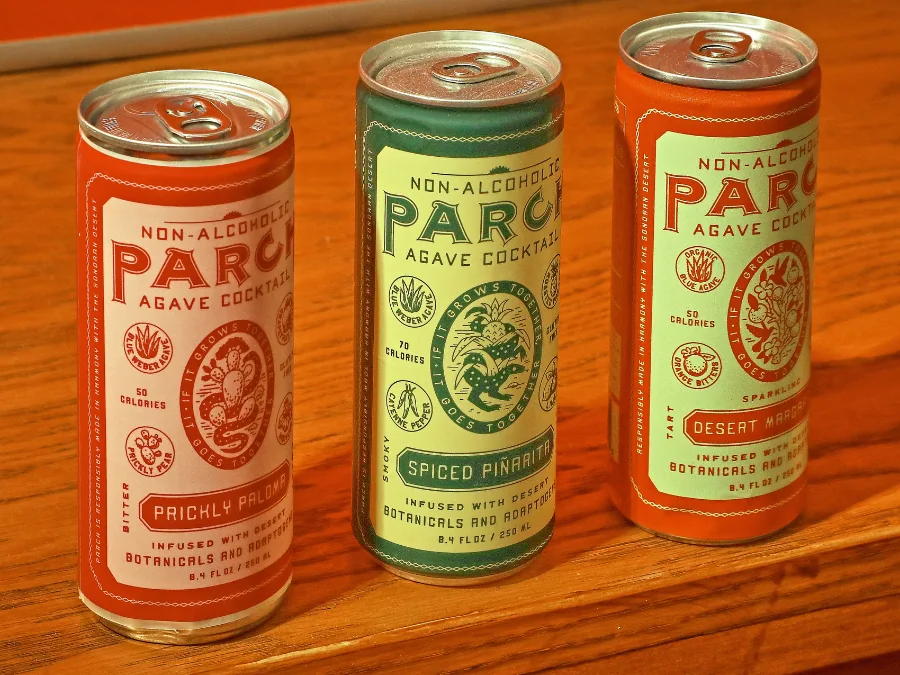
The moderation trend has also given rise to new opportunities for non-alcoholic RTDs, which grew 9% in volume year-on-year in 2024.
“Modern drinkers are looking for options to help them drink better, less and differently,” says the co-founder of alcohol-free agave brand Parch (below), Ila Byrne. The brand uses adaptogenic ingredients – including ashwagandha, L-theanine and American ginseng – in place of alcohol.
Byrne believes Parch is tapping into “the sheer dominance of alcoholic agave beverages, the rapidly expanding alcoholic RTD category and the emergence of functional beverages” to offer something new to the market.
IWSR predicts that ‘alcohol adjacents’ – drinks that feature mood-boosting and functional ingredients such as CBD, adaptogens and nootropics – will experience a significant rise in the coming years, having posted 11% volume growth in 2025 alone.
Parch is poised to engage with rising consumer demand in this space, “expanding rapidly” across its home market of the US, with sights set on Canada, Latin America, Asia, Australia and the Middle East.
Cocktails at home and away
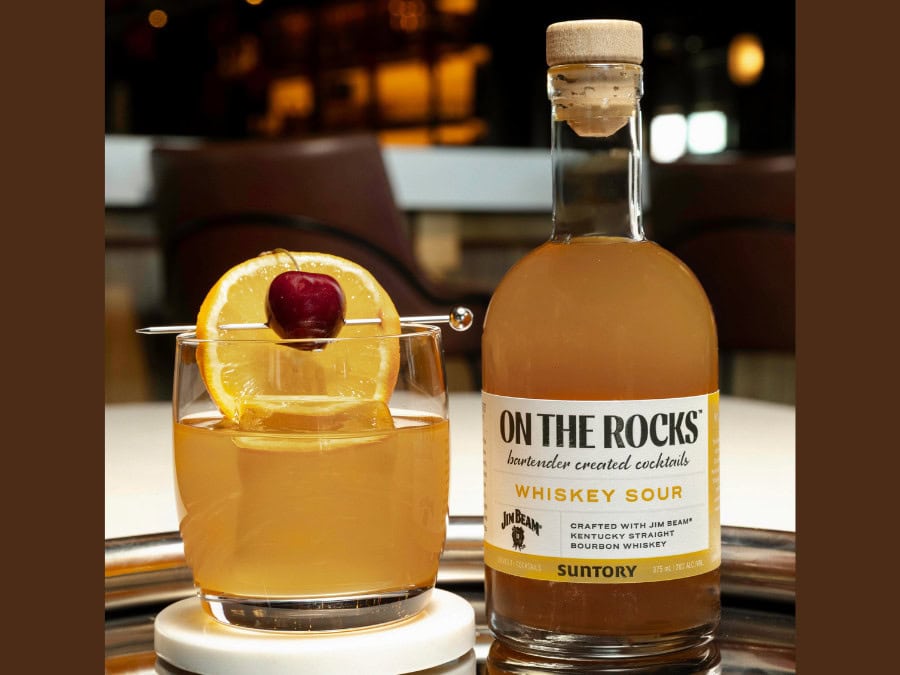
Premiumisation and at-home cocktail culture is also driving success for canned cocktails and spirits-based RTDs, both of which are proving to be bright spots for Suntory Global Spirits. The company has expanded its vodka-based -196 brand in Australia and, in the US, has launched a collaboration between its On The Rocks premium cocktails and bourbon brand Jim Beam (below).
“From a topline perspective, RTD is driving a lot of the growth in the spirits category, and it’s where the consumer is going, with a move toward flavour and convenience,” says Suntory Global Spirits’ president of global ready-to-drink, Davin Nugent.
De Kuyper Royal Distillers has also witnessed solid growth of spirits-based RTDs, particularly premix cocktails, and the company’s latest innovation hints at the future potential for the RTD category. Having debuted ready-to-serve 0.0% cocktails in late 2025, the distiller has now launched draught cocktails in 20-litre kegs designed specifically for “high-volume on-trade” outlets, says global marketing director Godelief van Erve.
“Both scale bar-quality cocktails amid rising demand and staff shortages,” she says, suggesting that the convenience and flavour innovation offered by the category has potential behind the bar, as well as at home.
RTD’s flavours of the future
With new SKUs launching all the time, the RTD category has become fairly saturated globally, and keeping up with constantly evolving consumer tastes is the only way to ensure survival in a highly competitive environment.
Flavour is a “key purchase decision maker” for RTD consumers, according to Diageo’s Gambrah, so keeping on top of flavour trends is critical for RTD brands.
Consumers today are “explorers at heart” and eager to engage with drinks that tell a story and offer a sense of place, adds Suntory Global Spirits’ Davin Nugent.
“The RTD category offers the opportunity for a lot of flavour exploration that is resonating with younger legal-drinking-age groups like Millennials or Gen Z, who are seeking approachable and adventurous flavours that fit into their social and lifestyle occasions,” he says.
But brands still need to strike a balance, finding flavours that are both intriguing and familiar.
Vok Beverages head of creative & senior brand manager Michael Newbold says: “It’s not just about bold flavour – it’s about getting the balance right. Consumers are looking for drinks that deliver great flavour but are still easy to drink and sessionable, with the right mix of sweetness and acidity”.
So which flavours are on the rise, and which have peaked?
We’re coming to the end of citrus flavours dominating, according to Newbold. “Lemon will remain a huge part of RTD sales, but we’re seeing growing interest in more tropical and fruit-forward combinations. Flavours like guava, passionfruit, mango and lime are gaining traction, especially when they’re paired together to create something a bit more layered and interesting.”
Asian-inspired flavours like matcha and ube also continue to find success, as are umami-forward combinations.
Coffee offers great diversity to RTDs, says Parch co-founder Byrne. “Coffee is one of the most playful flavour spaces to watch as it blends nutty milk flavours with juicy sweet fruits and earthy ingredients like mushrooms, sesame and ube,” she says.
‘Green’ flavours are also having a moment, she adds, driven in part by the recent matcha boom, which has brought grassy notes to the fore in both food and drink.