- Oversupply continues to dog the scotch industry, but some are hopeful the end is in sight
- Discounting may allow for trial and feel helpful for consumers, but producers warn the approach could damage brand equity in the longer term
- To appeal to wider audiences, brands are increasingly exploring lower-ABV scotch expressions, cheaper and slightly sweeter profiles, and whiskies designed specifically for mixing
- Exports are declining in volume and value, but industry figures maintain this is a post-Covid pandemic ‘normalisation’
- Domestically, issues with duty continue, as does added financial pressure from employment taxes for businesses
It’s been a challenging few years for scotch as inventories remain bloated, exports sluggish and the macroeconomic environment trembles under ever-evolving pressures.
The Scotch Whisky Association’s (SWA) summary of circumstances is sobering. “We’re hearing from across the sector that it is under strain not felt for decades, with many companies cutting jobs, pausing production and pulling back on investment,” says director of strategy & communications Graeme Littlejohn.
That said, brand owners and producers remain both hopeful and pragmatic. “If you create a scotch distillery, you’re in it for the long term,” says Nc’nean Distillery CEO Annabel Thomas. “People have seen cycles come and go, and [we are] looking forward to a more positive cycle on the horizon.”
Slipping exports & growth pockets
Having been on an upward trajectory in the years prior to the pandemic, the export trend has reversed in the past three years. In 2025, scotch export volumes declined 4.3% compared with the 12 months prior, to 104m nine-litre cases. In value terms, sales dipped 0.6% to GBP5.36bn (US$7.32bn).
Key markets struggled last year, including the US (-9.2% in volume year on year, and -4% in value), France (-14% in volume, -3.6% in value) and Singapore (-11.6% in value). However, India – scotch’s largest volume market – boomed by 15% in both volume and value. Chinese exports remained flat in value terms (-0.3%), but a surge in volume (+14% year on year) indicates some depremiumisation going on.
The SWA suggests that the pre-pandemic figures, “when export conditions were relatively stable”, are a more accurate baseline to compare against. Indeed, compared with 2019, exports in 2025 rose by just under GBP400m.
Several trade agreements are raising hopes for the future at exporting distilleries, namely the “landmark” in-progress UK–India bilateral trade agreement; a deal with China in February that saw scotch import duty cut from 10% to 5%; and a free trade agreement (FTA) with South Korea finalised in December.
Bacardi cites “huge potential” in its Asia, Middle East & Africa region, particularly India – which is a “big priority” for the group’s Dewar’s blended scotch brand.
“We see an exciting growth opportunity for the brand, as India is the largest whisky-drinking nation by volume, and we’ve seen an increase in premium cocktail culture in recent years,” says Bacardi’s scotch whisky global VP, Brian Cox. “This allows us more room for innovation and the ability to engage with customers in more culturally relevant ways.”
Also in alignment with overall trends, Pernod Ricard’s Chivas Brothers scotch whisky unit reports “positive momentum in a number of key markets such as India (+10%) and Türkiye (+32%)” in the company’s fiscal H1 (to the end of December 2025) – according to the SWA in the 12 months of last year, total scotch exports to Türkiye grew 43% in value and 13% in volume.
“The ongoing efforts to advance the UK–India FTA are an encouraging development that could further support growth and investment in the years ahead,” adds Pernod Ricard’s CEO of the Gold Brand Unit (comprising aged spirits & champagne), Nodjame Fouad.
As a smaller producer, Nc’nean’s export strategy is to give more attention to fewer markets – focusing on France, Germany, the UK and the US. Thomas says political tensions between the UK and US are “definitely not helping, but it’s maybe not quite as big a deal yet as some people think it is”.
She warns: “Rather than the tariffs specifically, what is going to make a bigger difference in the US is the state of the consumer.”
Oversupply realities
While there are always natural cycles of stock within aged spirits, some of the larger producers have made more permanent-feeling moves to balance inventories and save costs.
In February, Suntory Global Spirits merged operations at its Bowmore and Laphroaig distilleries, citing the need to “align production with long-term demand”. A year earlier, Brown-Forman made a similar move with Speyside’s Benriach Distillery and Glenglassaugh in the Highlands. There have also been redundancies at visitor centres and at maltings facilities.
At Cutty Sark brand owner La Martiniquaise-Bardinet, international marketing manager Laure Habbouse says the scotch market “is proving remarkably resilient, even as it enters a period of structural adjustment” amid “cyclical geographical shifts and new consumption habits”.
“A global oversupply, across all whisky categories, not only scotch, has increased available inventories and softened pricing pressures,” Habbouse says. “In the short-to-medium term, this environment is likely to translate into more accessible price points for consumers, creating opportunities for drinkers to explore quality whiskies at relatively affordable levels.”
While this would be a bonus for cash-strapped consumers, she adds: “For producers and brand owners, this new context demands greater strategic discipline and differentiation. With more liquid in the market, success will increasingly depend on reinforcing whisky credibility and brand identity.”
Nc’nean’s Thomas says supply cycles are “normal” for the industry, but the biggest knock-on of oversupply has been the “significant discounting, either permanent or temporary” that has occurred. “That’s a problem, because it impacts consumers’ perception of what whisky should cost,” she says. “And it means we have to fight harder again for every sale.”
In terms of Nc’nean’s own promotions, Thomas adds: “We try to stay clear of it, partly because we’re trying to create a premium brand, and partly because we don’t have the deep pockets to be able to offer massive discounts.”
From a bottler perspective, the co-founder of Edinburgh-based Tailored Spirits Co, Adam Harding, says: “It definitely feels like more of a buyer’s market at the moment. At the entry-level, new-make whisky, we’re seeing a bit more from big-name distilleries that we didn’t see before.”
Meanwhile, “it’s quite a different dynamic” for old and rare stock, Harding says. “We’re still finding challenges sourcing the oldest and rarest.”
Prices have “adjusted back down”, he says, following price inflation during the post-pandemic boom years of 2021 and 2022. “There was a bit of a lag, again, at the top end. New-make whisky got cheaper much faster,” says Harding. “More of it was available in the market, but the older stuff took a bit of a while to start to settle back down.
“The prices that we’re seeing certainly feel very cheap compared with recent years. It seems like the prices have adjusted in the right direction for everybody. So, if you’re buying whisky in today’s world, you’re going to be getting a much better deal than you were two or three years ago, when the market was a bit hotter.”

Lower-priced, accessible NPD
Discounting aside, big players are starting to invest in accessibly priced NPD, such as Diageo’s Johnnie Walker Red Soul (above). The GBP25-per-70cl (US$34) iteration launched last month and is described as “a more accessible scotch for non-whisky drinkers” who are “seeking sweeter flavours”.
The drinks major’s new CEO, Dave Lewis, has been open about his mission to expand Diageo’s mass-market portfolio, calling the business “significantly underrepresented” in the segment. Outlining his priorities in February, Lewis spoke in depth about the opportunity for repositioning existing brands in terms of price, hailing a recent reshuffling of Diageo’s whisky portfolio in the UAE that saw “significant repositioning” of VAT 69, Black & White and J&B Rare “against a more value-based opportunity”.
At Bacardi, Cox seems on a similar page. “Due to economic cost-of-living concerns and tariffs, we do see momentum returning to standard and value scotch segments outside of the classic emerging-market clusters,” he says. “This has a potential upside, as it’s important for us to recruit into the category at the base in order to trade these drinkers up in the future.”
However, he caveats: “Premiumisation remains 70% of category growth, [which is] down from 75%, but within the margin of error of tracking studies and forecast model estimates – and it’s still the key growth engine for the category.
“It’s important to remember that in scotch, ‘standard’ is a premium level for many other categories.”
Nc’nean’s raison d’être is to help more consumers discover whisky. “That’s why we exist,” says Thomas. She feels a ramping-up of cheaper NPD “could be a good thing” in this regard.
“Obviously, it needs to be executed well and take off. This isn’t the first time that scotch whiskies have tried to do it, and they haven’t all been successful. If they succeed in getting new people in, that’s great, because they hopefully come in there, and then migrate over time to Nc’nean.”
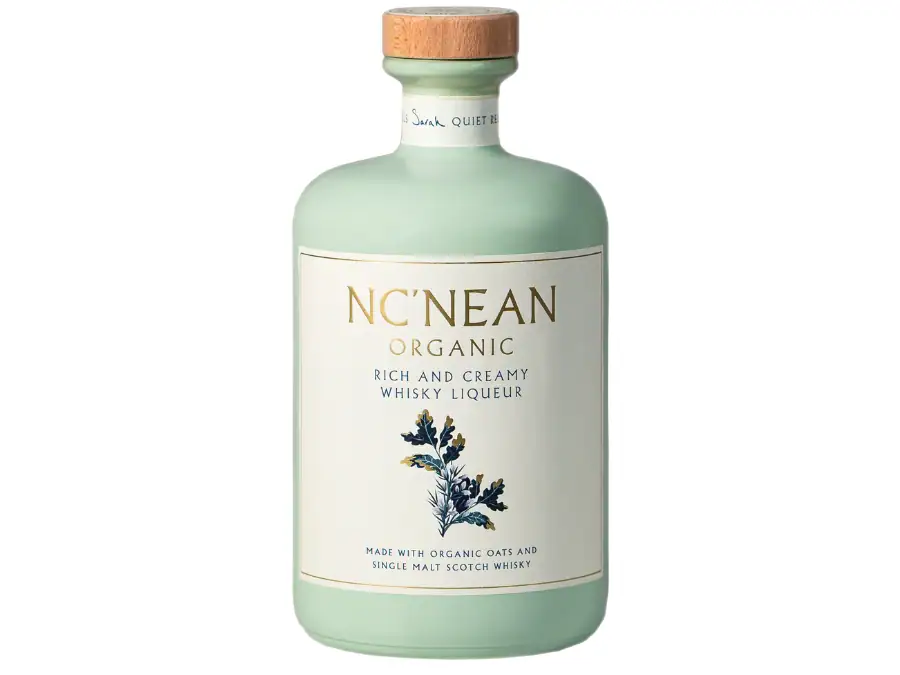
The west coast distillery has focused on creative ways to make its prices more accessible without lowering quality – such as with miniatures and gift sets. Last year, it produced a limited-edition vegan cream liqueur (below) that has been requested as a permanent SKU in some markets. The flavour profile and cheaper price point proved a handy way of encouraging in-market trial with consumers wary of venturing towards single malt. “Quite often, by the end, they’ve tried the whisky [as well] and they’ve liked it,” Thomas says.
La Martiniquaise-Bardinet’s Habbouse says RTD and RTS formats are also “gaining relevance” due to portability and convenience. “They resonate particularly well with younger consumers seeking simplicity and versatility,” she says. “RTDs can help broaden the category’s reach without compromising quality.”
In May last year, the brand owner released a canned RTD from Cutty Sark – The Cutty Sark & Ginger Ale Highball. Habbouse says “lower-ABV expressions, smoother and slightly sweeter profiles, and whiskies designed specifically for mixing”, such as LMB’s whisky-based flavoured spirit, Label 5 Original Citrus, can also “act as entry points” for non-scotch drinkers.
“In this evolving market, the winning strategy will likely balance heritage and innovation – protecting the integrity and standards that define scotch while simultaneously expanding the category through accessible styles, new consumption occasions and formats that speak to a new generation of drinkers,” says Habbouse.
Premium and aged expressions
Still a category tethered to tradition, scotch brand owners are confident in the resilience of age statements and limited editions.
“Even in periods of softer volume growth, the premium and super-premium segments of scotch continue to perform well, because consumers increasingly view whisky as something to savour and explore rather than simply consume,” says Bacardi’s Cox.
Asked whether Bacardi had observed any signs of depremiumisation, Cox is bullish on the opposite. “What one will see are variances between geographies and likely at individual brand levels. But overall, we see consumers becoming more intentional rather than trading down,” Cox says. “People may drink slightly less frequently, but when they do choose a whisky, they want it to feel worthwhile.”
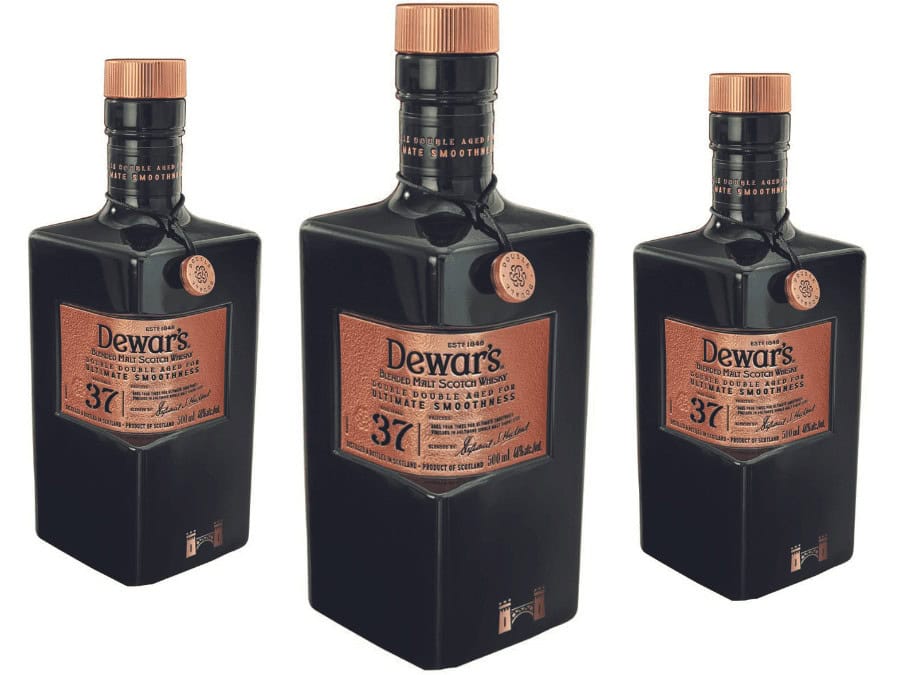
He says premiumisation has been a “long-term focus” for Bacardí, “particularly through the continued expansion of the Dewar’s aged portfolio”. In 2023, the company launched Dewar’s Collector’s Series with the Double Double 37-year-old expression (below), followed by a 38-year-old a year later.
“Economic pressures have naturally prompted discussion around the potential for consumers to trade down in certain markets,” says Pernod Ricard’s Fouad. “But we haven’t seen this develop into a sustained trend across our global footprint.
“Thanks to Chivas Brothers’ portfolio across price tiers and geographic footprint, we remain well positioned to meet consumer trends amid current contrasting market conditions in different regions.”
Home turf
A recent increase in spirits duty has been the cause of much consternation in the UK, where the Scotch Whisky Association describes an “increasingly uncompetitive domestic tax and regulatory environment”.
Duty rises, Nc’nean’s Thomas says, are “very unhelpful” for two reasons: “The first is obviously that it’s putting the cost of alcohol up in an environment where the consumer isn’t much minded to pay more. The other point is the enormous amount of time it takes to put through duty changes on a portfolio of products.”
But for Thomas, the bigger issue, when it comes to domestic politics, is the increasing cost of employment due to minimum wage and national insurance contribution hikes for employers.
“It’s something the Government both can and should solve, because it’s genuinely making people think twice about employing people. For us, that increase was the equivalent of a full-time person – and we employ fewer than 20 people.”
Amid all challenges, though, the trade still remains admirably stoic.
“The market is challenging,” admits Cox. “However, at a total category level, many sources – including IWSR and the SWA – suggest post‑Covid excess stocks in blended scotch should finally clear by the end of the year.
“The situation with single malts is a little less clear, but that’s decanting itself too.”
Thomas is equally optimistic. “It’s not as bad as people might be making out,” she says. “A lot of the industry is reducing production, but that’s not because there’s a complete disaster in the industry. It’s because we had this weird boom in Covid and now it’s normalising. In key markets, the consumer is remaining remarkably resilient.”