

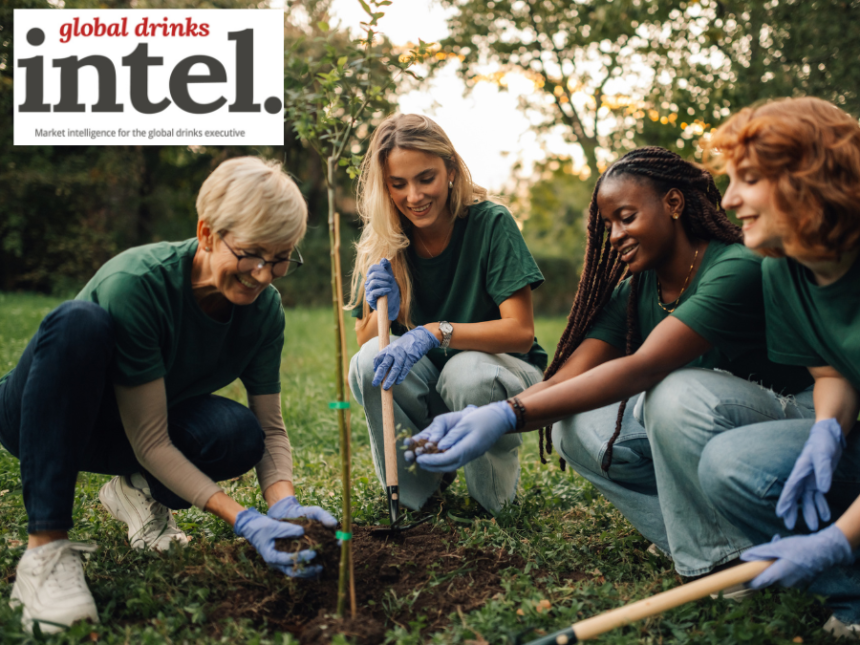
As consumer fatigue and suspicion of corporate green claims increases, beverage alcohol brand owners must work harder to get their messaging through.
According to research by Kantar, around 64% of consumers believe companies have a responsibility to solve environmental issues. But for those not keeping up with the latest innovations, the task of shopping ‘green’ can be off-putting.
“Consumers have a lot on their plate at the moment,” says Carlsberg’s global head of sustainability & ESG, Simon Boas Hoffmeyer. “We know there is fatigue around corporate green claims.”
“There is fatigue and suspicion of claims that are hard to understand, not to mention the myriad certification landscape,” adds sustainability consultant Anne Jones, who works with conference organiser Sustainability in Drinks.
You can’t blame some frazzled shoppers for just wanting to grab a six-pack and go.
“I don’t think people have stopped caring – especially not younger generations,” says Frugalpac CEO Malcolm Waugh. “What we see is that consumers are more sceptical of greenwashing and empty claims. In tough times, they still value sustainability, but they appreciate when it comes with tangible benefits or at least no extra burden on them.”

The ‘say-do gap’
Despite continued interest in sustainability, there‘s a gap between what we’d like to do and what we do – the so-called ‘say-do gap’.
“If someone said: ‘Do you want to drink unsustainable wine?’, you’d be mad to say no,” says wine consultant Joe Fattorini. “Similarly, if someone says: ‘Do you want to drink sustainable wine?’, you feel you ought to say yes, whether or not you know what sustainable wine is.”
Fattorini estimates that only a quarter of people are genuinely committed. The rest are split between the “say-do gappers” and those who actively don’t engage.
A recent report by consultancy firm PwC claimed consumers are willing to spend 10% more on sustainably produced or sourced goods despite cost-of-living pressures.
“There’s a real danger of people in the business being misled by a headline [like that],” says Fattorini. “If you built your strategy around that, you’d alienate 30% of shoppers who actively avoid ‘eco’ brands, and risk being perceived as either reducing quality or passing on costs by the 40% who are merely ‘eco-considerers’.”
Jones adds: “Consumers often say that they’re willing to pay more for sustainable items, but we rarely see evidence of that in action. However, consumers will pay to buy into brands that align with their values, so the only real answer is the long, slow building of brand loyalty based on credible, repeated sustainability messaging that is backed by evidence. There is no shortcut!”
Messaging
Amid a lack of time or interest, or simply due to confusion, some shoppers put their faith in retailers to do the groundwork for them. “Wine is a challenging category to navigate from a sustainability perspective,” says Jones. “Consumers often use their retailer as a ‘proxy’ to align with their values – for example, a local organic wine bar or a supermarket where they trust their environmental credentials in other categories.”
Even getting listed in so-called ‘sustainable’ retailers is not a sure win for brand owners. Fattorini cites an Italian winery that took the prominent, green word ‘organic’ off its labels in Sweden’s notoriously eco-conscious Systembolaget alcohol retail monopoly. “People believe that if you do a ‘good’ thing like this, you must either have to charge them more, or compromise on quality, and it affected sales,” he explains.
Boas Hoffmeyer says the relevant level of messaging and on-pack claims varies between products and geographies, but there will soon be an expectation that beverage companies are “doing their part”.
“We believe this will increasingly become a prerequisite, like their expectation that products are safe and of high quality,” he adds.

Overcoming green fatigue
Asking how brand owners can overcome green fatigue, there is one consistent message: Keep it relevant to people’s lives.
Waugh explains: “If you can tie eco-friendly choices to quality, convenience or value – for example: ‘this lighter bottle is easier to carry and won’t break, plus it cuts CO₂’ – you’re addressing their daily concerns and the planet.
“Brands that are transparent, factual and creative in showcasing their sustainability efforts will cut through any fatigue and build trust.”
Members-only intel
Keep reading this members-only article – and every one like it
- ✓All paywalled news and interviews
- ✓Category and market data
- ✓Monthly GDI magazine
- ✓Full archive + daily newsletter
Secure checkout · Cancel any time · Company invoices available
Already a member? Log in
See all plans, incl. 10-reader and corporate
Check if your company already pays for you Your company may already give you free access.
Corporate subscribers: AB InBev, Bacardi, Campari Group, Diageo, Moët Hennessy, Pernod Ricard, Proximo Spirits, Suntory Spirits Group, William Grant and Sons.
Activate company accessNot ready yet? Get the headlines free in our daily newsletter.
Sign up free