

Every category has a front door. In alcohol, that door used to be predictable. Lager. Maybe cider. Something your older sibling drank. Something that appeared regularly in the fridge, or at a barbecue that everyone else was drinking.
Walk down a beer aisle today, however, and you’re expected to know the difference between IPA and hazy IPA, or double IPA and craft lager. Spirits, meanwhile, asks consumers to understand base, mixability and occasion. And, wine remains its own language altogether. For a consumer early in their drinking life, that friction is quietly intimidating.
Thankfully, brands are starting to rediscover the importance of being gateway products.
In many beverage alcohol categories, we’re beginning to see market maturity or, often, decline. In the first six months of last year, for example, total alcohol sales in the US fell by 3%. For the full 12 months of last year, meanwhile, global wine volume was down 3.3%, as global spirits volumes were forecast to have declined year-on-year by 1.3% – the list goes on. At the same time, every brand owner’s earnings announcement includes at least one paragraph referencing moderation, health shifts or the realisation that younger consumers are drinking less.
It’s easy to assume that means we don’t need to bring in new consumers, but the truth is very different. Alcohol categories are rarely static in real terms. New consumers leave every day and new ones replace them. In categories that are flatlining or declining, winning those new consumers is the most critical thing.
In any mature category, people age out. Some stop drinking. Some trade down. Some just disengage. If you’re not replacing them, you’re shrinking, even if total penetration looks stable on a spreadsheet.
The pivot to heritage as a strategy – while not always a bad strategy – often points to brands being more concerned with retaining consumers than winning new ones. This is because they assume that stagnant sales performances mean nobody new is entering the category.
Today’s gateway brands don’t look like traditional alcohol. They look like something adjacent: energy drinks, tropical sodas, gaming culture, festival merch. They remove friction. They lower intimidation. And, crucially, they feel culturally familiar before you’ve even tried them.
Two sharp examples are Four Loko and Vamos by Mahou. Neither could be considered as premium. Nor are they heritage-led. And, they’re not trying to be the final destination either. They’re recruitment tools. And, while they recruit new drinkers in very different ways, both function as category entry points.
Four Loko doesn’t introduce the consumer to alcohol gently. It throws them into it.
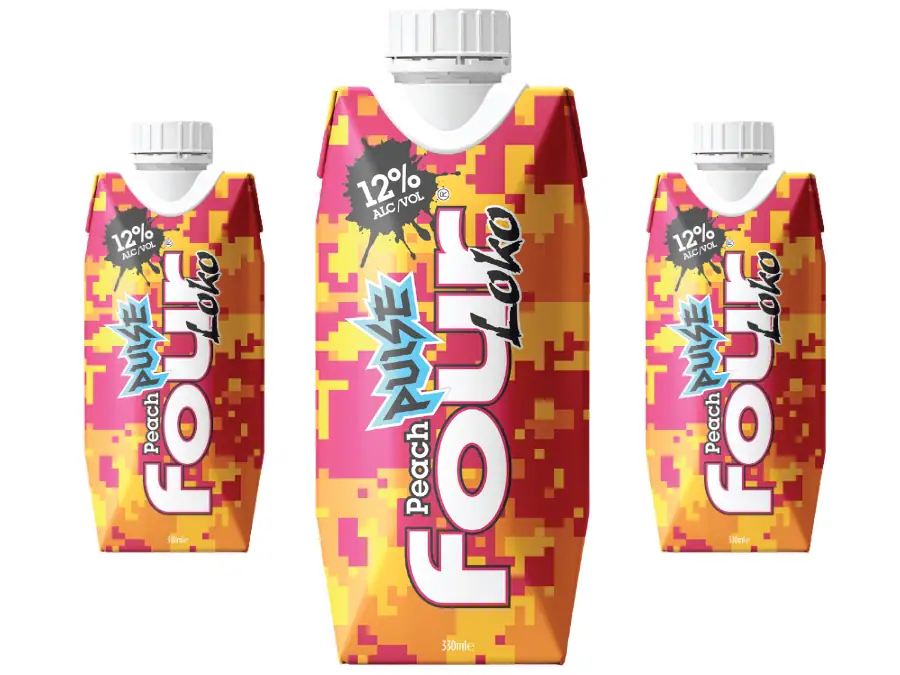
In February, brand owner Phusion Projects unveiled Remix, a high-ABV range of vodka-based RTDs under the brand name, on sale in resealable Tetra Paks for the UK market. Neon colours. Pixelated chaos. Graffiti-style type. Product names – Peach Pulse and Berry Blitza – that demanded immediate consumption. The 12% ABV sits there unapologetically.
There’s no craft story here. No ageing process. No tasting notes.
For a first-time or early-stage drinker, traditional alcohol categories can feel coded and exclusionary. IPAs come with flavour literacy. Whisk(e)y comes with ritual. Wine comes with judgement. Four Loko bypasses all of that. Instead, it borrows from energy drinks and gaming culture, worlds that younger LDA consumers already understand. The visual language speaks to stimulation, hype and immediacy. Not sophistication and heritage.
Four Loko is becoming the brand that feels closer to Monster than merlot. Its job isn’t lifelong loyalty. It’s category recruitment. It gets the consumer into flavoured, high-ABV RTDs.
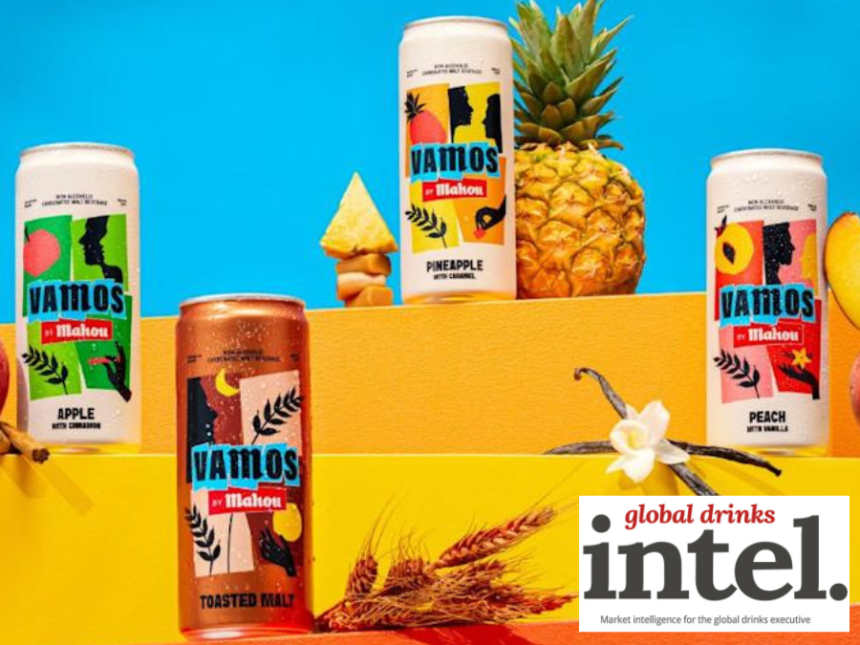
At the end of January, Spanish brewer Mahou San Miguel launched non-alcoholic malt beverage Vamos by Mahou in the Middle East. Where Four Loko is adrenaline, Vamos is an invitation. Bright turquoise branding. Palm silhouettes. Real fruit photography. Slim cans that look closer to flavoured sparkling water than beer.
The word vamos – let’s go – is collective. It signals movement together, not individual excess.
That matters for new drinkers. Alcohol can carry social anxiety. ‘Am I drinking the right thing?’ ‘Is this too strong?’ ‘Is this for me?’ Vamos strips that away. For someone unsure about beer bitterness or spirit strength, Vamos feels safe. It resembles soft drinks and RTDs; categories that are already embedded in social occasions.
It’s the drink the consumer would bring to a barbecue because it feels easy. The can they pick because they can already imagine what it tastes like. Alcohol marketing still leans into heavy gender identity coding. Vamos avoids that trap. It feels occasion-led rather than gender-led. Think, barbecue. Think, beach. Think, daytime gathering.
Both Four Loko and Vamos are solving the same structural problem: how do you reduce the psychological and sensory barriers to entering a category?
Four Loko does it by reframing alcohol as being part of energy culture. Vamos does it by reframing malt drinks as sunny soft drink culture. Neither leads with heritage. Neither leads with connoisseurship. Neither demands knowledge.
But both understand they are gateway drinks to their category.
Members-only intel
Keep reading this members-only article – and every one like it
- ✓All paywalled news and interviews
- ✓Category and market data
- ✓Monthly GDI magazine
- ✓Full archive + daily newsletter
Secure checkout · Cancel any time · Company invoices available
Already a member? Log in
See all plans, incl. 10-reader and corporate
Check if your company already pays for you Your company may already give you free access.
Corporate subscribers: AB InBev, Bacardi, Campari Group, Diageo, Moët Hennessy, Pernod Ricard, Proximo Spirits, Suntory Spirits Group, William Grant and Sons.
Activate company accessNot ready yet? Get the headlines free in our daily newsletter.
Sign up free