The latest wine packaging trends reflect many of the drinks industry’s most topical issues, from tariffs and regulations to sobriety and on-the-go convenience.
Sustainability-driven regulatory changes, higher international trade tariffs and an increasing consumer preference for convenience and sobriety are growing concerns for the US$7.43bn wine packaging business, as valued by Coherent Market Insights.
These market drivers now vie for attention alongside the industry’s classic – and still important – packaging preoccupations of function, design and cost.
The regulatory shift
The importance of the EU’s Packaging & Packaging Waste Regulation (PPWR), which will mandate recyclability targets, ban single-use plastic and extend producer responsibility when it comes into force in August, cannot be overstated.
As Europe is the primary source of exported wine, accounting for around 60% of global production, EU regulatory changes will effectively set the global standard for packaging design.
English wine, spirits & liqueur producer Lyme Bay Winery is “actively preparing” for the EU’s PPWR, according to MD Wolf Sieg-Hogg. “While some consumers still associate heavier glass bottles with premium quality, we define premium through provenance, craftsmanship and, above all, the quality of the wine itself,” he says.
“To balance sustainability with a premium feel, we’ve adopted lightweight bottles and boxes and reduced packaging wherever possible. This approach lowers material use and transport emissions while maintaining high-quality presentation.”
Lightweighting gathers pace
As well as the imminent arrival of PPWR, another factor driving the industry-wide adoption of lightweight glass bottles is, of course, to lower costs. There has been much innovation in this area.
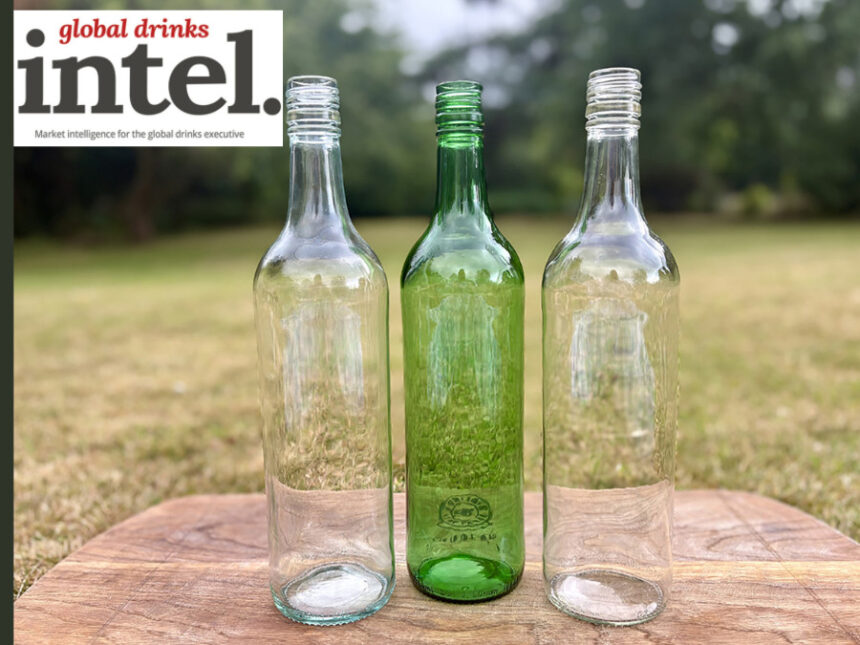
In July last year, Luxembourg-based firm Ardagh Glass Packaging unveiled a 300g 75cl bottle (main image) for still wine, significantly lighter than the 450g–500g industry standard, but able to withstand supply chain handling.
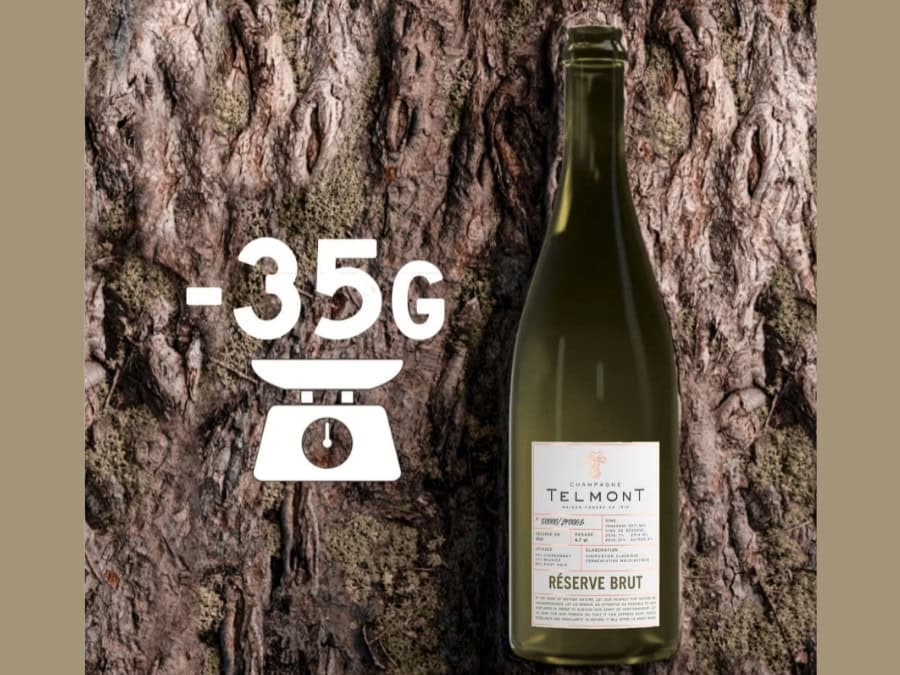
Similarly, in April 2025, Rémy Cointreau-owned Champagne Telmont launched an 800g bottle (above) of its Réserve Brut in the US in partnership with French glassmaker Verallia. Lighter than the standard 835g 70cl champagne bottle, the new design reduces carbon emissions by 4% per bottle while maintaining carbonation integrity.
The innovation was named ‘Green Packaging Initiative of the Year’ in the Global Drinks Intel ESG Awards last year, and Rémy Cointreau believes the 880g bottle could save 8,000 tons of C02 if adopted by the wider industry.
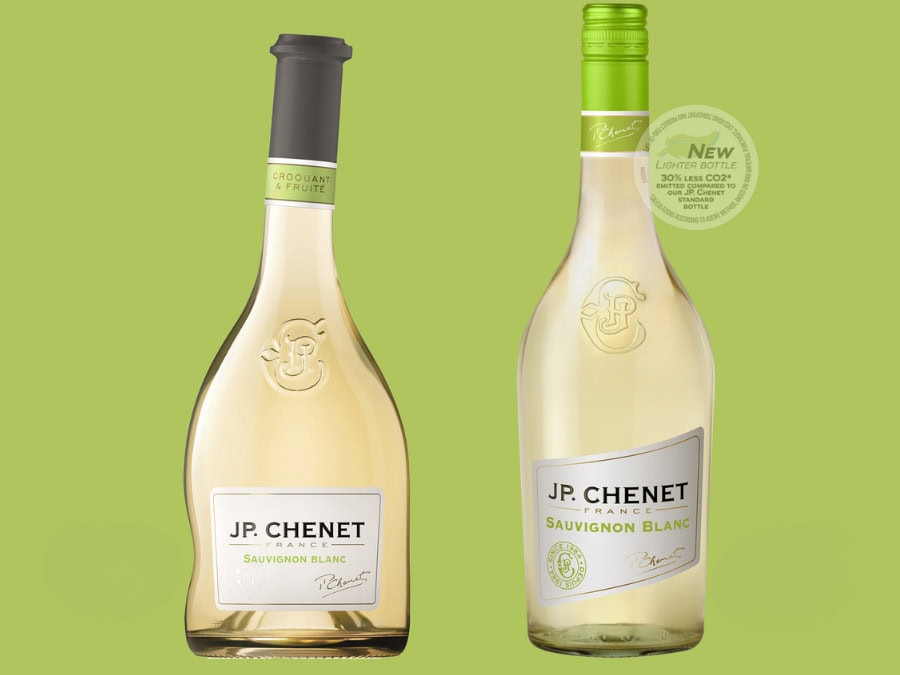
Another French wine brand, JP. Chenet, owned by Les Grands Chais de France and famed for its distinctive Josephine bottle with a tilted neck and wide body, has also jumped on the lightweighting trend, unveiling a new bottle design (below, right, compared to previous bottle, left) in December.
“Our iconic JP. Chenet Josephine bottle with a slanted neck was recently reimagined in the UK,” confirms UK marketing manager Henry Colver. “Our new bottle is 30% lighter and produces 30% less C02. Its new shape is more appealing to consumers and is also fridge-friendly.”
Challengers to glass
Despite these innovations, glass bottles will face increased competition from alternative vessels when the PPWR Extended Producer Levy, which is calculated by weight and adds GBP0.09 (US$0.12) to a standard glass bottle of wine in the UK, comes into force.
Global agency Equator Design, which designed the packaging for UK retailer Morrisons’ own-label wine, believes the charge will push more winemakers to switch from glass to aluminium, due to its lighter weight and infinite recyclability.
“It’s already a popular choice for single-serve wines, which have followed the lead of single-serve cocktails,” argues creative director Nathan Ball. “This taps into people taking wine to festivals or social events, especially if they’re trying to drink less. Plus, they’re just more portable than carrying a bottle of wine.”
Rising US tariffs
Meanwhile, in the US, the government’s imposition of tariffs on imported glass last year (over 20% on Chinese-made glass and 15% on European) has raised costs for American wineries considerably and accelerated moves toward alternative packaging materials and domestically made glass.
Amid this backdrop of higher costs and supply chain volatility, California-based packaging firm Saxco and Revino, a pioneer in reusable wine bottle systems, partnered in December to provide a standardised reusable wine bottle ecosystem for US wineries.
The ‘closed-loop’ system reduces reliance on imported glass and uses Revino’s strengthened glass bottles, which it says are “tough enough to endure 50 high-heat cleaning cycles”, as well as washable adhesives for labels, which can be easily removed.
With Saxco handling the logistics, a winery can order standardised Revino bottles through their regular supply chain, allowing them to meet the Extended Producer Responsibility legislation being passed in many states, as well as achieving an 85% emission reduction compared to standard single-use bottles.
Paper bottles go mainstream
With glass increasingly out of favour as the primary packaging material, alternative lighter, recyclable formats such as cans, pouches and bag-in-boxes are quickly losing their downmarket image.
In particular, the paper-based wine bottle, trailblazed by British company Frugalpac, has transitioned over the past three years from a niche green novelty into a mainstream retail option.
Paper bottles, which have a carbon footprint 84% lower than glass, have been integrated into state-controlled Nordic liquor monopolies and have become a standard eco-tier option in both European and US supermarkets.
In April 2025, US retailer Target launched its own-label Collective Good wine brand exclusively in Frugal Bottles across 1,200 of its stores, while in August, Rossmann, one of Germany’s largest retailers, introduced a German pinot blanc in the Frugal format in more than 2,200 outlets.
The success of paper bottles, according to packaging consultancy PRS In Vivo MD Patrick Young, lies in their design flexibility as well as their environmental benefits.
“Green Gen Technologies’ cardboard bottles are pushing into the mainstream as well, providing lightweight solutions for everyday wines,” he says. “Although oxygen permeability remains a concern for cellar-aged wines, these formats are quickly becoming viable for short- and mid-term storage, especially in retail channels that prioritise carbon reduction.”
Flat bottles look to plant polymer
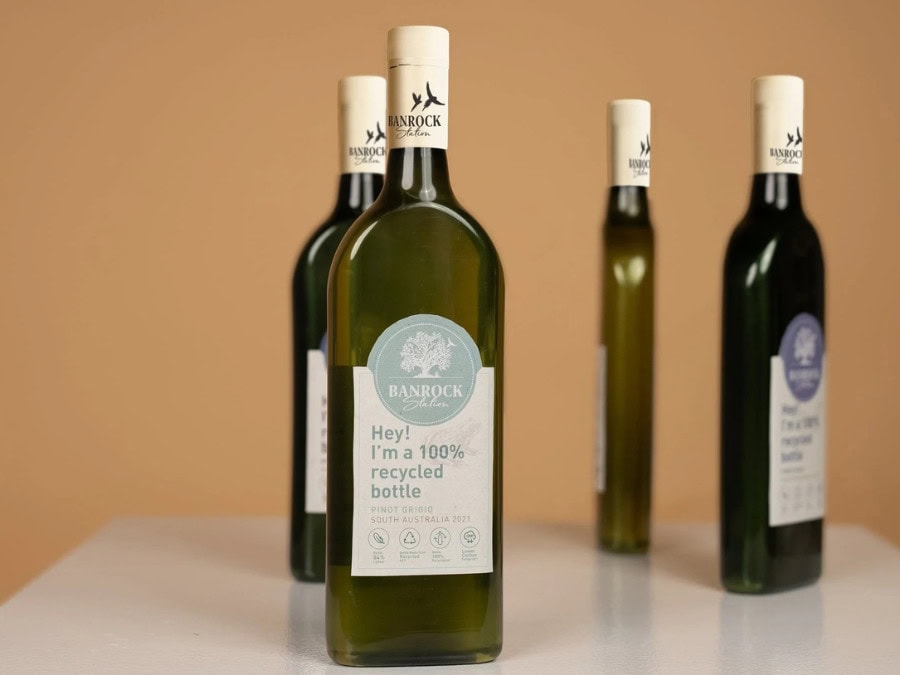
Also growing in importance are the eco-friendly, recycled PET flat wine bottles made by London and Australia-based packaging firm Packamama.
Ideal for the rising, delivery-dependent e-commerce channel, the Packamama bottle has already been used by Moet Hennessy’s Château Galoupet and New World labels Hardys and Banrock Station (above), produced by Vinarchy.
In a major development in January, Packamama signed an agreement with Dutch renewable chemistry company Avantium to incorporate Releaf PEF, a 100% plant-based polymer, into its packaging. The Australian Government has backed the development with an AUD1m (US$700,000) grant to support efforts to “decarbonise Australian wine packaging”.
Rise of on-the-go formats
Wine’s traditional glass-only identity is also being eroded by increasing outdoor socialising and on-the-go consumption. In response to glass restrictions at outdoor venues, brands are embracing shatterproof, lightweight and resealable formats.
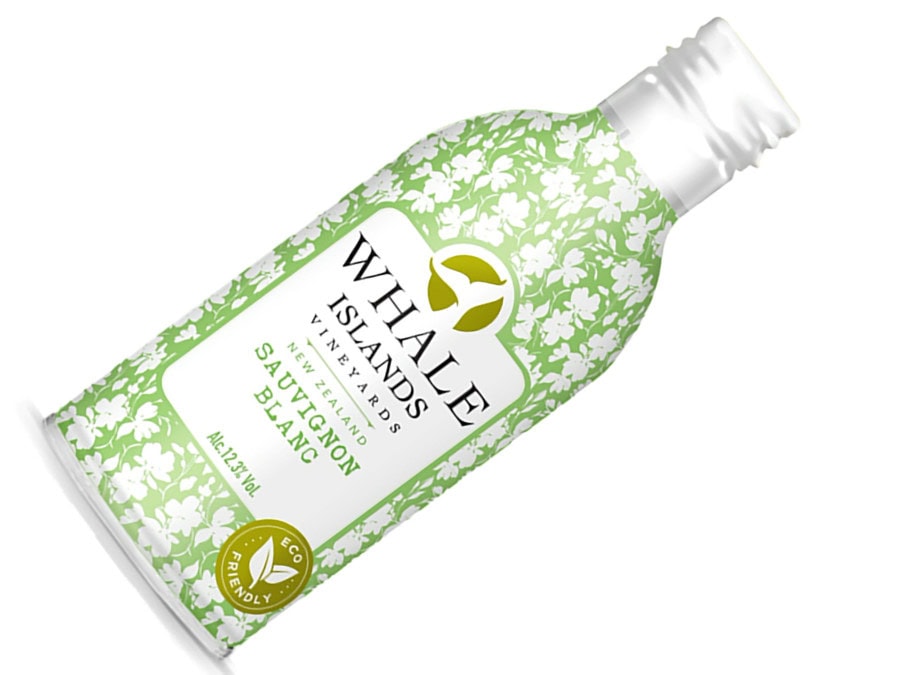
In January, for example, New Zealand’s Whale Islands Vineyards launched a first-of-its-kind resealable 25cl aluminium can in the US (below). Unlike traditional cans that must be finished once opened, this format allows consumers to “save some for later” during hikes or at outdoor events, addressing both portion control and freshness.
The growing importance of convenience (and sustainability) also lies behind the January relaunch of Portuguese cork manufacturer Amorim’s resealable Helix cork closure, first unveiled in 2013. The updated version is compatible with all bottles, expanding the closure’s appeal across markets and styles.
Sourced from natural cork and incorporating Amorim’s anti-TCA technology, Helix opens without a corkscrew but retains the classic ‘pop’ sound of natural cork, maintaining the opening ritual that wine drinkers routinely associate with celebration and quality wine.
Helix has already been adopted by several winemakers – including South Africa’s Rupert Wines, Spain’s Neleman, Italy’s Castellani and France’s Vins Richard – so is already a proven concept, says Amorim director of marketing & communication Carlos de Jesus. He believes the relaunch will allow Helix to “open possible avenues where cork is not normally present”.
The zebra striping effect
One of the few subcategories of the moribund wine industry to show signs of life at present is its non-alcoholic sector, a business predicted to grow at a healthy CAGR of nearly 8% to total USS3.78bn by 2030, according to Grand View Research.
This growth is impacting wine packaging trends, with higher-end non-alc wines increasingly packaged in cans to allow zebra stripers – consumers who alternate between alcoholic and 0% ABV drinks during the same occasion – to enjoy a single serving without committing to a full bottle.
One example is New Zealand’s Giesen, the top-selling non-alc wine in the US by value. When the Marlborough-based brand expanded its dealcoholised spritz line in September, it launched its 0% Sauvignon Blanc and Rosé Spritz RTDs in slim 25cl cans, rolling them out as four-packs across the US. Previously only available in a standard 75cl bottle, the move into cans was designed to capture outdoor and glass-free occasions.
The growth of non-alc wine is even impacting the closure business, with Vinventions unveiling the first closure for the no- & low-alcohol category in November last year. Made from bio-based raw materials, the Nomacorc Nolow claims to offer a “guaranteed TCA-free performance”, as well as “very low” oxygen permeability. Vinventions claims that dealcoholised wines are up to 50 times more sensitive to TCA, the molecule responsible for cork taint, than traditional wines.
As the boundaries between sustainability, portability and premium branding continue to blur, the wine industry is proving that quality is no longer measured by the weight of the bottle. Whether through paper, aluminium or circular glass ecosystems, the future of wine packaging increasingly lies in formats that respect both the consumer’s lifestyle and the planet’s limits.
Members-only intel
Keep reading this members-only article – and every one like it
- ✓All paywalled news and interviews
- ✓Category and market data
- ✓Monthly GDI magazine
- ✓Full archive + daily newsletter
Secure checkout · Cancel any time · Company invoices available
Already a member? Log in
See all plans, incl. 10-reader and corporate
Check if your company already pays for you Your company may already give you free access.
Corporate subscribers: AB InBev, Bacardi, Campari Group, Diageo, Moët Hennessy, Pernod Ricard, Proximo Spirits, Suntory Spirits Group, William Grant and Sons.
Activate company accessNot ready yet? Get the headlines free in our daily newsletter.
Sign up free