


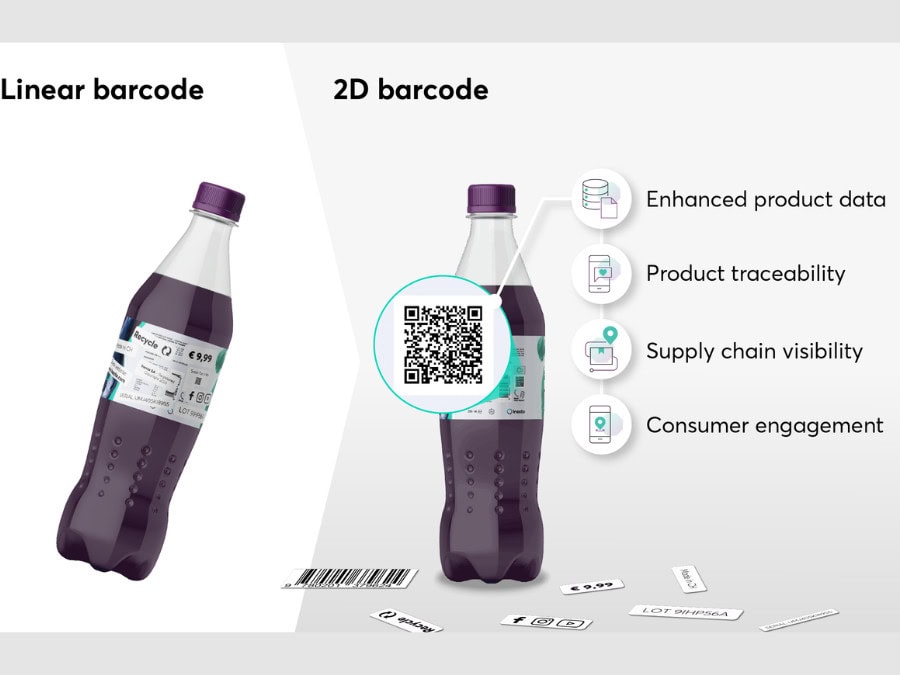
For decades, the linear barcode has been the quiet workhorse of beverage retail. But as regulatory complexity increases, the need for fast recall management grows, sustainability expectations intensify, and digital engagement reshapes consumer behaviour – that simple code is no longer enough.
The industry is entering the era of Digital Product Identity (DPI) – enabled by next-generation 2D barcodes – and the shift is far more strategic than it may first appear. This is precisely the focus of this upcoming webinar, ‘Digital Product Identity: The Next Step for the Beverage Industry‘, led by GS1 Switzerland and Inexto.
For brand owners, packaging leads, operations directors, marketing managers, and regulatory teams the question is no longer if this transition will happen, but how quickly it will reshape the industry landscape.
From static packaging to dynamic data infrastructure
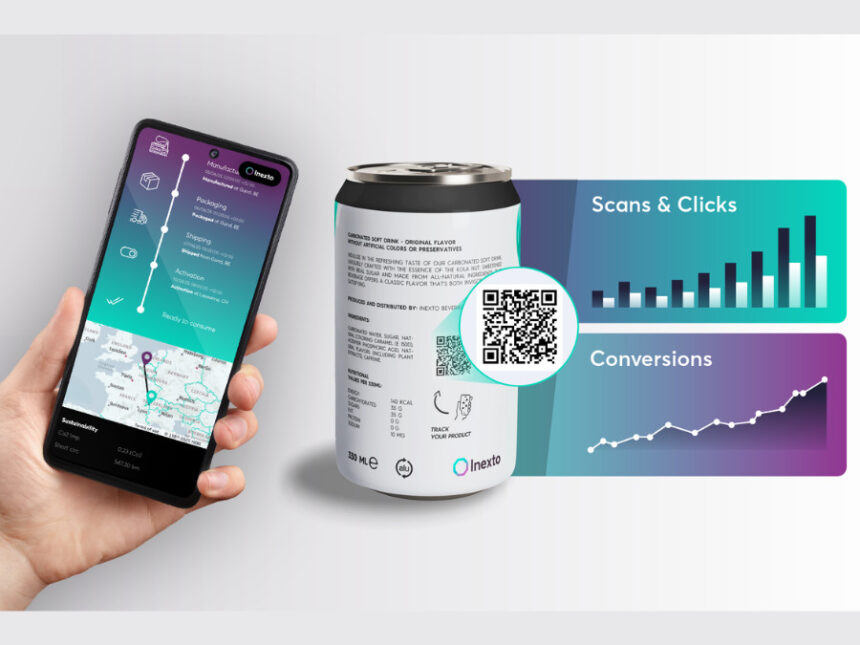
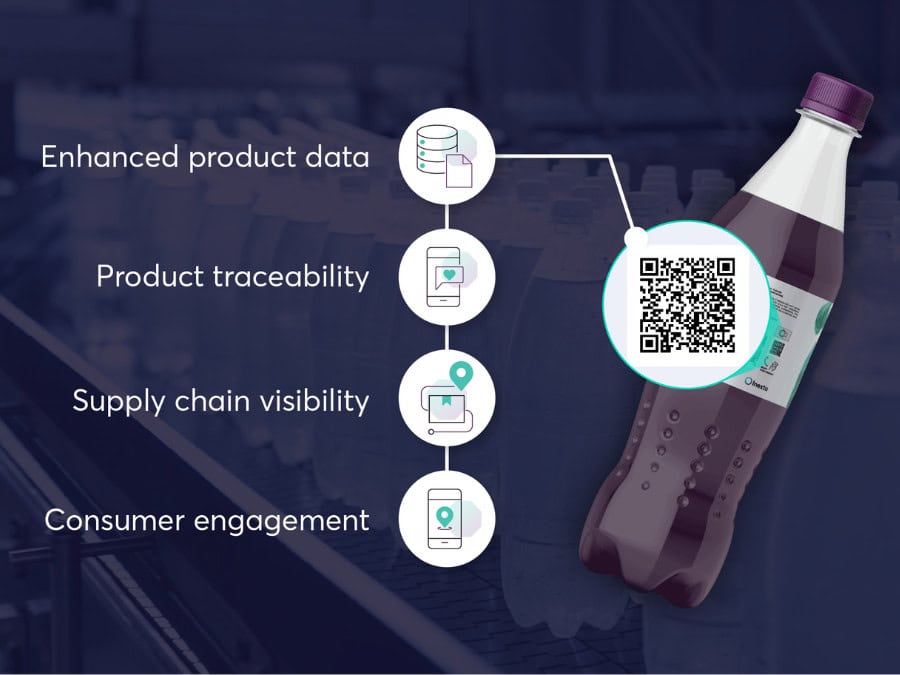
Traditional barcodes identify a product. A 2D barcode can do much more, including:
- Link to real-time product information
- Enable item-level traceability
- Power fast and efficient recalls
- Deliver regulatory and sustainability data on demand, and
- Connect consumers to personalised digital experiences
In effect, each bottle or can becomes a living digital record. This means traceability is evolving from batch-level compliance into real-time, item-level intelligence. For beverage producers managing complex supply chains across multiple markets, that shift can fundamentally improve risk management and operational visibility.
If you want to learn more about how this transition works in practice and what beverage companies should be doing to prepare, tune into this webinar presented by GS1 Switzerland and Inexto.
Regulation is accelerating the timeline
Europe in particular is experiencing mounting regulatory pressure: extended producer responsibility schemes, evolving labelling requirements, and new frameworks such as the upcoming 2D barcode standard powered by GS1.
2D barcodes offer flexibility: instead of redesigning packaging each time disclosure requirements change, brands can update digital content dynamically while keeping the physical pack unchanged.
In this context, Digital Product Identity becomes not just a compliance tool, but a hedge against regulatory volatility.
Beyond compliance – Competitive advantage
Forward-looking beverage brands are recognising that 2D barcodes are not merely a replacement for linear codes ahead of GS1’s Sunrise 2027 milestone. They are a gateway to new value creation.
With Digital Product Identity, companies can:
- Improve recall accuracy and reduce associated costs
- Strengthen supply chain resilience
- Provide verifiable sustainability data
- Enable consumer-facing experiences without increasing label clutter, and
- Capture first-party engagement insights via product scans
For premium, craft and multinational beverage brands alike, that combination of operational efficiency and consumer connectivity represents a rare alignment of cost control and growth opportunity. The next step is to translate the high-level strategy into practical beverage-sector applications.
Why timing matters
The transition to 2D barcodes is already underway across food and beverage manufacturers. Retailers and standards bodies are aligning around global GS1 frameworks, and the 2027 Sunrise initiative is quickly approaching.
Early movers will shape internal capabilities, supplier alignment and packaging redesign cycles on their own terms. Late adopters will find themselves responding under pressure.
To learn how the new 2D barcode standards and Digital Product Identity can benefit your business, register for the GS1 Switzerland and Inexto webinar on Thursday, 5 March.”