

Sign In
  • News
    • Beer
    • Spirits
    • Wine
    • Environmental, Social & Governance
    • Financial Results
    • Marketing
    • Mergers & Acquisitions
    • New Product Development
    • From the Industry
  • Intel
    • Comment
    • Interview
    • Category Intel
    • Consumer Intel
    • Market Intel
  • Awards
    • Global Drinks Awards
    • New Product Awards
    • ESG Awards
  • Magazine
  • Newsletter
  • Subscribe
  • Contact
  • News
    • Beer
    • Spirits
    • Wine
    • Environmental, Social & Governance
    • Financial Results
    • Marketing
    • Mergers & Acquisitions
    • New Product Development
    • From the Industry
  • Intel
    • Comment
    • Interview
    • Category Intel
    • Consumer Intel
    • Market Intel
  • Awards
    • Global Drinks Awards
    • New Product Awards
    • ESG Awards
  • Magazine
  • Newsletter
  • Subscribe
  • Contact
Search
OKI Banner - https://www.oki.com/uk/printing/label-printer/?utm_source=OKI+Web+Chat&utm_medium=Bing&utm_campaign=Global+Drinks+Awards&utm_content=ACTFUND-1070&activity_code=ACTFUND-1070


Gen Z isn’t killing alcohol – The brands that are crushing it while the drinks industry struggles – Comment

Eric Sampers
Last updated: 27/01/2026 at 5:03 PM
By Eric Sampers
27 January 2026
11 Min Read

‘The playbook needs rebuilding, not tweaking: updating the strategies, the touch points and delivering the innovations that matter.’


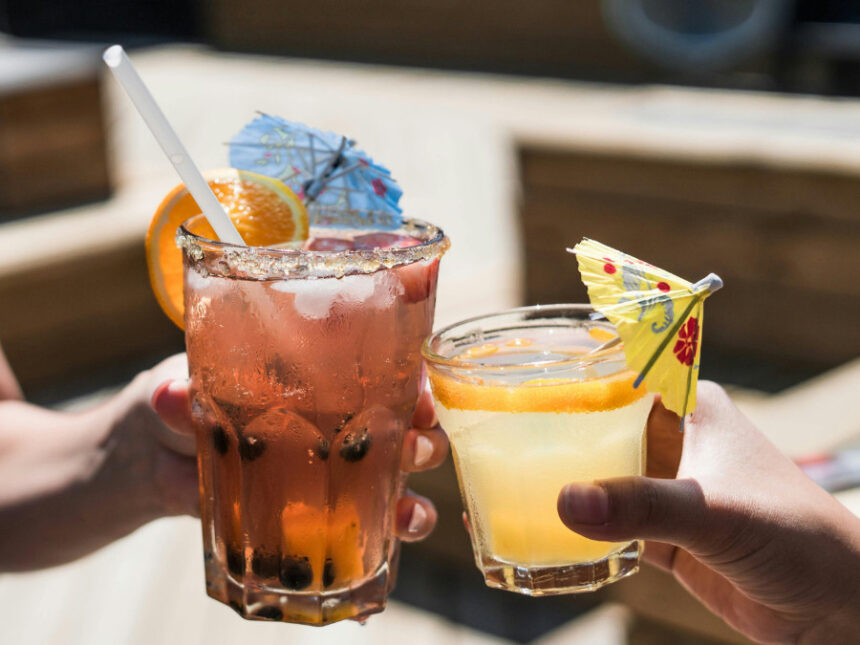
Two alcoholic drinks in glasses
Credit: Burst/Pexels
SHARE

Eric Sampers spent 16 years with Pernod Ricard before breaking out on his own in 2019, founding the low-alcohol spirits venture, Illogical Drinks Co. Just over three years ago, he joined Brockmans Gin as global marketing director, leaving the business late last year. This comment article was initially posted by Sampers on LinkedIn. Head here to add your comments.

Eric Sampers

There’s a lot of doom and gloom surrounding the beverage alcohol industry right now, and the share prices of the major listed operators tell the story well: Over the last couple of years, the shares of the likes of Diageo and Pernod Ricard have fallen by half, reflecting poor sales performance in their key strategic regions. This has been attributed to an unprecedented shift in consumer behaviour in western economies and beyond.

What really annoys me (and many others), however, is the familiar narrative pointing the finger at young LDA drinkers to justify these negative results.

Yes, there are external factors impacting sales (the cost of living crisis, for example, which is hitting consumers’ wallets). Yes, moderation is on the way up (per capita consumption in volume terms has been declining for decades though, this is not new news – check your expensive data subscription services).

But these explanations fail to account for the phenomenal success several brands are experiencing with young drinkers and Gen Z in particular.

What do Guinness, Buzzballz, Au Vodka and the functional drink Trip CBD have in common? Not much you might think, but you would be dead wrong.

First, they are thriving in an adult beverage industry that is currently depressed. Okay, Trip isn’t an alcoholic beverage, but it’s certainly making a dent in the alcohol market. Secondly, these brands share solid common traits and patterns that explain why they’re proving successful with younger consumers and particularly Gen Z.

Guinness strikes gold – Post-craft coolness driven by genuine preference rather than marketing

Guinness is going through a formidable post-pandemic resurgence: from becoming the most popular pint in the UK in early 2023 to Diageo claiming at the end of last year that one in every seven pints served in London is a Guinness, while opening a GBP73m visitor centre and microbrewery in the heart of the UK capital.

How did that happen?

Gen Z has played a major role: Through social media, peer influence and personal experimentation, they’ve discovered that Guinness offers a rare combination of functional benefits, visual distinction, accessible sophistication and authentic heritage. And they’ve massively bought into it, turning their back almost entirely on the craft beers that millennials were craving.

Exit funky microbreweries & IPAs, enter the reign of Guinness.

Guinness has achieved what craft brewers have spent years pursuing: Organic advocacy from digitally native consumers who voluntarily create content, develop rituals and recruit peers.

Functional benefits? The moderate ABV of Guinness (4.1% in the UK) is frequently cited as a key driver for younger consumers who wish to ‘keep up with their mates and not die’. Visual distinction? The traditional two-step perfect pour of its ‘camera-ready liquid’ and the ‘split the G’ phenomenon are active rituals that young LDA  drinkers can participate in and document on their social media, leading to a fetishisation of the stuff and a permission to socialise.

To them, Guinness feels both cool, authentic, reliable and ‘non-threatening’, is easy to drink, self-regulating and sophisticated. Guinness effectively beats the craft out of craft beers by removing all the complexity and snobbery that surrounded craft.

Buzzballz delivers on its name with brutal efficiency

These colourful and easily identifiable RTD cocktail spheres may have raised questions regarding responsible drinking and legal drinking age, but Buzzballz’ success with younger consumers is undeniable.

Since having exploded in the US, the brand has now reached Europe and the UK, becoming synonymous with ‘pre-drinks’ and ‘pre-party’; established occasions that resonate particularly well with cash-constrained young drinkers.

What Buzzballz excels at is ‘intentional functionality’: Maximum effect (speed) with minimal friction (portability), something that the alcohol industry can never responsibly promote but that Gen Z consumers and their matter-of-fact relationship with authenticity and product proposition value particularly.

Aesthetically, the Buzzballz pack is perceived as a ‘toy’ that triggers impulse and is an instant meme, functioning as a fidget-like object that’s highly ‘grab-able’ and instantly recognisable in low-attention environments (check out in US gas stations and UK convenience stores).

Its bigger insight is behavioural: The brand naturally invites short-form content because of its visual distinctiveness and user-generated content has inundated TikTok, bypassing the platform’s strict policies regarding alcohol advertising.

Devilishly inappropriate, borderline anti-ethical for the industry and brutally successful.

Au Vodka successfully bridges the gap between luxury and accessibility for a young audience

My other ‘real’ spirit example is also going to raise a few eyebrows among purists and those who think that what matters is inside the bottle. 

In the on-premise, Au Vodka keeps building on the successful ‘bling’ trend that emerged a decade ago and that many had predicted would die. Instant flavour (easy and fun), instant party and instant status object.

Here again, intentional functionality strikes gold with its younger audience. The shareable moments provided by the brand in all its forms are far more important than connoisseurship to Gen Z. The golden bottle delivers party kit semiotics, amplified by social media content (ice, mixers and lighting function as props).

The liquid delivers fun and low-effort mixability. It’s party building ritual (occasion amplifier) and a social signal. Au Vodka’s extraordinary commercial success has been fuelled by Instagram-optimised aesthetics and accessible flavour profiles, dismissing any questions around its credibility as a liquid.

Au has almost positioned itself as the alcoholic equivalent of fast fashion: Affordable, visually appealing, functionally adequate and socially acceptable in specific contexts. No heritage cultivation, no collector mentality and no brand loyalty beyond convenience and price. This is disposable luxury, but it’s also brutally effective.

Trip nails the alcohol ritual replication without the consequences

While not an alcoholic drink, Trip continues to successfully challenge alcohol brands at their own game.

‘Calm you can hold’, ‘spa retreat’, ‘tiny, fizzy vacation in a can’… These consumer comments are better than superlative product reviews. They evidence why Trip has become an adult alternative to alcohol drinks by nailing a strong occasion; an alternative that keeps the ritual (ritualised calm), not the liquid (‘I still have a drink, I still wind down, without the consequences alcohol brings’).

Trip satisfies the desire for a treat that retains a clean feeling for the drinker afterwards. Imagine this with a social element to it and what we have is a scarily efficient proposition to challenge a huge chunk of the alcohol industry.

Trip provides a socially acceptable exit from habitual, low-energy drinking without requiring a sobriety identity or complete abstinence. The psychological hurdle for trial is minimal: instead of opening a bottle of wine or fixing a G&T, open a Trip. The ritual architecture remains intact.

With premium design aesthetics, low-calorie health & wellness credibility and premium botanicals territory, Trip is also a premium delivery format in the convenience space with emotional baggage attached to it.

A perfect contender to premium alcoholic drinks.

Recent data indicates that Gen Z’s alcohol consumption is normalising to levels comparable with previous generations. Yet the industry narrative remains stuck on ‘Gen Z doesn’t drink’.

These four brands didn’t accidentally stumble into Gen Z success, they are winning precisely because they’ve abandoned the industry playbook and the patterns are clear: Functional intentionality over discovery, ritual immediacy over education, social media currency, value transparency, accessibility/non-threatening simplicity over craft complexity. And convenience, obviously.

Cans have been completely normalised and adopted, even making their way into the on-premise; something unthinkable just a few years ago.

These new generational drivers are radically different from the ‘premiumisation meets craft’ strategy that added sophisticated complexity and niche product explosion, which was incredibly successful with the previous generation (Millennials). It feels almost like a U-turn on some aspects, but this generation of drinkers dictates the agenda and tells us what their expectations are and how and where to meet them.

The playbook needs rebuilding, not tweaking: updating the strategies, the touch points and delivering the innovations that matter. This is what our industry has always been great at.

Winning over Gen Z in Europe’s on-premise – Market Intel

Previous Article Ponche Kuba bottle Rémy Cointreau updates Ponche Kuba packaging
Next Article Moet Hennessy quarterly sales Q1 2022 Q4 2025 chart Moët Hennessy returns to red in Q4 as 2025 sales dip – results data
MPU for Global Drinks Intel ESG Awards - https://gdiesgawards.com/categories/

The Newsletter

Sign up to receive our newsletter email

  • The very latest news from across the world's beverage alcohol industry
  • Cutting-edge intel from our in-depth category & market analyses, backed by benchmark industry data
  • The best insight on your competitors from our interviews with the industry’s leaders

This field is for validation purposes and should be left unchanged.

Follow on Social

Linkedin Twitter
Short Tower for Global Drinks Intel ESG Awards - https://gdiesgawards.com/categories/
Banner for Bayou Rum - https://bayourum.com/

You Might Also Like

Boston Beer Co sales graph Q1 2022-Q2 2026

Sales stay stubbornly red for The Boston Beer Co in latest quarter – results data

24 July 2026
Bulleit '87

This week’s new spirits launches – 20-24 July 2026

24 July 2026
Proximo Spirits sales Q1 2022-Q2 2026 chart

Reprieve of sorts for Proximo Spirits as quarterly sales slides decelerate – results data

24 July 2026
Skyline of Italian city

How the spirits industry is weathering Italy’s unique challenges – Market Intel

24 July 2026
Linkedin Instagram

What next?

  • Sign up to our FREE newsletter
  • Subscribe
  • My Account
  • Sign up to our FREE newsletter
  • Subscribe
  • My Account

About

  • Contact
  • Privacy Policy
  • Cookie Policy
  • Terms & Conditions
  • Contact
  • Privacy Policy
  • Cookie Policy
  • Terms & Conditions

Copyright © 2025 Global Drinks Intelligence Limited. All Rights Reserved

Built and Managed by Kukoo Creative

This website uses cookies to improve your experience. Read our privacy policy | Cookie settings | ACCEPT
Privacy & Cookies Policy

Privacy Overview

This website uses cookies to improve your experience while you navigate through the website. Out of these cookies, the cookies that are categorized as necessary are stored on your browser as they are as essential for the working of basic functionalities of the website. We also use third-party cookies that help us analyse and understand how you use this website. These cookies will be stored in your browser only with your consent. You also have the option to opt-out of these cookies. But opting out of some of these cookies may have an effect on your browsing experience.
Necessary
Always Enabled
Necessary cookies are absolutely essential for the website to function properly. This category only includes cookies that ensures basic functionalities and security features of the website. These cookies do not store any personal information.
Non-necessary
Any cookies that may not be particularly necessary for the website to function and is used specifically to collect user personal data via analytics, ads, other embedded contents are termed as non-necessary cookies. It is mandatory to procure user consent prior to running these cookies on your website.
Functional
Functional cookies help to perform certain functionalities like sharing the content of the website on social media platforms, collect feedbacks, and other third-party features.
CookieDurationDescription
li_gc6 monthsLinkedin set this cookie for storing visitor's consent regarding using cookies for non-essential purposes.
lidc1 dayLinkedIn sets the lidc cookie to facilitate data center selection.
VISITOR_INFO1_LIVE6 monthsA cookie set by YouTube to measure bandwidth that determines whether the user gets the new or old player interface.
yt-remote-cast-availablesessionThe yt-remote-cast-available cookie is used to store the user's preferences regarding whether casting is available on their YouTube video player.
yt-remote-cast-installedsessionThe yt-remote-cast-installed cookie is used to store the user's video player preferences using embedded YouTube video.
yt-remote-connected-devicesneverYouTube sets this cookie to store the user's video preferences using embedded YouTube videos.
yt-remote-device-idneverYouTube sets this cookie to store the user's video preferences using embedded YouTube videos.
yt-remote-fast-check-periodsessionThe yt-remote-fast-check-period cookie is used by YouTube to store the user's video player preferences for embedded YouTube videos.
yt-remote-session-appsessionThe yt-remote-session-app cookie is used by YouTube to store user preferences and information about the interface of the embedded YouTube video player.
yt-remote-session-namesessionThe yt-remote-session-name cookie is used by YouTube to store the user's video player preferences using embedded YouTube video.
ytidb::LAST_RESULT_ENTRY_KEYneverThe cookie ytidb::LAST_RESULT_ENTRY_KEY is used by YouTube to store the last search result entry that was clicked by the user. This information is used to improve the user experience by providing more relevant search results in the future.
Performance
Performance cookies are used to understand and analyze the key performance indexes of the website which helps in delivering a better user experience for the visitors.
Analytics
Analytical cookies are used to understand how visitors interact with the website. These cookies help provide information on metrics the number of visitors, bounce rate, traffic source, etc.
CookieDurationDescription
_ga1 year 1 month 4 daysGoogle Analytics sets this cookie to calculate visitor, session and campaign data and track site usage for the site's analytics report. The cookie stores information anonymously and assigns a randomly generated number to recognise unique visitors.
_ga_*1 year 1 month 4 daysGoogle Analytics sets this cookie to store and count page views.
YSCsessionYSC cookie is set by Youtube and is used to track the views of embedded videos on Youtube pages.
Advertisement
Advertisement cookies are used to provide visitors with relevant ads and marketing campaigns. These cookies track visitors across websites and collect information to provide customized ads.
CookieDurationDescription
__Secure-ROLLOUT_TOKEN6 monthsYouTube sets this cookie to manage feature rollout and experimentation. It helps Google control which new features or interface changes are shown to users as part of testing and staged rollouts, ensuring consistent experience for a given user during an experiment.
__Secure-YNID6 monthsGoogle cookie used to protect user security and prevent fraud, especially during the login process.
_fbp3 monthsFacebook sets this cookie to store and track interactions.
bcookie1 yearLinkedIn sets this cookie from LinkedIn share buttons and ad tags to recognize browser IDs.
yt.innertube::nextIdneverYouTube sets this cookie to register a unique ID to store data on what videos from YouTube the user has seen.
yt.innertube::requestsneverYouTube sets this cookie to register a unique ID to store data on what videos from YouTube the user has seen.
Others
Other uncategorized cookies are those that are being analyzed and have not been classified into a category as yet.
CookieDurationDescription
__Secure-YECpastYouTube sets this cookie to stores the user's video player preferences using embedded YouTube video
advanced_ads_visitor1 monthDescription is currently not available.
personalize_sync1 dayDescription is currently not available.
RBUUID2 monthsDescription is currently not available.
stackprotect1 hourDescription is currently not available.
syncTimeout12 hoursDescription is currently not available.
unique_session_id1 yearDescription is currently not available.
SAVE & ACCEPT
Powered by CookieYes Logo