

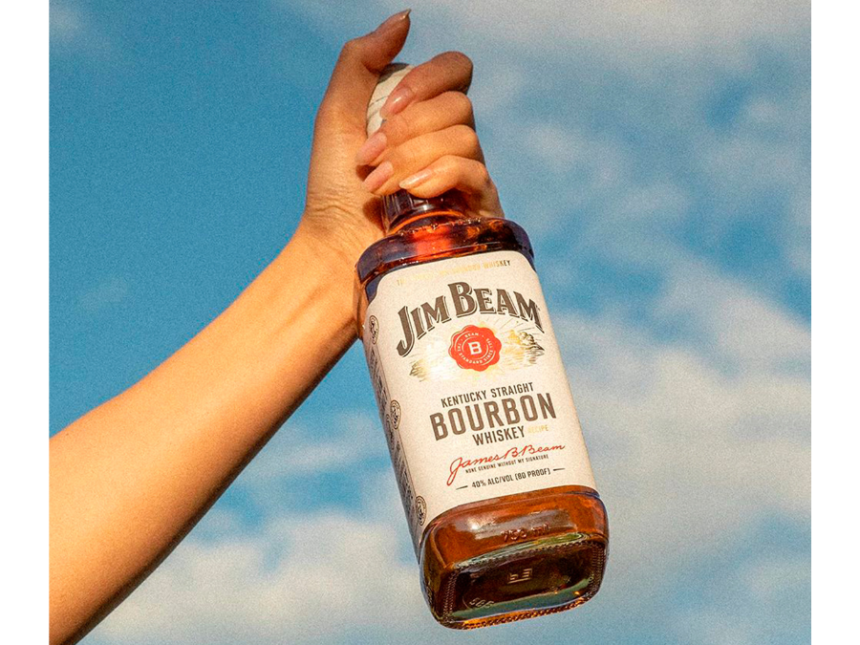
Suntory Global Spirits has become the latest spirits distiller to confirm a break in its production, with one of the two facilities that distils flagship bourbon Jim Beam set to cease for all of next year.
The company, whose American whiskey portfolio also includes Maker’s Mark and Knob Creek, has outlined plans to stop operations at the “main” distillery on its James B Beam “campus” in Clermont, Kentucky, for 2026 “while we take the opportunity to invest in site enhancements”. Jim Beam will continue to be produced at the group’s Booker Noe distillery in Boston, Kentucky, 12m south of the campus.
The confirmation, issued today (22 December), followed local press reports regarding the matter over the weekend.
“We are always assessing production levels to best meet consumer demand and recently met with our team to discuss our volumes for 2026,” a spokesperson told Global Drinks Intel. “We’ve shared with our teams that while we will continue to distil at our Fred B Noe craft distillery in Clermont and at … Booker Noe distillery … , we plan to pause distillation at our main distillery on the James B Beam campus for 2026 … . Our bottling and warehousing are still operating at Clermont.
“We continue to assess how best to utilise our workforce during this transition, and conversations with the union are ongoing.”
This year has seen a slew of international brand owners move to curb their rates of production in whiskey/whisky, including Brown-Forman in Scotland at the beginning of 2025, Pernod Ricard in Ireland in March and, in the same month, Diageo in the US.
Figures released in October highlighted the challenges facing the American whiskey category specifically: In its ‘Mid-Year Report’ on spirits shipments, published in October, trade association the Distilled Spirits Council of the United States said that exports in value terms fell by 9% in the three months to the end of June.
“Since 2012, American whiskey inventories have tripled, reaching nearly 1.5bn proof gallons by the end of 2024,” Discus said in the report. “With domestic demand slowing, exports represent the most viable path to reducing excess inventory and ensuring the sustainability of American whiskey makers.”