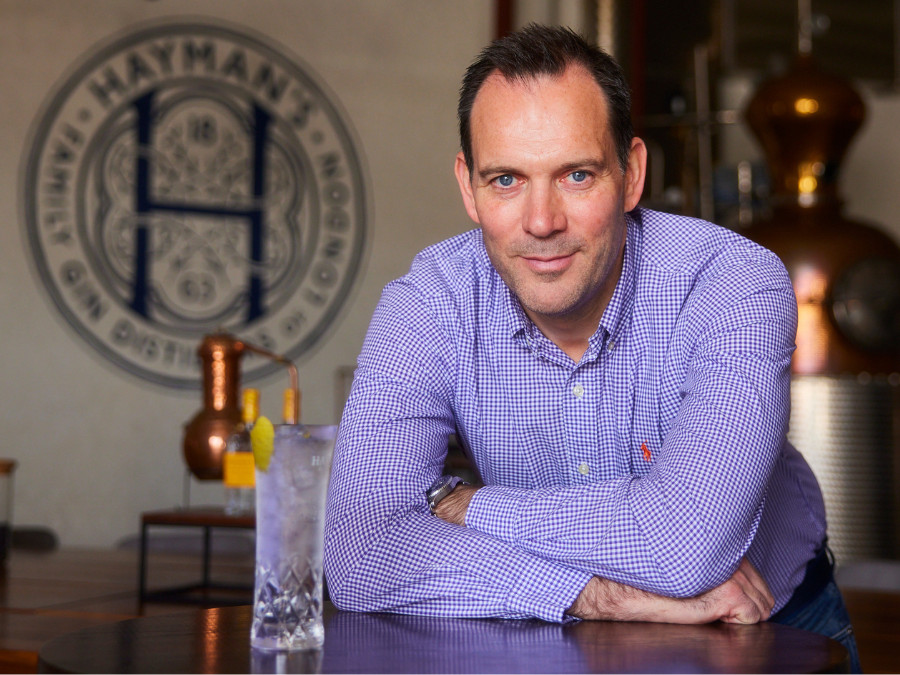
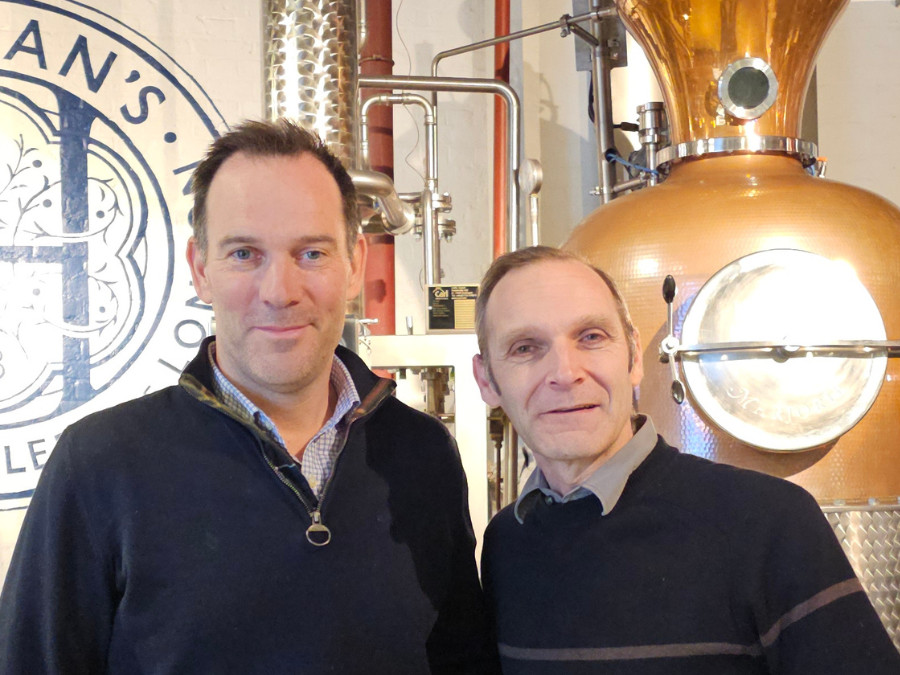
James Hayman comes from enviable gin stock. A direct descendant of the creator of Beefeater, he has worked for his namesake company since 2004. Today, Hayman’s of London remains family-owned, but the distiller’s clear lines of control have not made it immune to the downturn in gin in recent years. Last month, Global Drinks Intel editor Olly Wehring dropped in at the Hayman distillery in south-west London to see how the company is faring.
What’s the history of Hayman’s?
We really date back to 1863; Nobody else has the unbroken lineage that we’ve got. My great-grandfather was James Burrough, who created a number of gin brands, including Beefeater. My father joined the business in 1969, before the business was sold to Whitbread in 1987. He was only 40 at the time of the sale and had a decision to make. He was fortunate enough to be able to buy part of the company back, and he kept his hand in gin. I’d go and help out in the school holidays, then I joined the business in 2004.
At that point, we were ready to put our name on a bottle of gin again. We started with a gin liqueur, Hayman’s 1820. We followed that with Old Tom Gin in late 2006 and built an international footprint quite quickly. That was the foundation of what we’ve got today. As gin started to evolve – Hendrick’s shook up the category a bit – so did we, with a London dry gin, a sloe gin and our Royal Dock navy strength.
As a family business, we only have ourselves to answer to. We can make a quick choice because we only have to ask ourselves. Where we’ve got to today is where we wanted to be from the outset.
We hope that we’ve played our role in the category – Some of the craft names have made more of an impact, but we’ve been quietly getting on with making gin in London and earning respect for our gins. We haven’t gone down that flavoured profile, we’ve stayed true to what London gin is.
How we make our gin today is exactly the same as we made it in 1863. We just want to be a pillar of the category, and that’s what we aim to do.
How was the gin boom for you?
To be honest, it was great! Looking at 2010 to 2020, the first five years were probably better than the second five. We had some really good growth, we established who we are and we were able to invest. As the market became more saturated, we continued to grow, but it became a bit more challenging.
As long as the business is successful, we’re getting good returns, and we have strong partnerships, we’ll carry on doing what we’re doing.
What’s the size and scale of the company today?
We export 85% of what we make. Outside of the UK, our main markets are the US, Australia and New Zealand. We tend to target emerging markets, which is where we’ve had success.
In terms of sales, we’ve grown year on year on year – sales are a bit flat now as you’d imagine, but we still have some markets that sre still in growth. It’s not all doom and gloom, nor is it 2018, when every market was up.
We knew this was going to happen – I was being asked back in 2014 if the gin bubble had burst! Gin is having a rocky period at the moment, but it’s still a big category. For us, it’s about riding out the storm.
We don’t have really high prices; we’re sold at a sensible price, because we’ve been doing this for a long time.
Who’s your main competitor?
You could argue it’s anyone who makes gin in London. There’s probably not one brand – in some markets, it could be a local gin, in others, it could be another British gin.
What’s your biggest pain-point?
At the moment, it’s the wider economic uncertainty here in the UK. Things like, there’ll be a big national insurance increase from 1 April, which is difficult.
Then, there’s the change in UK policy about passing family business from one generation to the next. If we want to pass the business to our children at some point, we would have to pay 20% tax of the company’s book value. That doesn’t mean we’ve got the cash, which could limit future investment.
Hayman’s seems to sit between the established international brands and the craft gin movement.
You’re right, we’re not a corporate brand and we’re not a private equity brand. It’s been difficult at times to compete with private equity brands – People don’t really understand how much investment there has been in the gin category.
I think our brand has disadvantages in some markets, absolutely, but has advantages in others. It’s about finding the right importers who really understand Hayman’s.
Here in the UK, where we represent ourselves, the category is very private equity driven. Now that the money’s started to dry up, some brands are struggling to maintain their investment and are having to cut costs. We’re still able to invest. So, even though gin might be in decline, it’s an opportunity for us to grow our market share.
On the whole, history repeats itself. We will see consolidation and we hope that being in the middle gives us a position of strength.
How are you catering to the rising consumer appetite for moderating their alcohol intake?
We’ve gone into low alcohol – Our Small Gin is still at 43%, but you only use about 5cl in a serve – we really dialled up the botanicals in the still. When we saw that some people found the move to different measures quite difficult, we evolved that into Hayman’s London Light, which is at 12.5%.
We haven’t gone into 0% ABV yet. Looking at where the market’s going, we probably will have to at some point.
How is Hayman’s weathering the current sticky trading environment?
It is sticky. There are a lot of people in the gin category who’ve enjoyed good growth, beyond what they anticipated. That’s changed. We can’t take this personally – this is a market issue and we’ve just got to understand the situation and deal with it as best as possible.
But nothing lasts forever – we go through cycles.
Are you sure it’s cyclical this time around?
Gin is a lot bigger today than it was in 2010, when everybody was drinking gin because it was fashionable. Many of them have probably moved on to RTDs or premix cocktails now. Gin brands like Hayman’s have a responsibility to ensure the category doesn’t become boring or complacent.
This article is available to Global Drinks Intel members only.
Click below for details on how to join the Global Drinks Intel community.
Already a member?
Log in here to read the article in full.
If you work for any of the following corporate subscribers to Global Drinks Intel, head here to activate your access.
- AB InBev
- Bacardi
- Campari Group
- Diageo
- Moët Hennessy
- Pernod Ricard
- Proximo Spirits
- Suntory Global Spirits
- William Grant & Sons