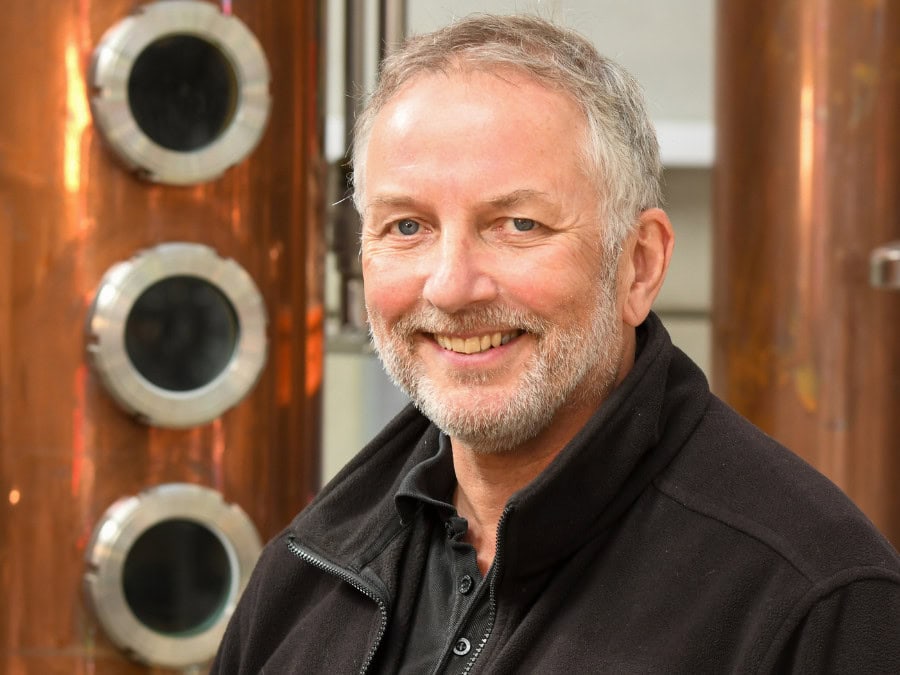
In September last year, William Grant & Sons announced the acquisition of Silent Pool Distillers and its namesake gin brand. At an event held at the company’s distillery in the south of England to mark its tenth anniversary in October, co-founder & MD Ian McCulloch (below) sat down with editor Olly Wehring to share the story so far.
Global Drinks Intel: What led you to setting up Silent Pool?
Silent Pool founding director Ian McCulloch: I’d had a 30-year career in television and came out after a regime change too many. During my time in TV, my job was to get the money in. Too often, my time with clients was in an office block with a spreadsheet, talking about something in the abstract.
If you live in (the English county of) Surrey – I’m Surrey born and bred – you never really see people truly making something – and that was something I wanted to do. The transferable bit from TV is that the programmes that make money are dramas – the viewer is emotionally invested. So, I wanted to make something that also involved an emotional attachment.
In 2012, I went for dinner at a neighbour’s house, where I met Christian Rose, who at the time was the chief executive of Greenall’s, the largest contract gin distiller in the UK. We got to talking about gin, which I’d always liked, and that was my actual lightbulb moment.
This’ll start to sound slightly ridiculous, but I mentioned this to a friend whose dentist’s father was Geoff Palmer, the emeritus professor of distilling at Heriot-Watt University in Edinburgh. My friend and I went to meet him and he gave us a crash course in how to distil spirit.
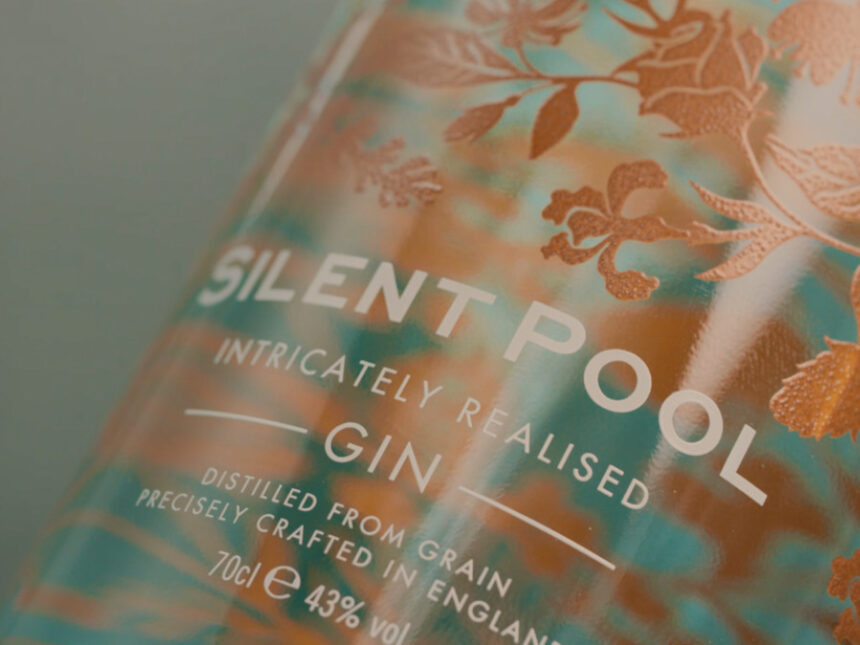
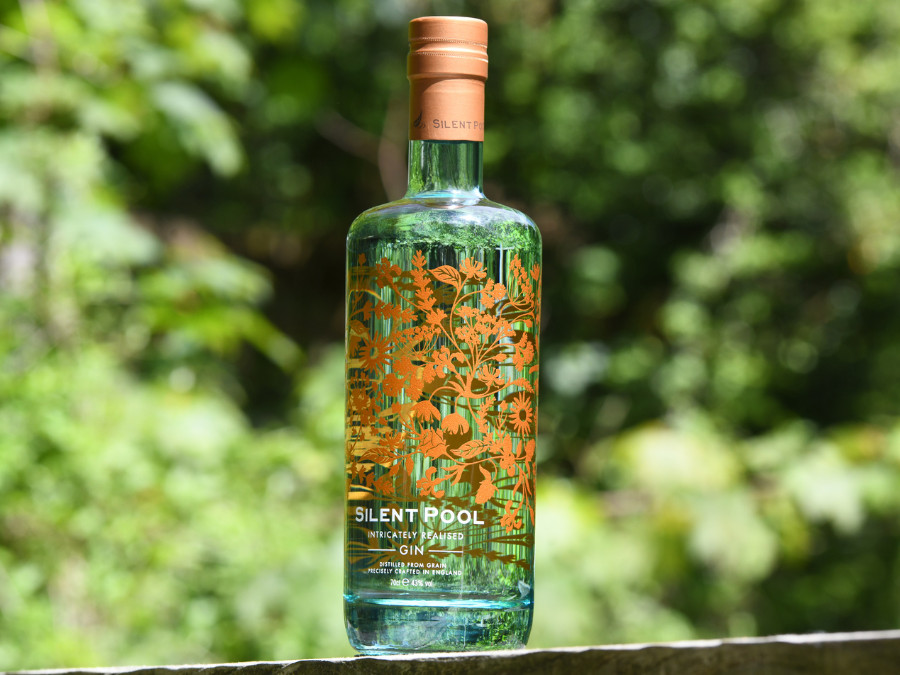
As part of our research, we sectioned up the gin market – old boring ones, weird ones, novelty ones and so on. We identified a quadrant that was really interesting – more accessible and more enigmatic; brands like Monkey 47, Gin Mare and The Botanist. That’s where we wanted to play. The line we used was ‘painting with flavours’. We wanted to create a contemporary version of an English classic – like how the Aston Martin DB11 is to the DB5; restrained but proportionate.
We spent a year thinking, shall we or shan’t we? Then, in 2013, we found a site for our distillery – Our landlord is the Duke of Northumberland, who’s been unbelievably supportive – we sourced a still from Germany and we secured a bottle design from a company we found that appeared regularly on packing awards websites.
GDI: Where did your funding come from?
IM: We’ve been self-funded.
GDI: What pace did the brand grow at?
IM: Covid notwithstanding, the annual growth rate has been enormous. We started shortly after Sipsmith (also based in the UK and acquired by Suntory Global Spirits eight years ago), and when we saw them grow, I thought that was the whole gin boom gone – but it was just the start.
One of the other things we’ve been lucky with is that, when you start a business, you’ll often end up at the immovable object stage – you need lots of money, or a special licence or a large production site. We never hit that point, so we just kept moving forward.
Our first glass bottle order was for 1,800 units and we thought that could be a year’s stock – They all went in about three weeks. For the first two years, we were under-ordering everything. It takes you a while to get in front of things.
I was selling Silent Pool from the back of the car locally and people were really supportive – we were seen as the naughty boys in the woods making booze! It helped that we’re based in Surrey, which is known as ‘the gin and Jag belt’.
GDI: Has Silent Pool been small enough to be immune to the recent downturn in gin?
IM: Immune might be a bit strong, but we are small. We’ve got headroom that we can’t see. Silent Pool isn’t everywhere. Because of our price point, which is driven by how we make our gin and its ingredients, we sort of self-select – We can tell quite quickly if a bar or pub is or isn’t right for Silent Pool.
We’ve found that the brand is massive in gifting. We understand that when you give somebody something, it’s sending a message about what you think of that person. With Silent Pool, it shows that you’ve done your homework!
GDI: Was the sale to a larger brand owner part of your exit strategy all along?
IM: We wanted to take it as far as we could, but it’s very common to reach a point when you need resources that you can’t fund yourself, unless you come from a rich background. We were looking for a partner to provide a sales footprint, primarily.
I was aware of William Grant’s products but I didn’t really know the company. I was introduced to the chairman, Glenn Gordon, and he just loved the brand. He could also see where Silent Pool could fit strategically in the company.
GDI: Even with Hendrick’s already on the group’s brand roster?
IM: Look at where the pricing is. There’s a cluster of gin brands at around GBP22 (US$28) and another cluster at around GBP30 ($38) – above that price level, it gets quite rarefied. If gin is like the whisky category, what’s the single malt of gin? Where does the category go on a price or desirability ladder? The strategy is about owning ultra-premium spirits.
GDI: Had Silent Pool hit a ceiling by the time William Grant arrived?
IM: No, but you need to grow. If you’re not swimming forwards, then you’re sinking! There’s still much more headroom for Silent Pool in the UK – there’s a whole unexploited market out there. At the same time, we were shipping to 30 countries, but were only building out the brand at a rate that our cash flow allowed. You can’t really dump a lot money in front of sales.
GDI: It seems quite early in the brand’s development for it to have been acquired, though.
IM: The big companies are often less good at NPD than they are at producing their core brands.
My background’s in sales and marketing – 85% of what we do is try to turn gin into money. Until you can pay staff in cases of gin, you’ve got to turn it into money. That’s the tricky bit and it requires storytelling, a narrative and honesty. It’s exactly the same for the larger brand owners.
People won’t drink Silent Pool because they’re thirsty or because they want to get drunk quickly – it’s too expensive! They’ll drink it because it tastes good, it’s well made and it says something about them.
GDI: What advice would you give to secure an approach from a larger brand owner?
IM: You’ve got to know what you are and you’ve got to be honest about that. If you’re going to go through eight months of due diligence, you have to be honest.
You’ve also got to try to weigh up what they bring to the table other than money – there are many vendors of money. What we wanted was a world-class sales operation in America that’s got boots on the ground selling high-end liquid. We wanted someone that calls on 15,000 bars a year in the UK and has relationships in the travel retail business. That’s the proper strategic fit.
It would have taken us forever to have achieved that on our own.
GDI: What’s next for you?
IM: I’ve got another two-and-a-half years to go with Silent Pool and this is a performance-related transaction. I’m pushing it as hard as I can – I want to make it work.
We’re plugging into their resources, which provides a different set of challenges, but we’re taking Silent Pool up a level. Besides, I’m invested emotionally.
GDI: Will you be sad to leave?
IM: I don’t know. We’ll see when we get there!
This article is available to Global Drinks Intel members only.
Click below for details on how to join the Global Drinks Intel community.
Already a member?
Log in here to read the article in full.
If you work for any of the following corporate subscribers to Global Drinks Intel, head here to activate your access.
- AB InBev
- Bacardi
- Campari Group
- Diageo
- Moët Hennessy
- Pernod Ricard
- Proximo Spirits
- Suntory Global Spirits
- William Grant & Sons