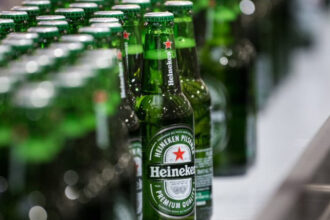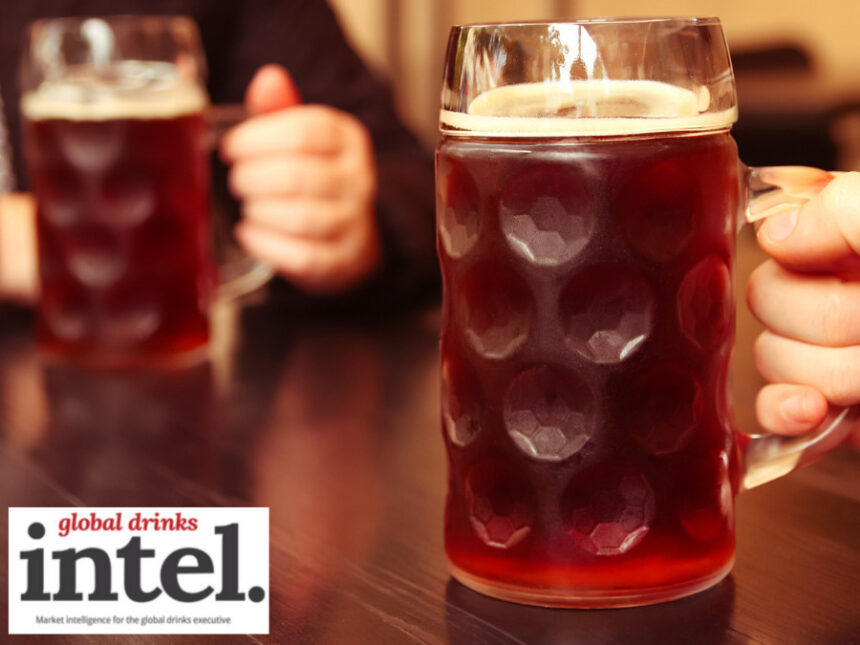
Think of Germany, and what often comes to mind as a defining element of the country’s identity is beer. Such a strong cultural association, however, has not shielded the category from negative trends.
Indeed, recent data from CGA by NIQ’s On Premise Measurement (OPM) solution, which was recently launched in Germany, reveals that beer faces significant setbacks in 2024, with declines in both volume and value across the country. Last year, the market’s beer volumes reached 4.95m hectolitres, marking an 11.1% decline compared with 2022, while sales were down by 7% year on year.
The category’s performance was particularly poor in the south of the country, where the decline was more pronounced. In the south-west, volumes fell by just over 14%, with sales down 10.2%, while the south-east experienced an additional 1pp (percentage point) drop. Northern states performed slightly better, but they still recorded negative results, with the north-west – the best-performing area – seeing beer sales decrease by 3.2% and volumes down 7.9%.
A matter of style
Despite the overall decline, there are bright spots within the beer category. CGA by NIQ’s research reveals that certain subcategories have actually been performing well, offering opportunities for operators and manufacturers to capitalise on in the coming months. Pilsners, for instance, have gained nearly 2pp in volume sales, signalling growth within an already substantial segment, as it accounts for two in every five beers sold in the German on-premise channel.
Even more promising are relatively smaller subcategories such as helles (pale lager) and alkoholfrei (alcohol-free), each of which has grown by 0.4pp compared with the year prior. This figure may seem modest, but with each style representing around a fifth of all beer sales in the country, their growth is rather significant and suggests strong potential for the coming months.
Alcohol-free beer has traditionally been more popular in Germany compared with other European markets, but with the recent global rise in interest in this segment, the country’s alcohol-free beer market can expect strong potential for continued growth in the future.
Meanwhile, the ‘bier mix’ segment – which includes popular beer-based mixed drinks like the classic German radler - has been experiencing a negative trend. This decline is particularly pronounced in the north-east, where volumes have dropped by a substantial 15.8%.
Weizen (wheat) beer is another style facing significant challenges in the German on-premise, with a year-on-year loss of 0.7pp in volume market share. While this decline is evident nationwide, it is most pronounced in the southern federal states, where the subcategory has seen the steepest drops.
Pricing dynamics
Analysing the pricing trends of specific beer styles can uncover deeper insights into consumer behaviour, helping to identify why on-premise visitors might be shifting away from certain subcategories and, in turn, offering valuable guidance for future strategies.
Amid the ongoing cost of living crisis, one might expect that consumers would steer away from higher-priced drinks. Yet the data presents a different picture.
Pilsners, which have shown growth despite beer’s overall downward trend, are among the more expensive beer options in Germany, averaging EUR9.93 (US$10.94) per litre. This is higher than the average price of weizen beers, which – as we have seen previously – have experienced a significant drop in market share nationwide.
Non-alcoholic beers are also more expensive than weizen beers, yet, like pilsners, the segment has performed better despite its higher price tag. Additionally, pilsners have seen a higher cost increase over the past year compared with other styles, which doesn’t appear to have adversely affected their satisfactory performance in the on-premise market.
It is worth noting, however, that bier mix is the second most expensive beer segment in Germany, averaging EUR10.09 per litre, and it has seen a decline. This suggests that price may well influence consumer choices too, yet only to a certain degree, and other factors should be considered.
For instance, weizen beer is the second-cheapest option available in Germany’s southern federal states, the style’s heartland. Despite its affordability, weizen has faced the steepest decline, a particularly surprising development given its historical popularity in the region. This trend could indicate that southern on-premise visitors – particularly younger LDA drinkers – might be shifting away from traditional styles (such as wheat beers), possibly due to their association with older generations and outdated lifestyles.
Profile of a German beer drinker
With beer the leading beverage alcohol category in the on-premise, it is crucial for operators, manufacturers and brands to gain a detailed understanding of consumer interactions and behavioural changes in this environment. This deeper insight is essential for fully grasping shifts in how consumers engage with the category when they go out.
CGA by NIQ’s consumer research reveals that the country’s drinkers are engaged with the on-premise environment. While the market has experienced a decline in visitation, two in five LDA consumers visit venues on a weekly basis, a figure that certainly confirms the significance of the on-premise in their lives.
Regular visitors to bars, pubs and restaurants in Germany are more likely to consume beer compared with the average user, making them a crucial target audience for businesses looking to capitalise on beer opportunities.
Consistent visitors tend to be younger – predominantly Gen Zers and Millennials – and they generally benefit from higher incomes, which, crucially, translates to a higher potential monthly spend. Despite the overall decline in the beer category, price does not seem to be a determining factor in German consumers’ beer choices.
The younger demographic of weekly visitors significantly over-indexes across most channels, but particularly in venues suited to larger groups and longer outings, such as drink-led establishments, bars and nightclubs. Despite the popularity of these among regular visitors, restaurants and hotels remain the most popular channels overall, accounting for more than half of the market.
For beer brands and suppliers, however, these are precisely the venues where the category’s volumes have experienced the sharpest fall. Beer’s market share has instead increased in smaller venues such as pub bars, fast-food outlets and small food establishments, which represent only a limited proportion of total beer volumes sold in Germany.
Several factors could explain the category’s success in these smaller or more casual venues. For one, casual environments may better suit the preferences of frequent beer drinkers, who might favour beer consumption in a relaxed setting while opting for other beverages in more formal venues.
Furthermore, while cost does not appear to be a determining factor in the specific styles of beer that people choose, financial constraints may influence the types of venues where they prefer to imbibe them.
In fact, CGA by NIQ research shows that the cost of living crisis is impacting the choices of nearly half of Germany’s on-premise users. These consumers may be favouring more affordable casual venues, as they typically offer lower prices for both food and drinks.
Luckily for operators, the undeniable inflationary pressures do not seem to negatively impact the overall outlook for the channel. Insights indicate a positive trend for future on-premise visits, especially among those younger demographics who may have higher spend levels when they go out. Indeed, one in five are still willing to trade up during special outings, while half are likely to simply pay more for higher-quality drinks.
Beer has yet to fully capitalise on this opportunity. Despite its popularity in the country’s on-premise, beer’s appeal among Gen Z consumers is relatively limited.
This is encouraging news for beer brands, manufacturers and operators, as it unveils a promising path to enhancing engagement with this demographic and driving higher-value purchases.
This article is available to Global Drinks Intel members only.
Click below for details on how to join the Global Drinks Intel community.
Already a member?
Log in here to read the article in full.
If you work for any of the following corporate subscribers to Global Drinks Intel, head here to activate your access.
- AB InBev
- Bacardi
- Campari Group
- Diageo
- Moët Hennessy
- Pernod Ricard
- Proximo Spirits
- Suntory Global Spirits
- William Grant & Sons