

New emerging markets for premium mixers providing major expansion opportunities have powered significant growth in the segment’s sales over the past decade – and also, more recently, in helping to rebuild sales after the Covid-19 pandemic. One of the biggest sales drivers has been the growth in premium spirits. As a result, according to a report by Finnoexpert, the overall mixer category is expected to grow at a CAGR of 8.2% between 2018 and 2028 to reach US$14.6bn.
This is good news, of course, for mixer brands young and old. But, it also highlights the importance of continuing to invest in branding and innovation and of appealing to new generations of drinkers – three areas that those established brands used to growth in an expanding market sometimes take their eye off.
Consider Fever-Tree. The UK-based mixer brand was founded in 2005 as a premium alternative to the standard mixers high in preservatives and artificial sweeteners that dominated at the time. By 2011, it had expanded distribution in 25 countries and become one of the UK’s fastest-growing drinks businesses.
More than a decade on, however, and Fever-Tree no longer stands out as the convention-buster it once was. The brand has evolved, yes, but subtly. Its focus appears to be on widening distribution rather than evolving to woo next-generation drinkers. And, despite an expansion into soft drinks in 2022, Fever-Tree retains a heavy emphasis on tried-and-tested quality products.
Meanwhile, the brand’s ‘If three-quarters of your G&T is the tonic, wouldn’t you want it to be the best?’ advertising message continues unchanged. If it ain’t broke, don’t fix it, you might think. Only, others are now stealing a march.
This, in part, contributed to Fever-Tree lowering its forecasts for annual sales at the same time as publishing half-year results that included higher revenue but lower profits, with US sales boosted, but sales in the UK falling flat.
As a result, I can’t help thinking the time has come for Fever-Tree to disrupt itself. Should the brand choose to do so, it could do worse than to draw some lessons from some of the industry’s colourful and vibrant upstarts. Take Double Dutch, with its innovative flavour combinations – such as cucumber & watermelon and pomegranate & basil – and its carefully constructed brand world, which combines whimsy with a willingness not to take itself too seriously.
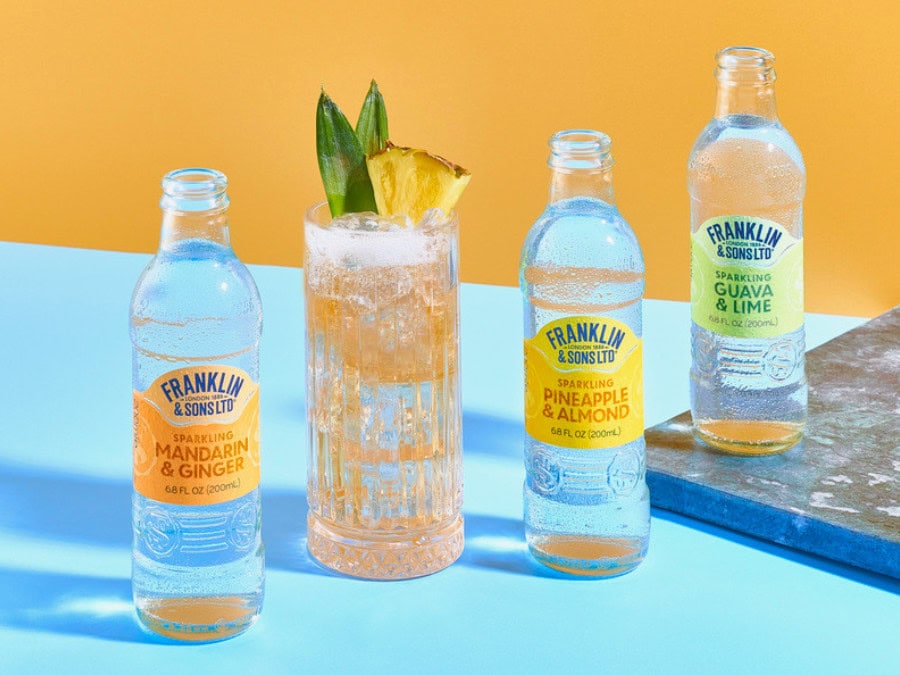
Or Franklin & Sons (see picture above) – credited by owner Global Brands last year as driving a 50% increase in the size of its international business – the success of which is being driven by an understanding of why its target audience chooses the brands they choose. Its bright and colourful products and highly saturated brand world promise to turn a spirit that might otherwise look dull into a highly Instagram-able moment, powerfully demonstrating that consumers drink as much with their eyes.
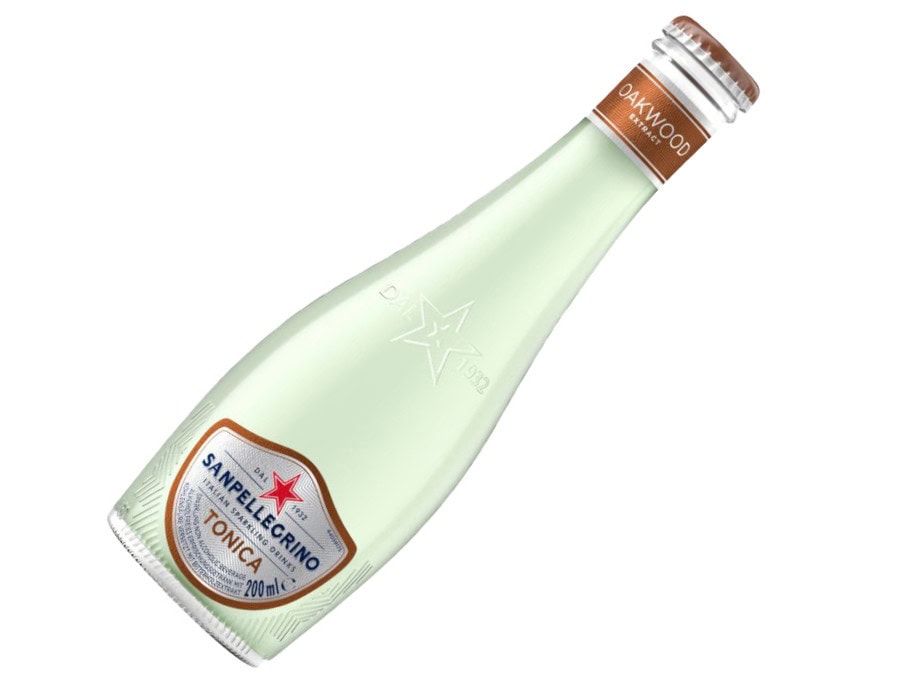
Now, there’s Sanpellegrino. A household name in soft drinks, the brand recently entered the premium mixer category, strengthening its link with the Italian aperitivo hour and the drinks associated with it. Its 20cl bottles include a couple of interesting takes on tonic – Tonica Citrus and Tonica Oakwood, the latter including oak extract. There’s also a Ginger Beer alongside a couple of familiar Sanpellegrino flavours: Limonata and Aranciata. On top of which, Sanpellegrino has neatly borrowed super-premium product cues from other categories to reinforce its position as a higher-end version of a premium mixer.
And, let’s not forget Coca-Cola’s innovative tie-ups with Brown-Forman’s Jack Daniel’s brand to launch the co-branded Jack & Coke, and with Pernod Ricard to launch Absolut Vodka Sprite, both last year.
The key take-outs from all of this? Firstly, new challengers – including incomers from soft drinks – are now driving mixer category disruption. Secondly, mixers have a huge role to play in bringing innovation to the spirits industry, which tends to over-rely on the traditional brand-building approach and, as a result, remains in regular need of a shake-up.
And finally, while consistency in branding is admirable, it should not be at the cost of evolution. While it’s important to stick to a brand narrative, it’s as important – if not more so – to keep refreshing the brand stories while doing so.