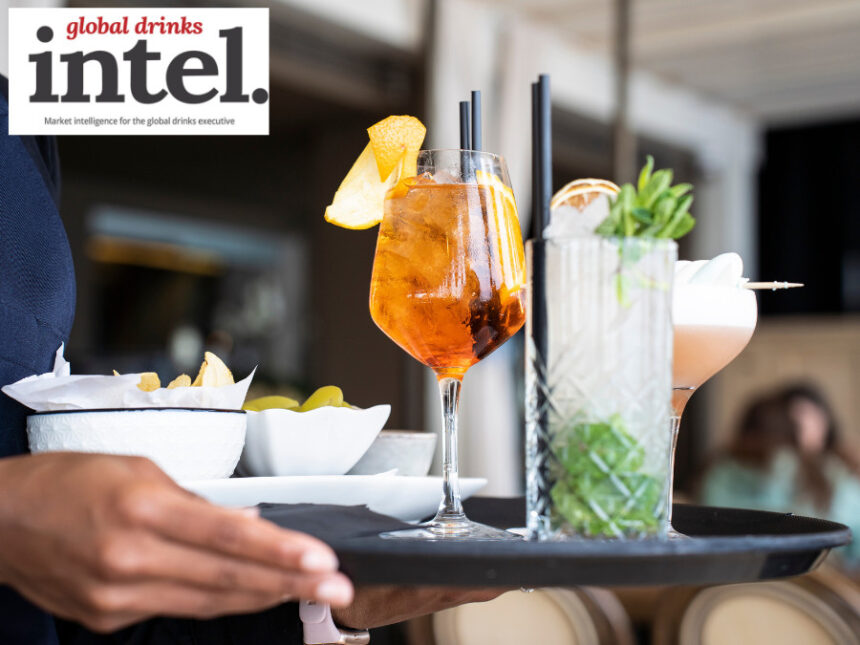
Europeans love the aperitif moment: in France, according to recent data from CGA by NielsenIQ’s Opus research, 56% of on-premise visitors consume aperitifs ‘almost every time’ or ‘every time’ they visit bars, pubs and restaurants. In Germany and Italy, an impressive 40% of on-premise users share the same sentiment.
To fully seize this opportunity and shape future strategies, brands, suppliers and operators need to understand how consumers perceive the aperitif drinking occasion.
Europeans consume a diverse array of beverages during their visits. In Italy, for instance, up to a third of on-premise patrons opt for sparkling wine as their aperitif, especially during the festive season. Meanwhile, in France, craft and domestic beer hold significant sway and are selected by about 15% and 20% of consumers, respectively.
The standout observation that emerges from the research, however, is the striking popularity of cocktails, chosen by more than a quarter of on-premise consumers in both Italy and France.
In Italy, the undisputed champion among aperitif cocktails is the spritz, with Aperol-based variations leading the way. Aperol Spritzes are favoured by over half of consumers, although a substantial 36% of individuals still appreciate the more bitter and robust profile of the Campari Spritz.
Despite the consumer’s loyalty to these two well-established branded expressions, suppliers and operators still have an opportunity to introduce alternative brands by looking at new bitters and liqueurs that align with consumer preferences as suitable mixers for sparkling wine.

Before dinner, and beyond
CGA’s Opus data reveal that a significant portion of consumers extend the aperitif occasion beyond the traditional early or late evening time frame. The data presents excellent opportunities for on-premise businesses, as it signifies an extended window to engage with consumers who appreciate the aperitif experience. In particular, findings indicate that nearly 15% of on-premise users consider lunchtime, mid-afternoon and dinner times as potential aperitivo hours across the European region.
When it comes to venues, aperitifs are typically enjoyed in more informal settings. In Italy, bars are the favoured venues for more than half of drinkers, followed by pubs (40%) and cafés (32%). Meanwhile, in Germany, cafés take the lead – almost 48% of consumers head to this type of venue for aperitifs, followed by bars (38%) and casual dining restaurants (32%).
Another crucial aspect that needs to be considered is the frequency of consumer engagement with the aperitif occasion, particularly as recent findings indicate a shift from weekly towards monthly visits.
Despite this change, the frequency of engagement is still remarkably high across Europe, meaning that aperitifs should remain a key focus for the on-premise channel in the months ahead. About 40% of Italian on-premise drinkers and 28% of users in France and Germany engage with aperitifs at least once a week. It’s also worth highlighting that a significant portion of the remaining share comprises those who indulge once or twice a month, accounting for 36% in Italy, 35% in France and 37.5% in Germany.
A small yet noteworthy percentage (2.6% in Italy, 6.5% in France and 4.2% in Germany) engage with aperitifs on a daily basis, a remarkable frequency that underscores the consistent and widespread appeal of this consumption occasion.
Opportunities for the occasion and category
These figures clearly underscore the opportunities the aperitif moment offers the on-premise. But, how can such opportunities be effectively seized?
Insights from CGA’s Reach survey, which delineates eating and drinking-out behaviours across European markets, reveals a consistent trend: consumers across the continent place a high level of trust in staff when it comes to selecting their drinks.
A significant majority – more than three in four on-premise visitors in France and Italy, and 58% in Germany – express a preference for being educated about the drinks they are served by knowledgeable bartenders. Conversely, a mere 4% in Italy, 6% in France and 13% in Germany do not value this guidance. This highlights the importance of staff expertise in shaping the consumer experience and in driving sales, and suggests that brands, suppliers and operators can effectively capitalise on the aperitif opportunity by prioritising staff training and knowledge enhancement.
Indeed, among individuals keen on learning more about drinks while out, more than a third say they’d prefer to receive such education directly from bartenders or waiting staff. Moreover, an additional 21% of on-premise consumers in Italy, 17% in Germany and 14% in France indicate a desire to be educated by drinks specialists or experts.
Delving into more granular data further solidifies the pivotal role played by well-trained on-premise staff capable of effective communication and engagement with visitors.
A notable percentage of consumers (28% in Italy, 19% in Germany and 30% in France) actively seek recommendations from bartenders when making decisions about their drinks choices. Similarly, a significant proportion (ranging from 14% to as much as 25% across these markets) inquire of waiting staff or bartenders to gather information about the available drinks options.
These figures are of paramount importance for outlets, as they highlight the potential to leverage the influential power of bartenders as an efficient and indispensable tool in capturing the popularity of the broader cocktail category, especially within the aperitif moment.
That said, there are additional avenues for players in the channel to influence consumer choices at the bar. For instance, nearly half of on-premise users in Italy and more than 40% in Germany acquire more information about drinks by perusing additional details on the menu. Moreover, approximately 34% in Germany and 24% in France express a preference for selecting drinks based on the descriptions provided on the menu.
This means ensuring that menus incorporate comprehensive information about a brand can enhance its visibility and, consequently, increase the likelihood of purchase by the consumer.
This article is available to Global Drinks Intel members only.
Click below for details on how to join the Global Drinks Intel community.
Already a member?
Log in here to read the article in full.
If you work for any of the following corporate subscribers to Global Drinks Intel, head here to activate your access.
- AB InBev
- Bacardi
- Campari Group
- Diageo
- Moët Hennessy
- Pernod Ricard
- Proximo Spirits
- Suntory Global Spirits
- William Grant & Sons