

This article has been available to Global Drinks Intel subscribers since August. To join them for FREE, please click here.
Consensus on the best wine closure option remains a long way off, but the focus of the debate has shifted in recent years.
Over the last 20 years or so, few topics in beverage packaging have been as fiercely debated as the deceptively simple question of which closure type is the best choice to seal a bottle of wine. It’s a perennially thorny issue that continues to inflame the passions of closure producers.
For the uninitiated, seemingly arcane subjects such as cork taint, oxygen transfer rates and reduction are argued over in forensic detail.
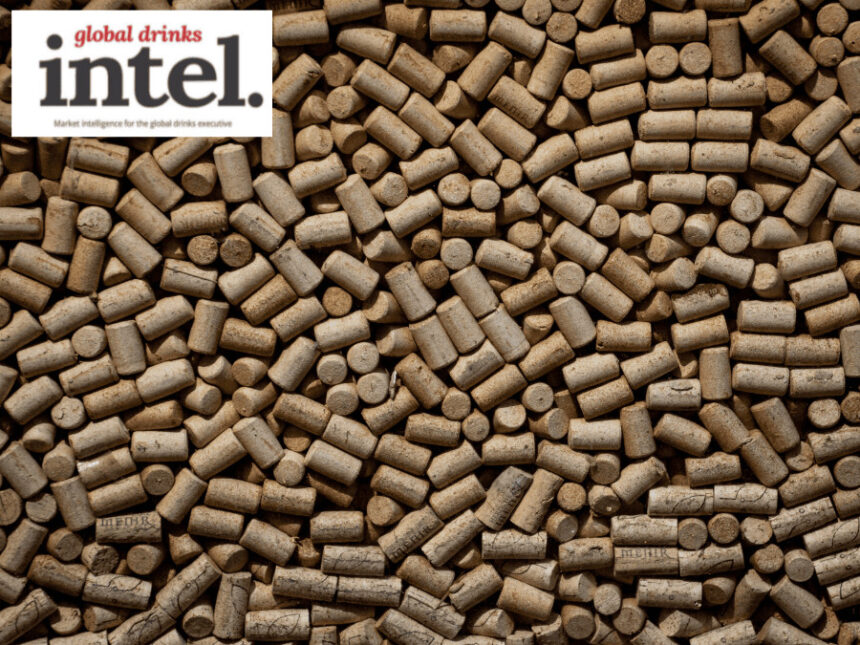
Of course, it wasn’t always like this. Before the turn of the Millennium, most wines were sealed with cork. However, increased dissatisfaction with the comparatively high prevalence of cork taint (TCA) in natural cork stoppers fuelled the rise of screwcaps, their convenience and consistent level of performance adding to their appeal in markets such as New Zealand, Australia and the UK.
In markets such as France, the US and China, however, the time-honoured ritual of opening a bottle sealed with a natural cork and the satisfying sound that accompanies it, holds sway, providing a reassuring seal of quality for wine consumers. In these territories, screwcaps have failed to lose their association with cheaper, lower-quality wines.
Changing the focus of ‘cork versus screwcap’
Today, the choice of closure has become more nuanced. The debate among manufacturers has moved on to embrace the equally contentious topic of sustainability.
Over the past two decades, natural and technical cork producers have spent tens of millions of dollars on anti-TCA measures and advanced screening procedures to greatly reduce the threat of TCA. Other closure types, such as glass and synthetic, plant-based stoppers, have also come into contention as possible solutions.
Some brand owners are increasingly convinced of cork’s environmental benefits. “Wherever possible, we use natural cork stoppers for our Own Selection wines and spirits,” reveals Barbara Drew MW, content officer at London-based wine and spirits retailer Berry Bros & Rudd. “Not only are these the perfect natural closure for our bottles, allowing them to gently evolve in the cellar if needed, but they also help to reduce CO2 emissions.
“By favouring natural cork, we can help make cork oak a more economically viable product. This means we can help to protect and expand the vital cork forest ecosystem. A life cycle analysis of cork wine stoppers, commissioned by Amorim, has shown that each natural cork stopper has a CO2 balance as high as -309g of CO2. And, as the trees replenish their bark, they lock up more carbon to be harvested again nine to 12 years later.”
Drew claims that “one hectare of cork forest draws down nearly 15 tonnes of CO2 in a single year”, while a screwcap closure “generates 25 times more CO2”.
Natural cork closures are also the preferred choice for Sea Change Wine, which partners with organisations such as One Earth-One Ocean and Sea-Changers UK to support ocean conservation projects. “Plastic or composite corks can’t often be recycled, if at all, meaning millions of plastic corks – and plastic wraps often found around the corks – are simply adding to the issue of single-use plastic each year,” says director Toby Hancock.
“With sustainability top of mind, Sea Change uses Amorim Cork’s Neutro cork Premium, which uses a steam sterilisation system, eliminating the invasive volatile substances that may potentially be present and maintaining the natural characteristics of cork unchanged, even with micro-granulated products. There is no need to insert any plastic expansion substance.”
In contrast, other producers, such as Australia’s Robert Oatley Vineyards, which operates wineries in Margaret River, McLaren Vale and the Yarra Valley, remain committed to screwcaps. “We use Stelvin and Stelvin Lux [screwcaps], as we find them the most reliable closure for delivering our wines to our customers in the style and quality we made them,” says business development manager Katie MacAulay.
Similarly, Dr Hope Foster, CEO at Texas-based winery Signature Sipz, says: “We primarily choose screwcaps for our wines, because they offer consistent and reliable closures, ensuring the preservation of the wine’s quality and preventing oxidation. Screwcaps are also easy to open and reseal, providing convenience for our customers. Additionally, they eliminate the risk of cork taint and offer a more sustainable alternative.”
The screwcap versus natural cork debate may have lost some of the heat it generated in the early noughties, but the contrasting views of producers indicate that this seemingly thorny packaging issue shows no sign of reaching a consensus anytime soon.
This article has been available to Global Drinks Intel subscribers since August. To join them for FREE, please click here.