

Sign In
  • News
    • Beer
    • Spirits
    • Wine
    • Environmental, Social & Governance
    • Financial Results
    • Marketing
    • Mergers & Acquisitions
    • New Product Development
    • From the Industry
  • Intel
    • Comment
    • Interview
    • Category Intel
    • Consumer Intel
    • Market Intel
  • Awards
    • Global Drinks Awards
    • New Product Awards
    • ESG Awards
  • Magazine
  • Newsletter
  • Subscribe
  • Contact
  • News
    • Beer
    • Spirits
    • Wine
    • Environmental, Social & Governance
    • Financial Results
    • Marketing
    • Mergers & Acquisitions
    • New Product Development
    • From the Industry
  • Intel
    • Comment
    • Interview
    • Category Intel
    • Consumer Intel
    • Market Intel
  • Awards
    • Global Drinks Awards
    • New Product Awards
    • ESG Awards
  • Magazine
  • Newsletter
  • Subscribe
  • Contact
Search
Banner for Le Tribute Pink Grapefruit - https://letribute.com/en-gb?srsltid=AfmBOooXoAFSrBVrsVtLnlySLXXjT62LG4oJ5imdqTABCraYG_SULm5V


Is Argentina’s wine industry stepping out of Malbec’s shadow? – Category Intel

Richard Woodard
Last updated: 19/01/2024 at 5:24 PM
By Richard Woodard
19 December 2023
11 Min Read

Argentina’s wine industry has witnessed a swathe of changes in recent years as its producing regions have expanded and new techniques have been introduced. Some things, though, remain very much the same.


SHARE

This article has been available to Global Drinks Intel subscribers since May. For details on how to join them, please click here.

Argentina’s wine industry has witnessed a swathe of changes in recent years as its producing regions have expanded and new techniques have been introduced. Some things, though, remain very much the same.

In many ways, the Argentinian wine scene, especially at the premium-plus end, has been transformed over the past two decades, thanks to the exploration of new regions and viticultural and winemaking techniques. Yet some things appear unalterable – especially the pre-eminence of the country’s flagship grape variety, Malbec.

“Undoubtedly, when somebody talks about Argentina, they talk about football, Messi, dulce de leche and Malbec – they are part of our identity and passion,” says Bodega Navarro Correas’ EMEA trade marketing manager, Josefina Castro Feijóo. “Malbec for us is not only a grape variety, it is our ancestor. It allowed us to study new places, develop cutting-edge techniques, look out into the world while adapting to our conditions and, most importantly, create different and attractive products.”

Malbec has opened the doors to multiple overseas markets for an industry historically over-reliant on eyewateringly high levels of domestic consumption. When beer began to erode those consumption levels during the 1970s, and domestic wine engaged in a race to the bottom in pricing terms, Malbec was almost forgotten – before being revived at the end of the 1980s, since when the varietal has hardly looked back.

Today, Argentina’s success in the UK, the US, Canada and the Nordic nations has been built on the foundations laid by the country’s emblematic grape variety. Consumption in Brazil, along with other Latin American markets, is on the up, and buyers are increasingly discovering Argentina beyond Malbec, in terms of grape variety, region and wine style.

Success beyond Malbec

The success in Sweden of organics-driven producer Domaine Bousquet illustrates this growing diversity. When co-founder & CEO Anne Bousquet first met the country’s off-premise monopoly, Systembolaget, in 2005, less than 1% of the wines sold there were organic; by 2008, the company was selling more than 1m bottles in Sweden, making up almost two-thirds of the country’s total organic wine sales. Today, 26% of all wine sold in Sweden is organic – the highest percentage in the world – and Bousquet continues to perform strongly there.

In terms of challenger varietals, Cabernet Sauvignon probably has the greatest claim, with Argentina’s continental conditions producing a different take on a grape that is often grown in a maritime climate. For Anne Bousquet, it is “the next big thing in Argentina”, and can be as good as Malbec. “Argentine Cabernets tend to have greater concentration of red and black fruit, and very little green tones due to the altitude of the vineyards,” she adds.

At Trivento, chief winemaker Germán Di Cesare agrees. “As more consumers discover Malbec, there is an opportunity in the future for them to discover our high-altitude and continental-climate Cabernet Sauvignon wines, which present different characteristics from ocean-influenced Cabernets,” he says. Di Cesare also points to the revival of Semillon, a historical Mendoza variety that, until recently, was all but forgotten.

Bousquet is also optimistic about the future for Cabernet Franc – a widely tipped varietal, but currently in short supply – Chardonnay and Sauvignon Blanc, while Castro Feijóo highlights Pinot Noir, Merlot, Grenache and Albariño.

The list of contenders, it seems, is almost endless.

“Malbec was our letter of introduction and, thanks to it, consumers around the globe recognise us as a country that produces wines of excellent quality,” says Graffigna head winemaker Fernando Mengoni. “While this reputation has already been built, maintaining it requires serious work, not only to preserve it, but also to improve on it.”

Diversification is transforming approach to Malbec

As Argentina’s wine producers have diversified, they have also transformed their approach to Malbec itself – eschewing the ‘big is beautiful’ philosophy of extreme ripeness, extraction and oak in favour of something more expressive of vineyard location and terroir. Concha y Toro’s Trivento business, for instance, makes everything from White Malbec [in its Trivento Reserve tier] to icon wine Eolo, sourced from 100-year-old vines in Luján de Cuyo in Mendoza.

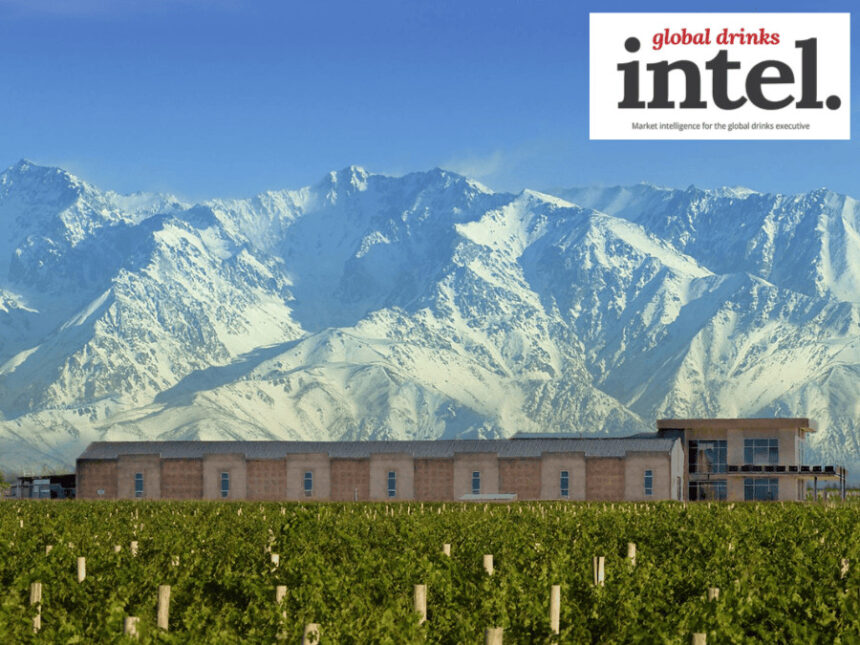
This process has been aided hugely by the exploration of cooler, higher-altitude vineyard locations, most notably in Mendoza’s Uco Valley. Here, the focus has lasered in on increasingly niche locations and names such as Gualtallary, Altamira and Los Arboles. In Gualtallary alone, altitudes range from 1,000m to almost 2,000m – climatically speaking, the equivalent of travelling from Tuscany to Alsace.

“We believe that having a banner variety has a lot of positive implications, since it positions Argentina on the world wine map,” says Rogelio Rabino, head winemaker at Sogrape-owned Finca Flichman. “But currently, with more studies of the terroir, we found that there’s no homogeneous style of Malbec, rather there’s a great diversity of profiles, from the traditional ones from old vineyards, with super-fruity, sweet tannins, to the modern, fresh, herbal and spicy ones.”

This approach is not simply based on producer preference, but consumer demand, points out Anne Bousquet. “During the 1990s and early 2000s, there was a lot of structure, extraction – with heavy use of oak – high alcohol and hot wines,” she says. “Now, winemakers favour elegance and fresher styles with clear fruit expression; consumers are also looking for this style.”

Covid ‘killed a lot of sacred cows’

This a sea change that’s still in progress: during the Covid-affected 2020 harvest, Moët Hennessy-owned Terrazas de los Andes rushed to complete picking before lockdowns made working conditions impracticable. “We knew we had to harvest fast,” recalls Terrazas founder Hervé Birnie-Scott. “We felt that the grapes were ready, but the alcohol was lower.

“In one year, we progressed five years. What we wouldn’t have dared to do, we did. We were already with this trend to harvest earlier for the freshness and acidity. But we accelerated that trend and jumped in time. We took some risks. It’s a revolution. 2020 killed a lot of sacred cows and sped up our learning curve.”

That 2020 harvest at Terrazas represents a microcosm of the recent changes sweeping through Argentina’s premium wine industry: despite a growing diversity in terms of grape variety and region, Malbec and Mendoza remain the dominant forces – but today, they represent something very different compared to the wines produced in the region at the turn of the Millennium.

Argentina’s winemakers and the ‘big frost’

At the end of October last year, a powerful cold front swept over South America, affecting not only the vineyards of Argentina, but also equatorial areas, with temperatures reaching historic seasonal lows.

As ever with spring frosts in vineyard areas, the timing was crucial – budbreak had already taken place, leaving plants vulnerable as temperatures dipped below zero. Some areas saw the mercury plummet to -5°C.

“The negative impact varies depending on the area,” says Navarro Correas’ Castro Feijóo. “Some vineyards in the east of Mendoza lost 100% of their production. In the Uco Valley, the damage was concentrated in Tunuyán and Tupungato, and the lowlands of Luján de Cuyo.

“In the north of the country, in the Calchaquí Valley, the damage reached 80% in some vineyards,” she says. “On this basis, the decrease in production can be estimated at approximately 30%. Consequently, the 2023 harvest will be quite affected in terms of quantity, and wine prices will increase.”

In the Mendoza region, roughly 40% of vineyards were affected by frost, reckons Anne Bousquet. But it was the Uco Valley, the south and the east that were most impacted – particularly Altamira, El Cepillo, Las Pintadas, Vista Flores and Zampal – others, including Gualtallary, saw only minor damage.

Producers with an array of vineyards in different locations – Trivento, for example, has 12 across Mendoza, of which only two were frost-affected – were rewarded for effectively spreading their risk. At the time of writing, however, the detailed consequences were still unclear.

“It’s still too early to know the real damage, since we must observe and measure the recovery of the plant, the possibility of secondary bud sprouting, if it comes with bunches, bunch weight, etc,” says Flichman’s Rabino. “In other words, the decrease in production will only be able to be quantified at harvest time.”

This article has been available to Global Drinks Intel subscribers since May. For details on how to join them, please click here.
Richard Woodard
ByRichard Woodard
Former newspaper journalist Richard Woodard has been writing about the global wine and spirits industry for nearly 20 years, and is a regular contributor to a number of magazines and websites.
Previous Article Why the UK wine industry retains high expectations despite short-term drags – Category Intel
Next Article Vineyards in New South Wales, Australia How China crisis has driven Australia’s wine industry to hunt out new markets – Category Intel
MPU for Bayou Rum - https://bayourum.com/

The Newsletter

Sign up to receive our newsletter email

  • The very latest news from across the world's beverage alcohol industry
  • Cutting-edge intel from our in-depth category & market analyses, backed by benchmark industry data
  • The best insight on your competitors from our interviews with the industry’s leaders

This field is for validation purposes and should be left unchanged.

Follow on Social

Linkedin Twitter
OKI Tall Tower - https://www.oki.com/uk/printing/label-printer/?utm_source=OKI+Web+Chat&utm_medium=Bing&utm_campaign=Global+Drinks+Awards&utm_content=ACTFUND-1070&activity_code=ACTFUND-1070
Global Drinks Awards Banner - https://globaldrinksawards.com/

You Might Also Like

Drinkers with balls of BuzzBallz

Drinks brands must identify category codes before embarking on search for sales – Comment

24 July 2026
Vineyards in Champagne at daybreak

Champagne harvest cap reduced for fourth consecutive year

24 July 2026
Computer and mouse

Canada greenlights inter-state direct-to-consumer alcohol sales

23 July 2026
Burnt Faith bottle with serve

Why brandy is starting to threaten spirits rivals’ rule over mixology – Category Intel

23 July 2026
Linkedin Instagram

What next?

  • Sign up to our FREE newsletter
  • Subscribe
  • My Account
  • Sign up to our FREE newsletter
  • Subscribe
  • My Account

About

  • Contact
  • Privacy Policy
  • Cookie Policy
  • Terms & Conditions
  • Contact
  • Privacy Policy
  • Cookie Policy
  • Terms & Conditions

Copyright © 2025 Global Drinks Intelligence Limited. All Rights Reserved

Built and Managed by Kukoo Creative

This website uses cookies to improve your experience. Read our privacy policy | Cookie settings | ACCEPT
Privacy & Cookies Policy

Privacy Overview

This website uses cookies to improve your experience while you navigate through the website. Out of these cookies, the cookies that are categorized as necessary are stored on your browser as they are as essential for the working of basic functionalities of the website. We also use third-party cookies that help us analyse and understand how you use this website. These cookies will be stored in your browser only with your consent. You also have the option to opt-out of these cookies. But opting out of some of these cookies may have an effect on your browsing experience.
Necessary
Always Enabled
Necessary cookies are absolutely essential for the website to function properly. This category only includes cookies that ensures basic functionalities and security features of the website. These cookies do not store any personal information.
Non-necessary
Any cookies that may not be particularly necessary for the website to function and is used specifically to collect user personal data via analytics, ads, other embedded contents are termed as non-necessary cookies. It is mandatory to procure user consent prior to running these cookies on your website.
Functional
Functional cookies help to perform certain functionalities like sharing the content of the website on social media platforms, collect feedbacks, and other third-party features.
CookieDurationDescription
li_gc6 monthsLinkedin set this cookie for storing visitor's consent regarding using cookies for non-essential purposes.
lidc1 dayLinkedIn sets the lidc cookie to facilitate data center selection.
VISITOR_INFO1_LIVE6 monthsA cookie set by YouTube to measure bandwidth that determines whether the user gets the new or old player interface.
yt-remote-cast-availablesessionThe yt-remote-cast-available cookie is used to store the user's preferences regarding whether casting is available on their YouTube video player.
yt-remote-cast-installedsessionThe yt-remote-cast-installed cookie is used to store the user's video player preferences using embedded YouTube video.
yt-remote-connected-devicesneverYouTube sets this cookie to store the user's video preferences using embedded YouTube videos.
yt-remote-device-idneverYouTube sets this cookie to store the user's video preferences using embedded YouTube videos.
yt-remote-fast-check-periodsessionThe yt-remote-fast-check-period cookie is used by YouTube to store the user's video player preferences for embedded YouTube videos.
yt-remote-session-appsessionThe yt-remote-session-app cookie is used by YouTube to store user preferences and information about the interface of the embedded YouTube video player.
yt-remote-session-namesessionThe yt-remote-session-name cookie is used by YouTube to store the user's video player preferences using embedded YouTube video.
ytidb::LAST_RESULT_ENTRY_KEYneverThe cookie ytidb::LAST_RESULT_ENTRY_KEY is used by YouTube to store the last search result entry that was clicked by the user. This information is used to improve the user experience by providing more relevant search results in the future.
Performance
Performance cookies are used to understand and analyze the key performance indexes of the website which helps in delivering a better user experience for the visitors.
Analytics
Analytical cookies are used to understand how visitors interact with the website. These cookies help provide information on metrics the number of visitors, bounce rate, traffic source, etc.
CookieDurationDescription
_ga1 year 1 month 4 daysGoogle Analytics sets this cookie to calculate visitor, session and campaign data and track site usage for the site's analytics report. The cookie stores information anonymously and assigns a randomly generated number to recognise unique visitors.
_ga_*1 year 1 month 4 daysGoogle Analytics sets this cookie to store and count page views.
YSCsessionYSC cookie is set by Youtube and is used to track the views of embedded videos on Youtube pages.
Advertisement
Advertisement cookies are used to provide visitors with relevant ads and marketing campaigns. These cookies track visitors across websites and collect information to provide customized ads.
CookieDurationDescription
__Secure-ROLLOUT_TOKEN6 monthsYouTube sets this cookie to manage feature rollout and experimentation. It helps Google control which new features or interface changes are shown to users as part of testing and staged rollouts, ensuring consistent experience for a given user during an experiment.
__Secure-YNID6 monthsGoogle cookie used to protect user security and prevent fraud, especially during the login process.
_fbp3 monthsFacebook sets this cookie to store and track interactions.
bcookie1 yearLinkedIn sets this cookie from LinkedIn share buttons and ad tags to recognize browser IDs.
yt.innertube::nextIdneverYouTube sets this cookie to register a unique ID to store data on what videos from YouTube the user has seen.
yt.innertube::requestsneverYouTube sets this cookie to register a unique ID to store data on what videos from YouTube the user has seen.
Others
Other uncategorized cookies are those that are being analyzed and have not been classified into a category as yet.
CookieDurationDescription
__Secure-YECpastYouTube sets this cookie to stores the user's video player preferences using embedded YouTube video
advanced_ads_visitor1 monthDescription is currently not available.
personalize_sync1 dayDescription is currently not available.
RBUUID2 monthsDescription is currently not available.
stackprotect1 hourDescription is currently not available.
syncTimeout12 hoursDescription is currently not available.
unique_session_id1 yearDescription is currently not available.
SAVE & ACCEPT
Powered by CookieYes Logo