

This article has been available to Global Drinks Intel subscribers since May. For details on how to join them, please click here.
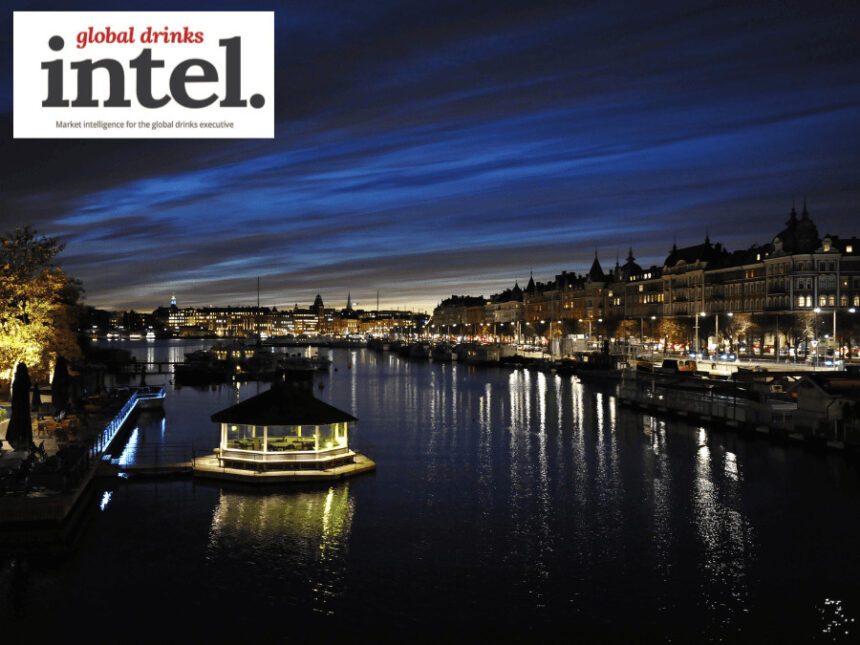
There’s a tangible, cyclical rise and fall to Stockholm’s on-premise. Winters may be brutal, but summers are nothing short of divine, offering long, sunny days and a dynamic, ever-evolving drinks scene.
Stockholm is the most populous city in Scandinavia and is home to 22% of Sweden’s population. Spread across 14 islands connected by bridges, ferries and the ‘tunnelbana’ [metro], the country’s capital is scattered with on-premise options, from hip rooftop bars to quirky basement gems. That said, the country’s relationship with alcohol is not straightforward, and off-premise sales are heavily restricted.
The scene
The drinking culture in Stockholm is packed with nuance. To visit the capital, especially during the warmer, light-filled months, is to discover a vibrant city pulsing with music, seemingly soaked in alcohol, and home to three stand-out bars [basement speakeasy Lucy’s Flower Shop ranked No.49 on ‘The World’s 100 Best Bars’ list last year, while Tjoget came in at 71 and Röda Huset 78], plus many additional historical and contemporary venues.
Stockholm has cemented its position among the top cities in a gastronomic sense, and its food and beverage experiences rival that of some of the World’s heaviest hitters, including Paris. Getting to this point of international renown, however, has not been an easy feat.
Like many of its Northern European neighbours, Sweden has a complex history with alcohol. While the complete record is far too involved to chronicle here, know this: for a large part of the country’s existence, alcohol was only loosely regulated. Coupled with freezing temperatures and limited sunshine hours, this absence of oversight yielded a widespread drinking problem among the population.
In an effort to right the ship in the mid-19th Century, the Government encouraged temperance and by 1914, liquor intake was officially rationed and closely monitored by the authorities. Although this rationing, known as the Bratt System, was disbanded in 1955, the state-owned Systembolaget off-premise alcohol retailer, colloquially known as Systemet, has since maintained the monopoly on sales of all alcoholic beverages above 3.5% ABV. The consumer must be at least 20 years old to purchase booze from Systemet.
In Stockholm specifically, Systemets typically close around 19:00 on weekdays and 15:00 on Saturdays, and are closed all day on Sundays, so obtaining alcohol isn’t exactly easy, and neither is its marketing. It wasn’t until Sweden joined the European Union in 1995 that the alcohol industry even earned the right to accrue a private profit.
The Systemet monopoly has little influence over the on-premise channel, where the legal drinking age, on par with much of the rest of Europe, is 18. However, understanding the entire system, its history and current operation, is critical to understanding the general attitude towards alcohol in Sweden.
Key trends
Unlike many other European cities, the consumption of alcohol in public areas is illegal in Stockholm. Despite this, the city has a strong drinking culture – much more prevalent than other Swedish regions, where the effects of the temperance movement and Bratt System can still be felt. This, in part, is to be expected. As the country’s largest city, nightlife is naturally going to be a focus, especially during the summer months with the seasonal arrival of outdoor clubs and music venues.
Two of the city’s most popular neighbourhoods are Östermalm and Södermalm. The city’s outlier approach to drinking also makes sense considering its make-up: just under 30% of Stockholmers are immigrants or of non-Swedish background, and about 15% of the city is foreign-born. These newcomers are less likely to embody the moderate drinking mentality that has been passed down through generations of Swedes.
Towards the end of the 19th Century, as much as 90% of all alcohol consumed in Sweden was brännvin, a distilled spirit with an ABV of between 30% and 38%. Today, while you’ll find all of the usual suspects – plus traditional options like bäska droppar [a bitter spirit flavoured with wormwood or anise], brännvin and aquavit [more on this later] – in most bars, the tides have shifted, and lighter-ABV beer and wine are heavily on-trend.
A 2021 study by CAN, an organisation that monitors alcohol consumption, found that wine comprised 42% of all alcohol sales, with beer at 32% and spirits/liqueurs accounting for only 21%. There are around 300 breweries in Sweden and Stockholm has Europe’s highest number of breweries per capita – aside from the UK – according to tourism body Visit Stockholm.
International players
Regardless of the current trends that suggest Stockholm is taking a step back from spirits, the most notable international brand to come out of the capital is a vodka. The Absolut Co was founded in 1877 by Lars Olsson Smith as part of an effort to challenge the city’s spirits monopoly. Today, although the business has been part of Pernod Ricard since 2008, Absolut Vodka is still produced in southern Sweden, utilising natural resources from the Åhus region, with its main office in Stockholm.
A contemporary of Smith’s, Olof Peter Anderson was also a distiller, although not based in Stockholm. Still, his legacy brought forth OP Anderson Aquavit, which remains one of Sweden’s oldest spirits still in production. The brand is distributed internationally and many of the city’s most popular bars feature OP Anderson Björk Aquavit on their drinks menus.
Billed as Sweden’s ‘national drink’, aquavit is distilled from grain or potatoes and flavoured with caraway or dill. Produced in Scandinavia since the 15th Century, the spirit must have a minimum 37.5% ABV and is often described to curious foreigners as ‘Scandinavian gin’.
Local players
Swedes love their local flavours, and drinks menus across Stockholm feature cocktails that include lingonberry, cloudberry, elderberry, Swedish blueberry and juniper juice. One example is the Orange Wine Martini at Pharmarium in the Old Town. The bar occupies what was once home to Stockholm’s first pharmacy, and its Martini includes Ramsbury Gin, Grey Goose Vodka, Arctic Bramble and Swedish orange wine.
Stockholm also has its fair share of distillers. Stockholms Bränneri, on the island of Södermalm, claims to produce the city’s first craft gin, and says that all of its products – dry gin, oak gin, pink gin, navy gin and an aquavit plus a slew of aperitifs and RTDs – are inspired by the brand’s Nordic heritage.
Large-scale brewers, meanwhile, are well-established in and around Stockholm, but craft beer only recently burst onto the scene. PangPang Brewery, with its taproom just outside the city, is one of the more established of the bunch, having been around for some 13 years. Additional craft brewers making a name for themselves include Stockholm Brewing Co, Omnipollo and Fjäderholmarnas Bryggeri.
Challenges & opportunities
The most obvious challenge to all alcohol channels in Sweden is its cold climate. But things are heating up. Since the late 1800s, the country has seen a rise in temperatures of roughly twice the global average change, leading to summer heatwaves as well as milder winters by almost 2°C. This warmer weather, coupled with the cultivation of new grape varieties – such as cool-climate white varietal Solaris – is helping turn viniculture from a hobby in the country into a viable concern. There are now around 40 commercial vineyards – and some 150 hobbyists – and while comparatively small at 150 hectares, some predict that Sweden’s vineyards may grow in the longer term to 10,000 hectares.
Sweden has a reasonably high level of engagement with wine: according to Wine Intelligence, just under half the population – 3.8m people – are classified as regular wine drinkers. They’ve also been receptive to the increased availability of local wares – in the last five years, sales of domestic wine in Sweden have almost doubled, according to Systembolaget, which sells over 85% of all wine in the country’s off-premise.
Stockholm’s on-premise, meanwhile, has also embraced the rise in domestic wine. There’s been an explosion of wine bars in recent years, creating an energetic scene with a focus on natural and biodynamic brands – Wine Intelligence estimates that Sweden ranks second [behind China] in terms of its potential for organic wine.
Celebrity chef Niklas Ekstedt’s trendy Tyge & Sessil in Östermalm, which focuses on natural wine from “underrepresented areas around the world, made from grapes we didn’t know existed”, also offers a healthy domestic selection. Malmö’s Swedish Wine Center says it “collects the noble drinks of Swedish vineyards”, while Dryck Wine Bar in Södermalm offers local craft beer alongside a wide choice of Swedish wine by the glass and bottle.
As Sweden continues its transformation from a wine-consuming nation to a producing one, even more of Stockholm’s on-premise venues will no doubt start to promote local viticulture.
This article has been available to Global Drinks Intel subscribers since May. For details on how to join them, please click here.