This article also appears in the June issue of Global Drinks Intel magazine.
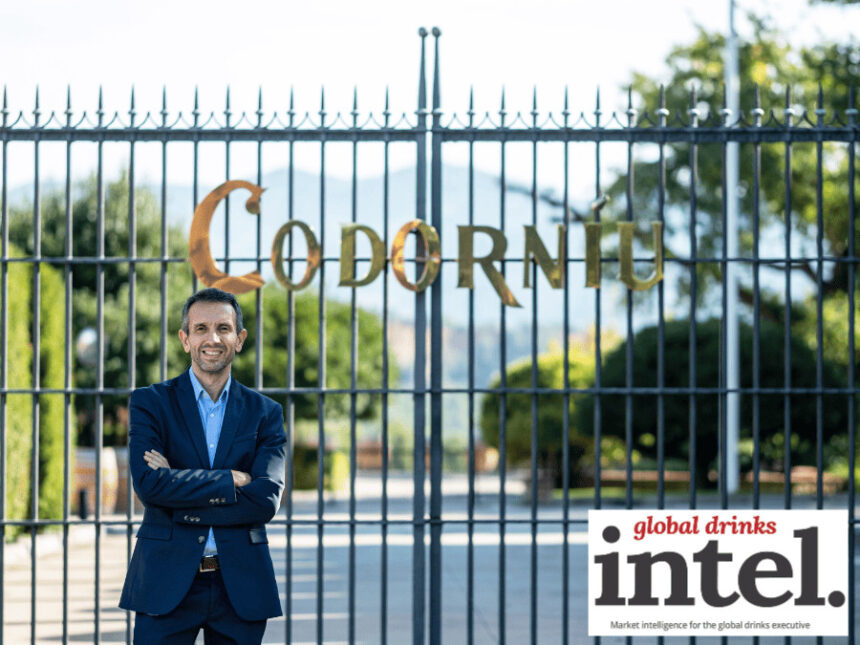
Sergio Fuster became CEO of Cava producer Codorníu almost three years ago. He joined the group, which is one of Spain’s oldest companies, after just under two years with Kellogg Co. His FMCG credentials also include 12 years with Danone. Global Drinks Intel caught up with him at ProWein earlier this year.
Global Drinks InteL: Given your FMCG experience, how are you finding an industry as traditional as wine?
Sergio Fuster, CEO of Codorníu: The wine industry tends to be very fragmented. It’s, without doubt, the most fragmented category I‘ve worked in. It’s very difficult to create a brand that you can scale, but some parts of the wine world are looking for an outside, brand-building perspective.
GDI: How do you go about building a wine brand?
SF: I’m not sure there’s a simple answer. We started with the Codorníu brand, which already had some scale in Spain. The challenge has been to transform it into a global brand. First of all, you do it through the packaging. We embarked on a major redesign to promote its value and prestige.
Portfolio management is next. We undertook an exercise to give some order to our portfolio, because we have a lot of SKUs. We created logic between the ranges and those ranges that didn’t have logic, we’re getting rid of. You need to be simple in your story; consumers don’t have time for complicated stories. So, we’ve been clarifying and simplifying the range.
Then, there’s innovation. We’re looking for innovation within quality and premiumisation, so we’re only innovating in our premium ranges. Under a certain price point, we’re really not interested, so we’re focusing on cava between EUR15 [US$16] and EUR20, which is significantly above what consumers think Cava will be. I take a lot of inspiration from Champagne, which I think is our competitor, not other Cavas.
Next is communication. The Codorníu brand is working towards communication codes that remind you of prestige brands, high value, in some cases fragrances, and not necessarily a supermarket product. Our communication doesn’t belong to the EUR5-per-bottle range. They belong more to EUR25 to EUR30.
Distribution-wise, we’re much more focused right now on building in the on-trade versus the off-trade.
You have to do all of the above consistently. You’re not going to drive a brand up in one or two years. It’s more a journey of 20-to-40 years. If I can put the first steps into it, then that will be a nice legacy.
GDI: What resistance have you come up against with bringing these ideas into this category?
SF: The wine industry is very traditional and conservative. There’s always been a way of doing things. Through starting little by little, people understand and see the value. We’ve done a lot of work to evolve the culture and be more open to outside ideas.
We have to be humble enough to recognise that we’re only at the beginning. We need to set the direction now so we can be very disciplined in our application in the coming years.
There are wines coming from the New World that are competing with Europe. Why are they so successful? What are they doing? We need to evolve but never make concessions in quality. We’re value-driven not volume-driven. I want to discuss value, not the number of bottles, At the end of the day, we’re going to be asking consumers to pay a certain price for our high-quality products, so I want to talk in euros or pounds.

GDI: Are you worried that you’re looking to premiumise at a time when the consumer cannot afford what they used to be able to?
SF: I’m conscious of it, but many of the luxury segments are accelerating in the current environment. The landscape doesn’t matter, we always reserve money for little luxuries. I believe high-quality Cava falls into that category of little luxuries. We have a lot of runway, regardless of financial slowdowns.
I don’t think we’re in a financial crisis anyway – We’re in a sort of slowdown. I don’t think it’s as bad or as structural as it was in 2008.
GDI: A lot of the larger wine groups are also pulling out their lower-value SKU’s and we’re seeing quite a few divestments of brands and wineries. What are you doing with that lower-tier part of the portfolio?
SF: We’re de-focusing. The most difficult part of any strategy is deciding what not to do. Companies like to do everything, all the time. Wherever there’s a sale, they go after it. In brand-building, you have to be very disciplined. In our case, we’re slowing down – or stopping completely – our innovation in the lower-priced segments.
We’re growing the most in the middle- to high-tiers. That’s where we want to be in the coming years, and if that means losing lower-quality volume, that’s welcome. There’s a role for those segments to play, but not for our company and not for our brands.
GDI: What’s Codorníu’s ownership structure?
SF: [Private equity company] The Carlyle Group acquired 68% in 2008 and the family retains 32% ownership.
GDI: Private equity companies tend to build a business up, then sell it again. That’s not a particularly solid base for a traditional industry. Is that a challenge?
SF: Traditionally, you hadn’t been able to find our brand-building model in wine. It makes sense that your financial structure is fit for that. What Carlyle can do is inject fuel for growth. They’re not here for the short term; they think mid- to long-term in the investments they make.
Undoubtedly, they’re here to grow value. So am I. I’m not doing anything different because we have private equity versus any other owner. I’m building this company for the next 20 to 30 years.
GDI: What do you lose sleep over?
SF: The idea that climate change can significantly impact us is a concern. We can manage the short-term impact, but what’s the wine world going to look like in 50 years? We need to think about vineyards at high altitudes and in colder climates. These are serious concerns, if not right now, but certainly something that we and the whole industry should care about.
GDI: Any final declarations?
SF: Over the last 20 years, Cava has stepped up dramatically in quality. Combined with scarcity in Champagne, this is a unique moment for Cava to tell the world who we are in terms of quality. I’m really happy to be here in this moment.
This article also appears in the June issue of Global Drinks Intel magazine.