

Hit by some of the most crippling COVID-19 restrictions in the world – including total bans on alcohol sales – Cape Town’s on-premise is slowly but surely recovering. Bridget McElroy reports.
Alcohol – be it production, trade or consumption – is an integral part of South Africa’s identity, yet the country’s relationship with booze is quite nuanced. Though heavily reliant on the economic impact of the industry and known worldwide for producing terrific wines, South Africa’s liquor sector faced some of the toughest COVID-19 regulations in the world, with four prohibitions over the course of two years.
The scene
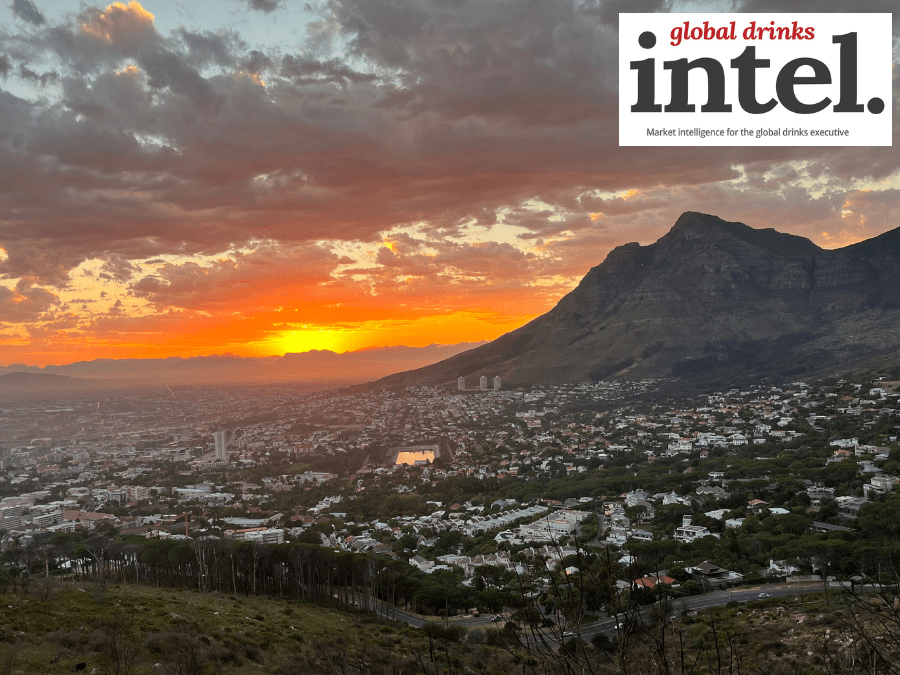
Cape Town, located in the country’s Western Cape province, is a geographically stunning city boasting a bustling business sector, a flourishing tourism industry and a world-renowned food and beverage scene. In recent years, the World Health Organization has ranked South Africans as the fifth or sixth-biggest drinkers in the world, so it’s no surprise that the country’s most densely populated city is home to a slew of drinking establishments.
Kloof Street, at the base of Table Mountain National Park in the northwest of the city, is a hotspot for popular venues like Kloof Street House, Asoka and The Dark Horse. Bree Street and Long Street are also trendy areas, the former having recently become more gentrified and revitalised, with the latter next in line and on the receiving end of assistance from the city.
In general, all types of bars are attractive at the moment, with no one type standing distinctly above the rest. As Jay Chiwala, head barman at Tjing Tjing, the Japanese-style rooftop bar in the Central Business
District, attests, the popularity of a specific style of bar is very personal and, in a city where there is so much variety, differs depending on a number of factors, including what is deemed age-appropriate. Of Tjing Tjing, he says: “Our customer base varies, but we tend to find overlap with customers of bars that are upmarket, yet still relaxed and maybe a bit more indie and alternative.”
Consumers in Cape Town are very price-conscious and high-end bars with inflated pricing struggle more than those offering affordable drinks. Although, with the rise of premiumisation, as long as the venue is vibey and the concept is different, it’s bound to attract plenty of consumers, residents and visitors alike.
Key trends
Bars and pubs in the city centre were the third-most-popular point of interest for international tourists in April, according to the ‘Western Cape Tourism Research Overview’ from Wesgro, the region’s official tourism, trade and investment promotion agency. Similarly, bars and pubs ranked in the top three for local visitors. On average, both groups spent around three hours in on-premise venues.
As far as what’s consumed during those hours, beer accounts for 75% of the total alcoholic beverage consumption in South Africa, according to last year’s ‘South African Wine: Trends and Opportunities for Trade in Africa’ report. Wine accounts for 10%, followed by spirits at 3%.
Within that 3%, gin is – and always had been – a big player in Cape Town. Tjing Tjing’s Chiwala and other local bartenders agree: Their customers’ top spirits choice is gin, both in cocktails or otherwise. In fact, gin is now more popular than beer for middle- and upper-class South Africans, many of whom live in Cape Town, according to a BrandMapp study of the top 30% of South Africans by income. The study found that 76% of ‘middle-class-and-up’ adults drink alcohol, with wine the most preferred drink (43%), followed by gin (33%) and beer (28%).
International players
Unsurprisingly, Cape Town’s market is controlled by large global brands. Anheuser-Busch InBev, Diageo, Namibia Breweries, Heineken, Pernod Ricard and, of course, Distell, all have significant market share.
As previously mentioned, beer is king in South Africa and, according to Wesgro, 3.2bn litres are consumed each year. It makes sense, then, that Heineken is making serious moves to further invest in the South African market with the proposed acquisitions of Distell and Namibia Breweries. Both deals are expected to close in the next quarter.
When probed about what Heineken’s acquisition of Distell will mean for the on-premise channel, Garth Oelofse, on-premise sales manager for the Western Cape at leading liquor distributor The Really Great Brand Co (RGBC), expressed doubt that it will impact the channel much, if at all. Many other on-premise folks echoed his prediction and reported experiencing no significant change as yet.
Whether this is due to a truly seamless transition, a specific establishment’s bias towards more independent producers or a delayed impact, remains to be seen.
Local players
Though the market is experiencing a consistent push towards premiumisation and is saturated with global brands, there are plenty of local selections too. An estimated 19m glasses of South African wine are enjoyed worldwide every day. The country produces around 4% of the world’s wine, and of that, the majority comes from the Western Cape, right by Cape Town. Some of the most famous wine regions – Stellenbosch, Paarl and Constantia – are within an hour’s drive of the city.
Besides wine, South Africa has also proudly produced Amarula, a cream liqueur made of solely African ingredients, since 1983. Like truffles in Italy, Marula trees, which bear the fruit featured in Amarula, only grow in sub-Equatorial Africa, making it a truly unique offering.
Cape Town is also home to a number of craft breweries and distilleries. There are approximately 30 registered gin distilleries in the Western Cape alone, and some hotels, like Bantry Bay’s Ellerman House, have started distilling their own gin labels.
The Cape Town Festival of Beer has run since 2009 and, although the 2022 dates are yet to be confirmed, around 60 breweries are expected to be on the docket this autumn. The Craft Brewers Association of South Africa was officially established in 2017, born from the need to provide a voice to the growing number of craft brewer popping up across the country. It reports 23 registered breweries within the city centre and its immediate suburbs and an additional seven in the winelands, within a 40-minute drive of Cape Town.
Challenges and opportunities
South Africa has been particularly challenged by its relationship with alcohol since apartheid, when a number of questionable practices instilled an alcohol dependence in many. The industry employs hundreds of thousands and contributes greatly to the country’s GDP, but many South Africans, more so in rural areas than urban, have an unhealthy and even dangerous reliance on alcohol.
These complicated dynamics became even more complex during the pandemic. COVID restrictions started in March 2020 and lasted, to some degree, until April this year. Unlike other major cities where lockdown regulations had permissions in place designed to give on-premise establishments a fighting chance of survival – drinks-to-go, for example – Cape Town (and the entirety of South Africa) was subject not only to time-bound curfews, but also to bans on the sale of alcohol, both in the on- and off-premise, along with freezes on domestic sales and international exports. The on-premise was impacted massively by regulations passed during the pandemic, but the fact that the channel could not sell alcohol at all during large stretches of time was the biggest blow.
These nationwide alcohol bans had two major impacts: first, there was a lot of bootlegging and illicit trading, especially in the Western Cape, where there were stockpiles of reserve wine. Second, in spite of the bootlegging, first responders noticed a sizable decrease in the need for emergency services.
The trade freeze and subsequent growth of the black market yielded significant economic losses, and reports estimate that the policy cost the liquor industry over US$11.7bn from March 2020 to July 2021.
RGBC’s Oelofse attests that the sector did not recover in any meaningful way until bans and curfews were lifted, and even then, last year’s summer season – typically a peak earning time – was negatively affected by the Omicron variant. When trade was reinstated, the bounceback was quick for those that survived, and many establishments are reporting close to their 2019 numbers, but some are still struggling to regain their footing.
The wine sector, for example, suffered severe reputational damage and suppliers now contend with a lack of confidence in their reliability, resulting in loss of business.
These next few years are critical and it’s hard to imagine anything but support for unbridled growth. However, given the statistics coming from hospitals, the Government is quietly considering a more permanent overhaul of its alcohol policy. While potential changes might have a positive impact on public health, there’s no doubt they would stunt industry recovery.
It will be interesting to watch how South Africa manages to rebuild.
This article was initially published in the July/August issue of Global Drinks Intel magazine. For details on how to subscribe, click here.