On the same day as posting an impressive set of numbers from the six months to the end of December, Treasury Wine Estates served up CEO Tim Ford to share the details behind the half-year performance with Global Drinks Intel editor Olly Wehring.
Given the return of Australian wine exports to China in March last year, and the addition of Daou Vineyards’ trading at the start of calendar-2024, how exactly is Treasury Wine Estates performing at the moment?
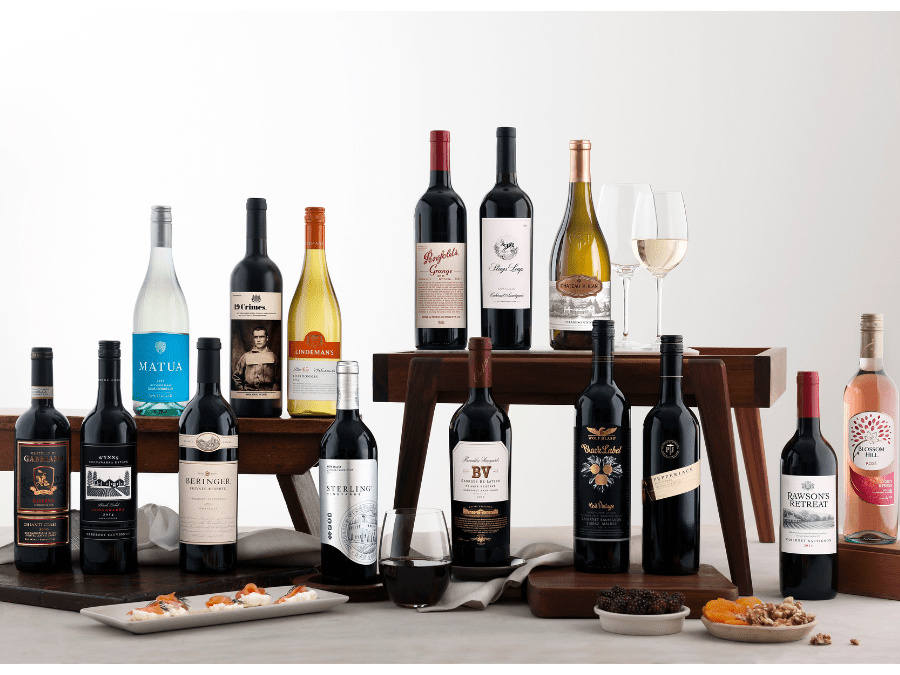
It’s not simple, but I start with our luxury brand performance year-on-year. We’ve got six or seven brands – including Penfolds, Daou, Frank Family Vineyards, Stags’ Leap – that account for nearly 80% of our earnings globally. That’s the number one priority for this business.
I give ourselves ten out of ten for Penfolds, nine out of ten for Daou and a seven or eight for our other US luxury brands.
We’ve had a lot of change in the US in the half-year (to the end of December) around our team and distributors. That knocked our momentum slightly, but it improved towards the end of the period. I’m very happy with the luxury business, which gives us better margins.
On the premium side, ‘Treasury Premium Brands’ performed pretty well in the US. In the current market, to have flat sales in the US – outside of Daou – is a resilient performance that we should be satisfied with, albeit it’s slightly behind what we set out to achieve. There’s no doubt that we’re outperforming our competitors in the US in total.
The ‘Treasury Premium Brands’ unit accounted for 6% of our earnings in the half-year, which is small in the scheme of things, but it’s also important that we get it right. It hasn’t performed to our expectation, and it wasn’t last (fiscal) year either. That’s why we made the leadership change, with Angus Lilley taking over, to bring that focus back on the growth brands within the business, like 19 Crimes, Matua and Squealing Pig.
We’re starting to see some progress there, but there’s been a fair bit of fixing in the division over the last six months. That’ll take us a bit of time, but I certainly would expect that to improve in the second half and into the next (fiscal) year.
With our commercial brands, such as Lindeman’s and Wolf Blass, it makes strategic sense for us to try to sell those brands, but we’ve got to be responsible in terms of what the best financial outcome is. The offers we received weren’t at a level that would suggest we should sell them versus keeping them and continuing to drive them in their current channels. They’re still making money, although they absorb costs because of their volume. They’ve got a role to play, albeit pretty minor.
We don’t expect them to grow, but we’re not going to shift strategy on the back of the fact we’re keeping them. We’d obviously have liked to have sold those brands; That was the plan. But it wasn’t going to be an ‘at any cost’ deal.
We went to the bottom end of our full-year profits guidance in today’s update, but we’re well set up to continue to grow going forward. Is there anyone else in the world of alcohol at the moment growing at 18%-19% year-on-year? The answer is no!
We’ve got a couple of tailwinds with Daou and Penfolds. It’s not a perfect result, but it’s not a perfect world.
On Penfolds, how comfortable are you about the brand’s longer-term performance in China, with the consumer softness that we’re all seeing in the country?
I see us continuing to grow double-digit month-on-month in that market. The distribution we’ve seen, particularly in the last three months of the year as we got into the pre-Chinese New Year period, has returned Penfolds to be the number one brand in China. And it hasn’t taken long! The guys couldn’t have executed its re-establishment better.
Everyone’s doom and gloom about the category in China, but it’s growing again for the first time in four years. There’s a reason for that; Penfolds is back. There’s not too much to not feel positive about.
What about the subsequent turbulence for the brand outside of China, as you rebalance the supply of Penfolds?
In Asia, Thailand, Malaysia, Hong Kong, Singapore and Indonesia remain focuses and we’ve still got large allocations going to them. In Australia, we’ve shifted the mix of the business, with some entry-level Penfolds that we were selling here now heading to China.
The diversification of Penfolds is still strong. We had an initial spike of getting product back into China, and as more wine comes online next year and the year after, we can balance that out better by maintaining the other markets as well.
There was a risk that we went too hard or too soft on different markets, but I think we got it broadly right.
What are you going to do with the ‘commercial brands’ you’ve chosen not to sell?
We’ll do what we’ve been doing for the last couple of years. They’ve been declining, but only by single digits, which is in line with the category. There’s still significant volume.
We’ll keep trading them, but we’re not going to shift strategy and invest a whole lot of people and A&P to try to regenerate those brands. We’ll look to stabilise their volumes, but not let it distract us from the other growing brands that we’ve got to focus on.
When you’ve got a sale process going on and your customers are making choices between what they promote, they’re generally going to go with other brands. We can take that off the table now and get focused on trading those brands through activations in retail.
Is there a premiumisation opportunity here, or is it more a cash-churn business?
It’s more a cash churn. The opportunity is bigger on the other brands we’ve got, whether it’s Matua, Squealing Pig or Pepperjack – brands that are resonating more with younger consumers. That’s what the GBP7 (US$8.70)- to GBP8 market is all about.
We think that 19 Crimes has still got runway as well. That’s another brand we’d rather be innovating and investing behind than behind Wolf Blast or Lindemann’s over and above what we’ve done.
You must be craving some calmer waters in the months ahead. Do you think you’re going to get that?
Maybe relatively, yes! From our point of view, we’re pretty well-positioned.
We can ask the question about US tariffs and whether that will create noise; for us, that would create an opportunity because our business in the US, particularly our luxury business, produces and sells domestically. So, protectionist tariffs that are looking after domestic policy should be a positive for us.
We’ve got different options if there are any around-the-edges-type tariffs. As long as the Australian government continue to do what they’ve done, which is manage multiple relationships effectively – they’ve proven to be pretty effective at that over the last three years – then we’re positioned the right way for where the consumer’s going.