

Sign In
  • News
    • Beer
    • Spirits
    • Wine
    • Environmental, Social & Governance
    • Financial Results
    • Marketing
    • Mergers & Acquisitions
    • New Product Development
    • From the Industry
  • Intel
    • Comment
    • Interview
    • Category Intel
    • Consumer Intel
    • Market Intel
  • Awards
    • Global Drinks Awards
    • New Product Awards
    • ESG Awards
  • Magazine
  • Newsletter
  • Subscribe
  • Contact
  • News
    • Beer
    • Spirits
    • Wine
    • Environmental, Social & Governance
    • Financial Results
    • Marketing
    • Mergers & Acquisitions
    • New Product Development
    • From the Industry
  • Intel
    • Comment
    • Interview
    • Category Intel
    • Consumer Intel
    • Market Intel
  • Awards
    • Global Drinks Awards
    • New Product Awards
    • ESG Awards
  • Magazine
  • Newsletter
  • Subscribe
  • Contact
Search
Global Drinks Awards Banner - https://globaldrinksawards.com/


How wine companies are preparing for more freak harvests as climate change bites – Market Intel

Richard Woodard
Last updated: 19/01/2024 at 5:31 PM
By Richard Woodard
21 November 2023
9 Min Read

Producing wine has always been dictated by the climate, but recent extreme weather events have seen winemakers turn to nature to mitigate the effects.


SHARE

This article has been available to Global Drinks Intel subscribers since July. For details on how to join them, please click here.

Producing wine has always been dictated by the climate, but recent extreme weather events have seen winemakers turn to nature to mitigate the effects.

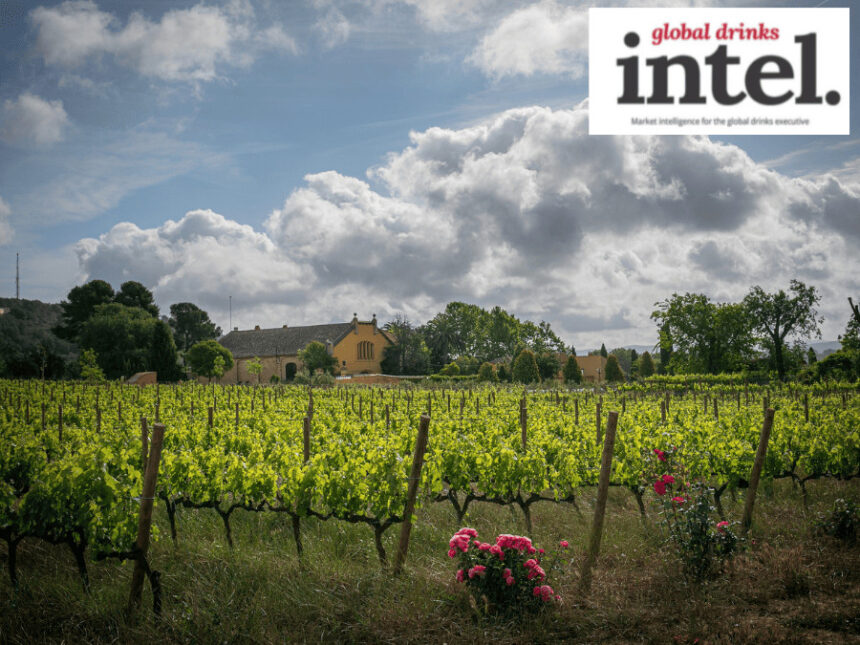
Depending on your point of view, last year’s wine vintage in Europe was either a miracle or a portent of future catastrophe. Unprecedented drought and sweltering temperatures, harvests brought forward by weeks, but remarkable grape health and, generally speaking, excellent quality.

From Champagne to the Douro, from Rioja to Piedmont, the refrain from producers was similar: the vine is a tenacious plant that, with a little human assistance, can thrive when others wilt away. This seems to have been especially true of older vines with established root systems.

But it wasn’t universal.

“For us, 2022 was one of the worst vintages in the last ten years,” says the co-founder of Romania’s Cramele Recaş, Philip Cox. “It was both extremely dry, but also with volatile weather events, such as hail and torrential rain in short periods that actually caused more damage than the drought.”

At Spain’s Familia Torres, GM Miguel Torres Maczassek acknowledges the challenges of the growing season, but adds: “Given these extreme climate conditions, which will only become more common in the future, we were pleased to see how well our ancestral varieties performed, being in most cases the latest to be harvested in the regions where they are planted.” More on those ancestral varieties shortly.

It’s hard to generalise on the basis of a single harvest, but there have been enough years in the recent past with hotter and/or more erratic growing conditions to make all but the most tin-eared wine producer sit up and take notice. “The effects of climate change on viticulture, especially in the form of weather extremes, have become very evident over the last couple of years,” says Henkell Freixenet’s head of communication, Jan Rock.

“While the vine is generally a very resistant plant, continuous drought over many years will definitely have an impact. Until today, we have experienced losses in the harvest volume, but not in the taste profile.”

Trials of hybrid and new grapes – and ‘lost’ ancient varieties

In common with many other producers, Henkell Freixenet has trialled new and hybrid grape varieties in a quest to balance future resilience with quality and flavour. Meanwhile, Familia Torres has been researching resistant varieties for decades, many of them ancestral grapes almost lost to history.

“This started 40 years ago as a philanthropic project to bring back forgotten pre-phylloxera varieties out of a sort of cultural heritage responsibility,” says Torres Maczassek. “But, we realised that some of these varieties not only have great potential for winemaking, but they’re also well-adapted to climate change.”

As a result, Familia Torres is focusing on five or six ancient varieties (out of more than 50), using them in wines such as Clos Ancestral, Grans Muralles, Forcada and Pirene. However, the discovery of alternative grapes is only one potential solution – and it’s certainly no panacea.

“Given the diversity of viticulture and the changing conditions, there is no one-size-fits-all solution when it comes to giving priority to ‘new’ grape varieties,” says Rock. This view is echoed by Louisa Rose, head of winemaking at Yalumba and Australian country ambassador for International Wineries for Climate Action (IWCA, a collaborative group of wineries co-founded by Torres’ father, Miguel A Torres).

Yalumba owner Hill-Smith Family Estates has its own vine propagation nursery, with Rose acknowledging that new varieties are an important part of R&D activities in Australia. “We’re always looking for new flavours and styles,” she says. “However, the ‘traditional’ varieties that we work with are still our main focus, and mostly behave well in the drier and hotter years.

“One of the varieties that we’ve been working with since the 1840s – yes, there are still vines growing that were planted back then – grenache is one of the most heat-tolerant varieties we know of, and thrives in the warmer seasons.” Torres Maczassek adds that the same grape – garnacha – is beginning to perform well in traditionally cooler areas like Penedès.

The resilience of existing grapes will be crucial in the future. At Cramele Recaş, Cox insists there is “no market” for new varieties. “I think there’s very little chance of alternative varieties being a success with customers,” he says, “unless they are already well-known and established from other regions of the world.

“About 90% of varietal wine sales are from fewer than ten varieties. Consumers at the mass-market level at least simply do not look for other varieties – and I don’t think they are going to start doing so soon. It takes decades to get a relatively new or unknown varietal on the market.”

Mulches to sunscreen – all roads lead to regenerative viticulture

Even if this was not the case, replanting vineyards is a costly and time-consuming business, so other adaptive techniques will be needed. Cramele Recaş selects new vineyard sites with ready water supplies in higher-altitude, cooler parts of the country, and is investigating intelligent irrigation systems powered by renewable energy.

Rose, meanwhile, ticks off a list of practices, including permanent grasses in the vineyards and midrows, mulches under the vines, the planting of more vegetation in and around the vineyards, changes in trellising and training to shade bunches from sunlight – even the application of kaolin ‘sunscreens’ to anticipate heatwaves.

The logical conclusion of this is regenerative viticulture, which Familia Torres has been introducing into its organic vineyards in recent years – both to mitigate the effects of climate change and to keep on producing balanced wines in the future.

Torres Maczassek explains: “In regenerative viticulture, we mimic nature as much as possible by using, among other tools, permanent ground cover, no tilling and planned grazing – following [Zimbabwean regenerative livestock farmer] Allan Savory’s holistic approach. Thanks to permanent ground cover and no tilling or ploughing of the soil, vineyards can capture atmospheric carbon dioxide and fix it in the soil.

“The implementation of regenerative viticulture also has many other benefits: it avoids erosion, retains more water as we increase carbon and organic matter in the soil, boosts microbial life and biodiversity, making a stronger ecosystem, and improves the soils to make them more resilient against climate change.”

Such practices, which organisations such as the IWCA will help to disseminate around the world, could be important safeguards against an uncertain future – a future where ‘freak’ years like 2022 may just become the norm.

This article has been available to Global Drinks Intel subscribers since July. For details on how to join them, please click here.

Richard Woodard
ByRichard Woodard
Former newspaper journalist Richard Woodard has been writing about the global wine and spirits industry for nearly 20 years, and is a regular contributor to a number of magazines and websites.
Previous Article Logo for the International Alliance for Responsible Drinking Drinks industry Environment, Social & Governance activations around the world in November ’23 – ESG
Next Article Ex-Distell chief buys into Tiny Keg Can Co in South Africa
MPU for Global Drinks Intel ESG Awards - https://gdiesgawards.com/categories/

The Newsletter

Sign up to receive our newsletter email

  • The very latest news from across the world's beverage alcohol industry
  • Cutting-edge intel from our in-depth category & market analyses, backed by benchmark industry data
  • The best insight on your competitors from our interviews with the industry’s leaders

This field is for validation purposes and should be left unchanged.

Follow on Social

Linkedin Twitter
Global Drinks Awards Short Tower - https://globaldrinksawards.com/
Banner for Le Tribute Pink Grapefruit - https://letribute.com/en-gb?srsltid=AfmBOooXoAFSrBVrsVtLnlySLXXjT62LG4oJ5imdqTABCraYG_SULm5V

You Might Also Like

Drinkers with balls of BuzzBallz

Drinks brands must identify category codes before embarking on search for sales – Comment

24 July 2026
Vineyards in Champagne at daybreak

Champagne harvest cap reduced for fourth consecutive year

24 July 2026
Skyline of Italian city

How the spirits industry is weathering Italy’s unique challenges – Market Intel

24 July 2026
Computer and mouse

Canada greenlights inter-state direct-to-consumer alcohol sales

23 July 2026
Linkedin Instagram

What next?

  • Sign up to our FREE newsletter
  • Subscribe
  • My Account
  • Sign up to our FREE newsletter
  • Subscribe
  • My Account

About

  • Contact
  • Privacy Policy
  • Cookie Policy
  • Terms & Conditions
  • Contact
  • Privacy Policy
  • Cookie Policy
  • Terms & Conditions

Copyright © 2025 Global Drinks Intelligence Limited. All Rights Reserved

Built and Managed by Kukoo Creative

This website uses cookies to improve your experience. Read our privacy policy | Cookie settings | ACCEPT
Privacy & Cookies Policy

Privacy Overview

This website uses cookies to improve your experience while you navigate through the website. Out of these cookies, the cookies that are categorized as necessary are stored on your browser as they are as essential for the working of basic functionalities of the website. We also use third-party cookies that help us analyse and understand how you use this website. These cookies will be stored in your browser only with your consent. You also have the option to opt-out of these cookies. But opting out of some of these cookies may have an effect on your browsing experience.
Necessary
Always Enabled
Necessary cookies are absolutely essential for the website to function properly. This category only includes cookies that ensures basic functionalities and security features of the website. These cookies do not store any personal information.
Non-necessary
Any cookies that may not be particularly necessary for the website to function and is used specifically to collect user personal data via analytics, ads, other embedded contents are termed as non-necessary cookies. It is mandatory to procure user consent prior to running these cookies on your website.
Functional
Functional cookies help to perform certain functionalities like sharing the content of the website on social media platforms, collect feedbacks, and other third-party features.
CookieDurationDescription
li_gc6 monthsLinkedin set this cookie for storing visitor's consent regarding using cookies for non-essential purposes.
lidc1 dayLinkedIn sets the lidc cookie to facilitate data center selection.
VISITOR_INFO1_LIVE6 monthsA cookie set by YouTube to measure bandwidth that determines whether the user gets the new or old player interface.
yt-remote-cast-availablesessionThe yt-remote-cast-available cookie is used to store the user's preferences regarding whether casting is available on their YouTube video player.
yt-remote-cast-installedsessionThe yt-remote-cast-installed cookie is used to store the user's video player preferences using embedded YouTube video.
yt-remote-connected-devicesneverYouTube sets this cookie to store the user's video preferences using embedded YouTube videos.
yt-remote-device-idneverYouTube sets this cookie to store the user's video preferences using embedded YouTube videos.
yt-remote-fast-check-periodsessionThe yt-remote-fast-check-period cookie is used by YouTube to store the user's video player preferences for embedded YouTube videos.
yt-remote-session-appsessionThe yt-remote-session-app cookie is used by YouTube to store user preferences and information about the interface of the embedded YouTube video player.
yt-remote-session-namesessionThe yt-remote-session-name cookie is used by YouTube to store the user's video player preferences using embedded YouTube video.
ytidb::LAST_RESULT_ENTRY_KEYneverThe cookie ytidb::LAST_RESULT_ENTRY_KEY is used by YouTube to store the last search result entry that was clicked by the user. This information is used to improve the user experience by providing more relevant search results in the future.
Performance
Performance cookies are used to understand and analyze the key performance indexes of the website which helps in delivering a better user experience for the visitors.
Analytics
Analytical cookies are used to understand how visitors interact with the website. These cookies help provide information on metrics the number of visitors, bounce rate, traffic source, etc.
CookieDurationDescription
_ga1 year 1 month 4 daysGoogle Analytics sets this cookie to calculate visitor, session and campaign data and track site usage for the site's analytics report. The cookie stores information anonymously and assigns a randomly generated number to recognise unique visitors.
_ga_*1 year 1 month 4 daysGoogle Analytics sets this cookie to store and count page views.
YSCsessionYSC cookie is set by Youtube and is used to track the views of embedded videos on Youtube pages.
Advertisement
Advertisement cookies are used to provide visitors with relevant ads and marketing campaigns. These cookies track visitors across websites and collect information to provide customized ads.
CookieDurationDescription
__Secure-ROLLOUT_TOKEN6 monthsYouTube sets this cookie to manage feature rollout and experimentation. It helps Google control which new features or interface changes are shown to users as part of testing and staged rollouts, ensuring consistent experience for a given user during an experiment.
__Secure-YNID6 monthsGoogle cookie used to protect user security and prevent fraud, especially during the login process.
_fbp3 monthsFacebook sets this cookie to store and track interactions.
bcookie1 yearLinkedIn sets this cookie from LinkedIn share buttons and ad tags to recognize browser IDs.
yt.innertube::nextIdneverYouTube sets this cookie to register a unique ID to store data on what videos from YouTube the user has seen.
yt.innertube::requestsneverYouTube sets this cookie to register a unique ID to store data on what videos from YouTube the user has seen.
Others
Other uncategorized cookies are those that are being analyzed and have not been classified into a category as yet.
CookieDurationDescription
__Secure-YECpastYouTube sets this cookie to stores the user's video player preferences using embedded YouTube video
advanced_ads_visitor1 monthDescription is currently not available.
personalize_sync1 dayDescription is currently not available.
RBUUID2 monthsDescription is currently not available.
stackprotect1 hourDescription is currently not available.
syncTimeout12 hoursDescription is currently not available.
unique_session_id1 yearDescription is currently not available.
SAVE & ACCEPT
Powered by CookieYes Logo