- First-quarter sales increase by 8.9%, totalling EUR6.38bn [US$6.99bn]
- ‘Americas’ and ‘Europe’ regions up double digits in three months to end of March
- Asia Pacific struggles, sales down 5.4%
Heineken has seen the alcohol-free extension of its namesake lager brand struggle in the first quarter of 2023, although three-month sales were up by almost 9% year-on-year.
An 8.9% top-line lift for the brand owner contrasted with a 3% volumes dip in the three months to the end of March. The figures indicate the brewer’s use of price rises in the period, which was highlighted by CEO Dolf van den Brink as having played a sizable role in the Q1 performance.
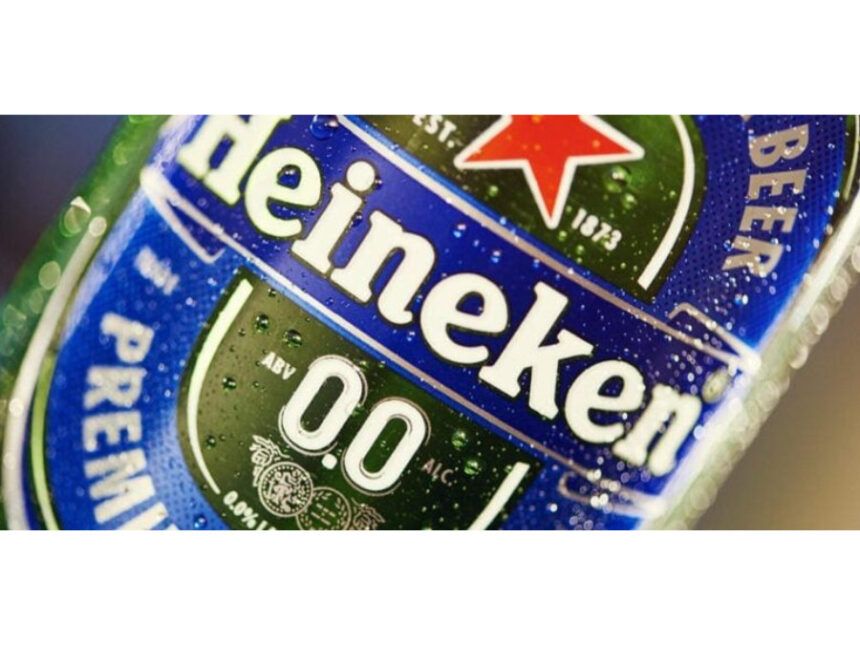
While the Heineken lager was credited with "driving premiumisation at scale" - the brand upped its volumes by 2.3% - Heineken 0.0 fell back in volume terms, by "a low-single-digit". The group pinned this on its ceasing of sales in Russia, although the no- & low-alcohol trend has been widely forecast to be a growth opportunity for brewers worldwide, particularly in developed markets.
The company noted in the results announcement the roll-out of Heineken 0.0 to China later this year.
On a regional basis, Heineken had the well-established beer markets of Western Europe to thank for accepting price rises: The 'Europe' reporting region rose by 13.5% in value on a 1.3% volumes decline. The region was trumped, however, by 'Americas' [+14.8% in value, +3.1% in volumes] where premiuisation trends combined with price rises, particularly in Brazil and Mexico. US sales inched up by "a low-single-digit" as volumes decreased "mid-single-digit".
Among the beer markets to watch this year is Nigeria, where the temporary lack of local currency availability "caused by an immediate withdrawal of old bank note denominations" crippled consumers' ability to spend. Group sales in the country were down low teens.
Also, Vietnam, long-considered to be the next battleground for multinational brewers, rang alarm bells: Heineken's expectation that the country's "steep post-COVID recovery last year" would continue failed to materialise in Q1, when its sales slumped by the low-twenties. The company put this down to a wider economic slowdown in the country.
"We start the year with strong revenue growth driven by pricing and disciplined revenue management, while we materially increase investment behind our brands," said van den Brink. "Business performance in Europe and the Americas regions is encouraging, with consumer demand holding up better than expected in the first quarter. Results in the Asia Pacific and Africa, Middle East & Eastern Europe regions were disappointing, hindered by temporary volatility in Vietnam and Nigeria, leading to demand softness."
In other developments, the group said a buyer has been found for its operations in Russia, although the transaction has a way to go regulatorily speaking before reaching a conclusion. Finally, the completion of the move to take majority control of Africa's multi-category operator Distell was confirmed for next week.
"We look forward to welcoming over 5,400 new colleagues … into Heineken and to add more than EUR1bn in net revenue and EUR150m operating profit to our African footprint," the CEO concluded.