

European consumers are some of the most-coveted by beverage alcohol brand owners. They are knowledgeable, adventurous and, crucially, willing to trade up – a triple threat that is irresistible to aspirational brands.
For years, rum owners have laboured to turn continental drinkers’ attention to the premium end of the category, using on-premise education, impactful marketing campaigns and thoughtful innovation to cultivate a new generation of brand loyalists.
“We’ve witnessed a positive evolution in the premium and super-premium rum segments in recent years, driven by consumers’ growing interest in high quality, provenance, and compelling narratives woven into brands,” says the global brand director for Venezuelan rum brand Diplomático, Patrizia Damiani. “The variety of production processes and the large number of countries that produce rum give consumers a fascinating offer, ranging from white to aged rum, special casks to vintage editions.”
European consumers have become increasingly aware of rum’s diversity beyond the standard house pours, and today the region represents almost half of the world’s premium and super-premium sales. Unsurprisingly, there was a blip in 2020 following the widespread on-premise closures at the height of the coronavirus pandemic. After years of steady incremental gains in Europe, total rum volumes nose-dived by more than 10%, according to IWSR Drinks Market Analysis.
Despite this, the category has demonstrated exceptional resilience, exceeding pre-pandemic volumes by more than 1m cases in 2021 to reach a total of 24.6m cases. Growth has continued at pace; from 2021 to 2022, volumes grew by 6% to 26m cases.
Cost of living crisis casts shadow
But are macro factors once again casting a shadow over rum’s otherwise rosy landscape? While IWSR figures show volume of premium-and-above rum is on the rise in Europe, it’s being marginally outpaced by standard rum. Meanwhile, in 2022, the UK and Germany – the premium segment’s second- and third-largest markets in Europe, respectively – registered small volume declines for premium-and-above.
“While the rum category has a very healthy future, the broader economic picture in European markets like the UK and Germany is certainly challenging,” admits Havana Club CEO Christian Barré. “The cost of living is creating financial pressures at the fastest pace in decades, which, in turn, means household budgets are under pressure.”
But the head of Pernod Ricard’s Cuban rum JV (with the country’s government) sees an upside: “At times like these, consumers are drinking less but better, meaning they look for affordable luxuries and opt to spend their cash on recognised brands that they trust to deliver a high-quality experience every time.”
Brugal MD Eileen Livingston adds: “The global cost of living crisis and economic slowdown provides a challenging backdrop in Europe, where disposable income levels are being affected. However, we expect the premiumisation trend, which has been embedded in consumer behaviour, to continue – even if at a slower rate than before.”
Volumes leap in Spain as demand strengthens elsewhere
Brands are confident that the groundwork has been laid for premium rum’s longer-term ascent, and even in the current climate, there are noticeable bright spots. In Spain, for instance, total volumes in 2021-22 jumped by 19%, by far the strongest performance in Europe’s top five rum markets.
Barceló is the market leader in Spain, and has focused on “intensifying [its] work in the on-trade, off-trade and e-commerce channels,” according to Carlos Peralta, general director of parent group Varma’s spirits unit. Notably, Barceló has benefited from Varma’s access to 25,000 premium on-premise venues across the country.
Edrington-owned Brugal hails from the Dominican Republic and is the second best-selling rum in Spain, where Livingston says the brand posted an “outstanding performance” last year. The brand has continued to roll out its Amistad Verdadera ‘True Friendship’ campaign and launched its Ron Gastronomico project, which sees Brugal 1888 partner with Michelin Star chefs such as Dani Garcia.
“We’re committed to premiumising Brugal at every single touchpoint for the consumer,” says Livingston. “While there’s work to do in such a dynamic market as Spain, Brugal’s premiumisation journey will continue to deliver real value.”
In addition to mounting demand in the UK, France, Germany, Italy and Spain, Havana Club has identified “promising potential” in emerging European rum markets such as Greece and Portugal, says Barré. “The beauty of being part of the Pernod Ricard network is that we benefit from its considerable and dynamic footprint. This opens the doors to further opportunities as we look to continue dominating our existing core European markets and stepping up our game in up-and-coming markets in 2024.”
According to Barré, “origin, premiumisation and innovation, [as well as] exciting collaborations and storytelling are the major trends driving [Havana Club’s] performance within Europe”.
The brand’s 2023 edition of the Havana Club Tributo collection, which hit 20 markets including the US in July, will roll out across the UK and other select European markets in the coming weeks. Meanwhile, leaning into premium cues akin to peers in whiskey/whisky, the brand launched an 11-year-old expression last year via Pernod Ricard’s The Whisky Exchange e-commerce business. Havana Club also unveiled a line of vintage iterations, starting with a 2007 bottling with an SRP of EUR390 (US$419).
In terms of marketing, Havana Club has been linking up with Europe-based artists and influencers to further the connection between the brand and region. In the UK, Havana Club launched a limited-edition bottle with grime MC Skepta, while in Spain, singer & DJ Bad Gyal designed an exclusive label for the limited-edition Havana Club 7 Años bottle.
Cocktail culture ‘very positive’ for premium rum
Havana Club has long been a favoured brand among bartenders, and this year the brand will launch its inaugural Havana Club Cocktail Maestros competition, which is largely targeted towards Europe-based mixologists. Splitting its entrants into teams of two, the competition focuses on teamwork, and the winners will take home a EUR10,000 prize.
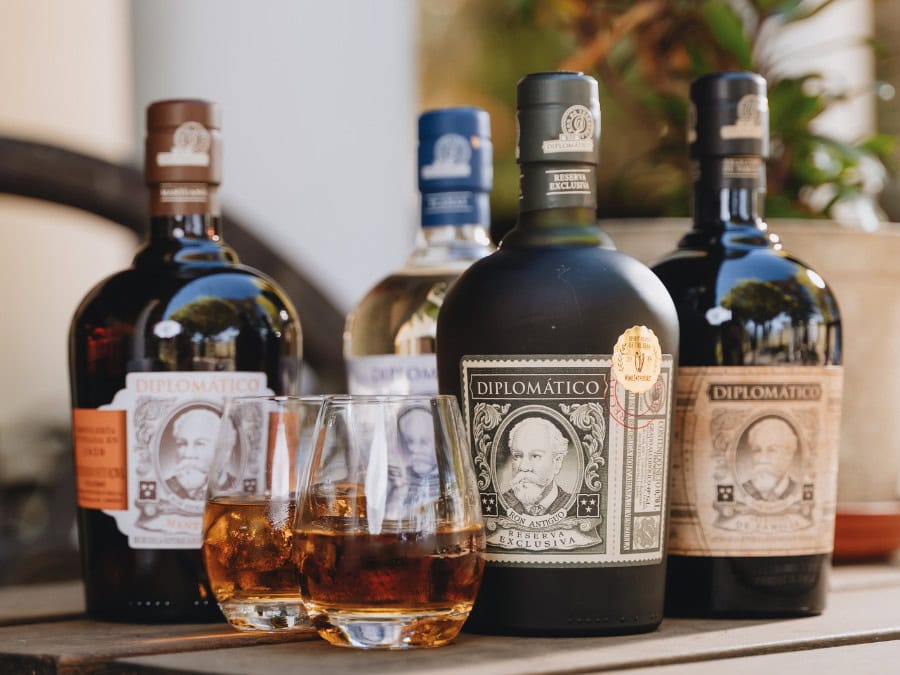
Diplomático’s Damiani notes that the development of cocktail culture in recent years has had a “very positive impact on premium rum category growth internationally” – arguably nowhere more so than in Europe.
“Consumers continue to enjoy classic rum cocktails such as the daiquiri, which we elevate with a unique premium white rum called Diplomático Planas,” she says. “They’re also interested in twists on classic cocktails, such as the rum old fashioned and the rum mule.”
Europe represents half of Diplomático’s business, and the region “remains a key driving force of growth for the brand due to its experienced and discerning consumers in spirits,” says Damiani. The brand, which was acquired by US group Brown-Forman in late 2022, will continue to use innovation as a “strategic pillar” to strengthen its position in premium-plus.
One European market where innovation has played particularly well is the UK. Here, spiced rum has become an established sub-category, driven by the consumer’s ongoing interest in cocktails and their sweeter taste preferences.
Cautious observers, however, will be wondering if the UK’s demand for spiced rum could follow that of flavoured gin, whose market saturation resulted in a dramatic category decline.
Havana Club to take premium-and-above to ‘new heights’
In the near term, as Europe’s economic challenges play out, brands will continue to build and populate the premium-plus end of the rum category, developing established markets in the region while also targeting new ones.
“We believe premium-and-above has great potential to grow even further within Europe and we will take this to new heights with continued innovation to drive further growth in the on-trade, off-trade, e-commerce and travel retail,” says Havana Club’s Barré.
With such investment and focus, it’s clear that Europe is playing a major role in rum’s premiumisation journey – brands will hope that other major spirits markets are paying attention and will fall in line.