

This article was initially published in the May issue of Global Drinks Intel magazine. For details on how to subscribe. click here.
Aged spirits from Asia have continued to expand their global footprint, with whisky still leading the way. However, the region’s rum producers are starting to make their move.
Japanese, Taiwanese and Indian whiskies are now well-established around the world and are steadily building their international presence. Asian rums and brandies are yet to experience a similar boom, but there are signs of development in the rum category.
Asian whisky has an increasingly global appeal, especially among a “growing number of open-minded whisky enthusiasts”, according to the brand ambassador & global PR officer at Taiwanese whisky producer Kavalan, Kaitlyn Tsai. “We can see a significant rise of Asian whiskies,” she says. “For many consumers in Asia-Pacific nations, whisky is associated with high quality, success and a high standard of living. Moreover, premium Asian whiskies really appeal to consumers in European and American markets with a strong existing whisky-drinking culture.”
Japanese whisky may grab most of the headlines, but Tsai says Taiwanese whisky has a growing presence on the international stage. “In the top competitions, Kavalan has won the biggest awards for over a decade, enabling us to compare favourably to many of the established brands, including Japanese ones,” she explains.
There is no doubt that Japanese whisky has earned its headlines. “In ten years, exports have multiplied by almost six times,” says Louis Laborde, Hatozaki brand manager at Marussia Beverages. “In 2021, exports achieved a historical record of nearly 900,000 nine-litre cases, according to IWSR Drinks Market Analysis. The US and France are the No.1 and No.2 markets outside Japan, accounting for a combined 46% of total Japanese whisky exports.”
Laborde says Japanese whisky drinkers “are versatile and love tasting new whisky. The rarity of some aged whiskies and super-premium-plus price positioning has left a space for newcomers”.
Adventurous consumers seek out new styles and brands
Part of the segment’s success is due to a greater global appreciation for Japanese goods more broadly, says Jon Potter, MD at Suntory, whose Asian brown spirits portfolio includes the much-lauded Japanese whiskies Yamazaki, Hibiki and Hakushu. “We see this through an increased demand for our Japanese whisky portfolio, as well as a broader appetite for other well-crafted, premium Japanese products,” he says.
At India’s John Distilleries, whose international aged spirits brands include the Paul John and Original Choice whiskies, head of public relations, digital marketing & communications Asa Abraham suggests whisky drinkers are becoming more adventurous. “With the foray of Asian whiskies, and the popularity of Japanese and Taiwanese whiskies, into the global whisky world, consumers enjoy exploring new whiskies from new regions, including India,” she says. “Several Indian malts have won international awards, while Paul John Whisky has been honoured with awards at various prestigious spirits competitions across the world.”
Younger whisky drinkers, in particular, are seeking out new types of whisky, says Delhi-based Radico Khaitan’s president of international business, Sanjeev Banga. “The younger generation is open to experimentation and trying out new drinks and brands. The increasing consumption of cocktails is also helping newer brands and spirits.
“There is increasing recognition and acceptance of Indian spirits worldwide. This is not restricted to the Indian diaspora.”
The Middle East, Africa and South America are the key markets for the company’s mass-market brown spirits brands 8PM Whisky, Contessa Rum and Old Admiral Brandy. While the US, Europe, the UK, Singapore, Australia and global travel retail are the key markets for its luxury portfolio – featuring Rampur Single Malt and Jaisalmer Gin – Banga says that international awards for Rampur have helped expand the brand’s distribution and build acceptance for the company’s portfolio, which is now available in almost 90 countries.
Rum makes its move
The success of Asian dark spirits is much more evident in whisky than in rum, says Rakshit Jagdale, MD of Amrut Distilleries, which produces Amrut Single Malt Whisky as well as the Old Port and Two Indies rums.
“There is good growth in the whisky segment as well as rum, but I’m not too aware of how Indian rums are doing globally,” he says. “In single malt, more Indian expressions have been coming on board. The category that Amrut pioneered is growing and is up for the challenges going forward.”
Asian rums are starting to make more of an impact in the global market, however, and in March, Diageo secured the acquisition of super-premium Philippines dark rum Don Papa. The brand, which launched in 2012, is already sold in 30 countries, with France, Germany and Italy its largest markets.
Expanding into new markets
Outside India, the US and EU are key markets for Amrut, which, like other Asian whiskies, continues to develop its presence abroad. “We entered South Africa last year and have just made our entry into South America in a very small way,” says Jagdale. “Global travel retail, meanwhile, is recovering and people are venturing out – Traffic has bounced back. The Indian single malt category is doing reasonably well there.”
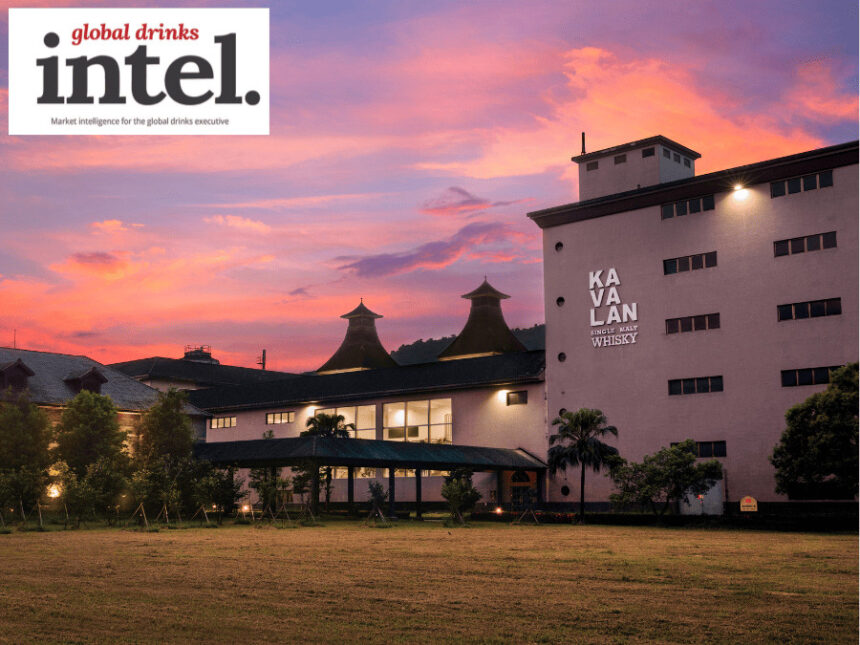
Taiwan’s Kavalan exports to around 60 markets, and Tsai reveals the company has recently expanded to Nepal and Myanmar in Asia, as well as Central and South American markets including Argentina, Mexico, Panama, Guatemala and Costa Rica. “We are very optimistic about our prospects internationally,” she says.
Kavalan is preparing for future export growth by building a third maturation warehouse, which is due to be completed by October. “This move will double the capacity of Taiwan’s premier whisky to meet rising demand globally,” Tsai says.
“We will continue to expand our global presence and bring more surprises to excite whisky drinkers. In the coming years, you can expect more additions to our ranges – including our gin – in terms of different casks used. In addition, new peated malt whiskies are undergoing maturation, which should satisfy fans in the future.”
NPD and cooperation among brands key to future prospects
New lines have also boosted Hatozaki’s development. Marussia’s Laborde says a limited-edition Hatozaki Omakase line, which was available in the US last year, was very successful – all 4,200 units sold out within a few weeks. A second eight-year-old small-batch Omakase limited edition followed in June, also as an exclusive to the US.
With Hatozaki now on sale in around 40 markets, Laborde reports healthy international growth for the brand. “Key markets are by far the US, followed by France, two large markets for whisky and Japanese whisky specifically,” he says. “Poland and the UK also perform well. ll markets have been performing quite well since the beginning of the year, driven by the category dynamics and our marketing activities.”
John Distilleries’ Abraham, meanwhile, feels that greater cooperation can help ensure continued growth for Indian malt whiskies. “The unique flavour profile of Indian and Asian malts has found favour with the global whisky connoisseur, and the growth of Indian malts across the world has encouraged other manufacturers into the game,” she says. “We have a long way to go though, and Indian producers should work together to develop the category.”
Paul John’s key international markets include the US, the UK, Australia and Europe, while Abraham says, “Japan, South Korea and the Middle East markets are growing fast as well”.
Chinese malts enter the fray
As well as the expansion for Indian, Japanese and Taiwanese whiskies, other Asian whiskies are now entering the category, which bodes well for further growth in Asian brown spirits.
BBC Spirits has an extensive range of Japanese whiskies, including The Matsui, The Kurayoshi, The Tottori, The San-In, Hinotori and Kuju New Born, as well as Teeda Japanese Rum. The French company recently added Goalong Chinese Whisky to its portfolio, with the initial range from the Hunan-based distillery including a blended whisky and two single malts.
According to the brand owner, which claims to be the leading supplier of Japanese spirits in Europe, the coming years will see “an explosion of demand” for Chinese single malts.
This article was initially published in the May issue of Global Drinks Intel magazine. For details on how to subscribe. click here.